

Key Takeaways
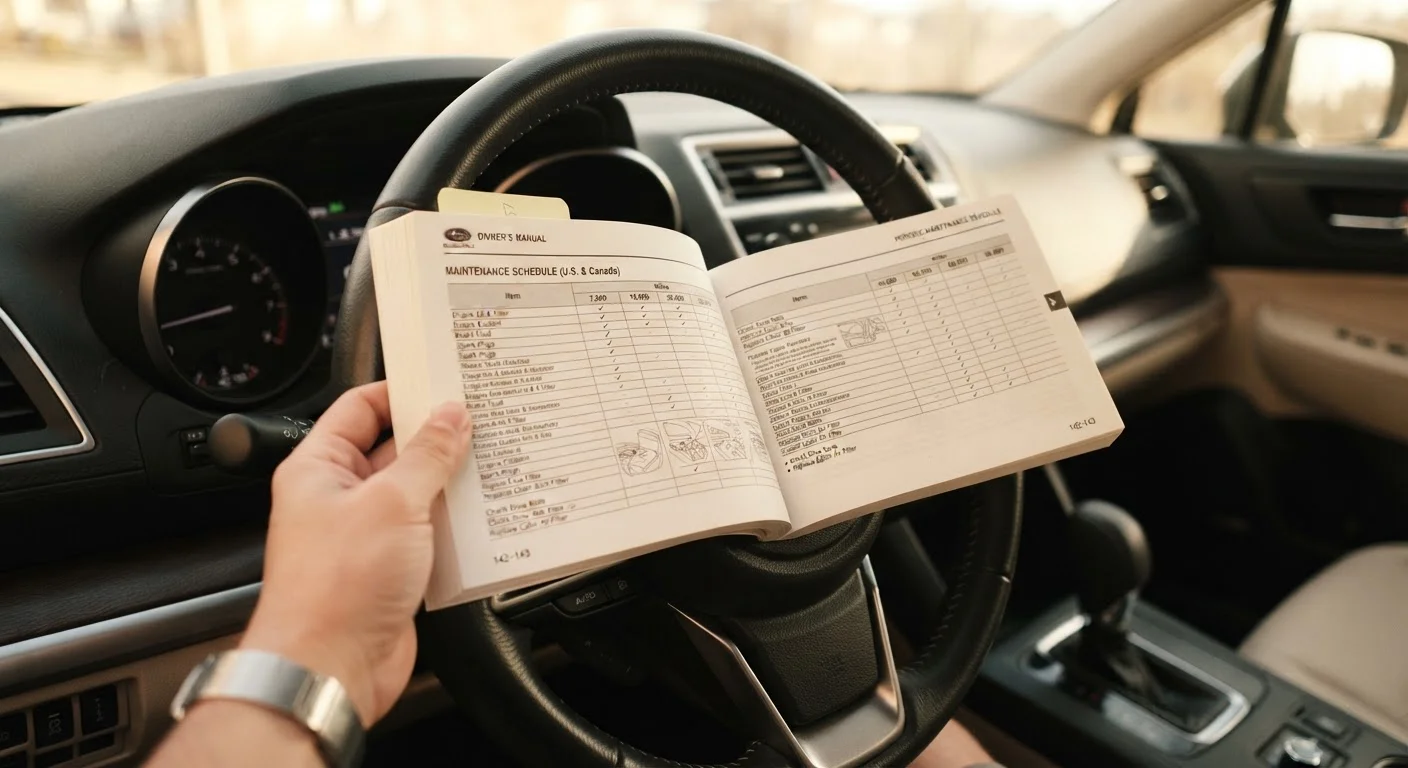
- Your owner's manual is the single most authoritative source for your car's service schedule.
- Both mileage and elapsed time trigger service needs — whichever comes first typically applies.
- Driving in stop-and-go traffic or extreme temperatures counts as 'severe' use and shortens intervals.
- Missing scheduled maintenance can void manufacturer warranties and accelerate wear.
- A simple log or phone reminder is often enough to keep your schedule on track.
What a Service Schedule Actually Is
A service schedule is a manufacturer-defined maintenance calendar that tells you when specific vehicle components need to be inspected, replaced, or serviced. Think of it less like a warranty requirement and more like a health checklist for a machine you rely on daily. Every make and model has its own schedule, which is why the owner's manual — not a shop's generic reminder sticker — is your most trustworthy reference.
Service items are typically divided into minor and major categories. A minor service usually covers an oil change, filter checks, and a visual inspection of fluid levels and tire pressure. A major service goes deeper: spark plugs, transmission fluid, timing belts, brake fluid, and more. Understanding exactly what each service level covers helps you know what you're paying for and what questions to ask a mechanic.
Start With Your Owner's Manual
Before looking at third-party maintenance guides or shop recommendations, open your owner's manual to the maintenance section. Manufacturers design schedules for the specific engineering tolerances of your engine and drivetrain — generic advice may not align. Your manual is free, accurate, and already in your car.
Mileage vs. Time: Which Trigger Matters More?
Service intervals are expressed two ways: mileage (e.g., every 5,000 miles) and elapsed time (e.g., every 6 months). Both matter, and the general rule is to go with whichever comes first. A driver who logs only 4,000 miles a year still needs an oil change annually, because engine oil degrades chemically even when a car sits idle.
~35%
Drivers who skip or delay scheduled oil changes
Industry surveys consistently suggest a significant share of US drivers extend oil change intervals beyond manufacturer recommendations.
2x
Rate of fluid degradation in short-trip driving
Engine oil in vehicles used predominantly for short trips degrades faster due to incomplete combustion byproducts, per general automotive engineering guidance.
This dual-trigger system catches two very different usage patterns: the high-mileage commuter who racks up miles fast, and the low-mileage driver whose car ages on the calendar rather than the odometer. If your driving falls on either extreme, pay close attention to both columns in your owner's manual rather than assuming mileage alone tells the whole story.
If your vehicle sits unused for extended periods, degradation still happens — keeping a car in good shape during non-use requires its own set of precautions beyond the standard schedule.
Decoding the Common Service Intervals
Here's a plain-language breakdown of the service items most drivers encounter:
- Engine oil and filter: Conventional oil typically has a shorter interval than full synthetic. Check your manual — many modern vehicles with full synthetic oil can go 7,500–10,000 miles between changes, contrary to the old 3,000-mile rule.
- Tire rotation: Usually every 5,000–7,500 miles to ensure even tread wear across all four tires.
- Air filter (engine): Typically every 15,000–30,000 miles, though dusty driving environments shorten this.
- Brake fluid: Often every 2 years or 30,000 miles — brake fluid absorbs moisture over time, which lowers its boiling point and reduces braking performance.
- Spark plugs: Copper plugs may need replacement around 30,000 miles; iridium or platinum plugs can last 60,000–100,000 miles.
- Timing belt (if equipped): A critical, often expensive replacement — typically between 60,000 and 100,000 miles. Failure can cause severe engine damage.
- Coolant flush: Generally every 30,000–50,000 miles or every 5 years.
Timing Belt Failure Is a Serious Risk
On interference engines — common in many modern vehicles — a snapped timing belt can cause pistons and valves to collide, resulting in catastrophic and expensive engine damage. This is one service you should not delay or guess at. Check your owner's manual for the exact replacement interval and have a qualified mechanic perform the work.
A deeper look at service schedule structure can help you compare what your manual recommends against what shops commonly suggest.
Severe vs. Normal Driving Conditions
Manufacturer schedules usually define two categories: normal and severe driving conditions. Many drivers assume they fall into the normal category — but the severe definition is broader than most people expect.
Severe conditions typically include:
- Frequent short trips under 5 miles (engine never fully warms up)
- Stop-and-go city traffic
- Towing, hauling, or driving in mountainous terrain
- Operating in extreme heat or cold
- Driving on unpaved or dusty roads
If several of these apply to your routine, you may need to shorten your service intervals. The seasonal car care routine is a practical complement to the standard schedule, especially if you live somewhere with harsh winters or blazing summers.
When in doubt about which service condition applies to you, choose the severe schedule. The cost difference of an extra service is almost always less than early component failure.
Maintenance intervals for severe conditions exist precisely because real-world use rarely matches the smooth, highway-heavy driving assumed in normal schedules.
Before any service appointment, photograph your current odometer reading and the shop's work order. It takes 30 seconds and gives you a clear paper trail if questions arise later.
Disputes about whether a service was performed or when it's next due are far easier to resolve with documented mileage at the time of service.
How to Stay on Top of Your Schedule
The most common reason drivers fall behind on maintenance is not cost or inconvenience — it's simply losing track. A few straightforward habits keep you ahead of the curve:
- Read the maintenance section of your owner's manual once and mark the intervals that apply to your current mileage. Most manuals have a simple table in the back.
- Keep a service log — even a notepad in the glove box. Record the date, mileage, and service performed each visit. This also protects resale value.
- Set calendar reminders on your phone for both the mileage threshold and the time-based trigger.
- Note warning lights promptly. Dashboard symbols are often your car's first signal that something needs attention. Decoding warning lights can help you distinguish what requires immediate action versus a routine appointment.
Deciding which tasks you handle yourself and which you hand to a professional is another layer of the equation. Knowing when DIY makes sense and when it doesn't can save you both time and money. As mileage climbs, the stakes of staying current with maintenance rise — keeping a high-mileage car reliable depends heavily on a consistent service history.
This article is for general informational purposes only. Always consult your vehicle's owner's manual and a qualified mechanic for guidance specific to your make, model, and driving conditions.