

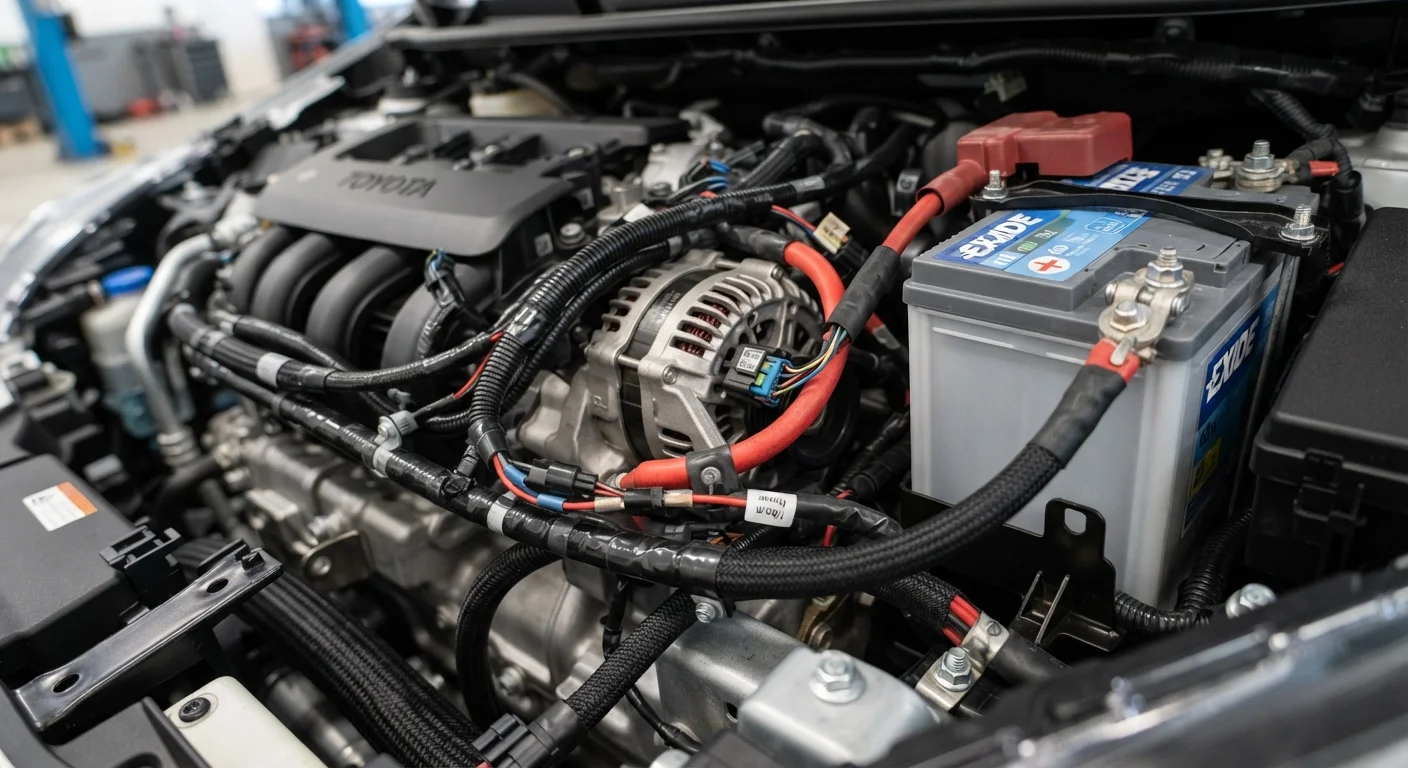
Key Takeaways
- The battery starts the car; the alternator keeps everything running and recharges the battery.
- A failing alternator can drain a perfectly healthy battery within an hour of driving.
- Slow cranking, dim lights, and dashboard warning lights are early indicators of charging system trouble.
- Most battery failures occur after three to five years of use.
- A mechanic should diagnose charging system faults before you replace any component blindly.
How the Charging System Works
Your car's charging system is a three-part loop: the battery, the alternator, and the starter motor. Each has a distinct role, but they depend on one another. Understanding how they interact saves you money and prevents the frustrating experience of a car that won't start.
In simple terms: the battery provides the burst of power needed to fire the engine, the starter motor converts that electrical energy into mechanical rotation to crank the engine, and once the engine runs, the alternator takes over — generating electricity to power everything and top the battery back up. When one link in this chain weakens, the others compensate until they can't.
3–5 years
Average car battery lifespan
Industry data consistently shows most 12V lead-acid batteries require replacement within this window, with climate being a major variable.
13.5–14.8V
Healthy alternator output range
A reading consistently below 13V at idle with the engine running is a strong indicator of alternator underperformance.
200+ amps
Starter motor current draw
Cold temperatures can push starter current demand even higher, making a strong, fully charged battery essential in winter.
The Battery: Storage, Not Generation
A common misconception is that the battery powers the car while it's running. It doesn't — that's the alternator's job. The battery's primary function is to deliver a large, immediate surge of current to the starter motor. After that, it acts as a buffer, absorbing electrical spikes and providing backup power if demand temporarily exceeds what the alternator produces.
Most modern vehicles use a 12-volt lead-acid battery. Hybrid and electric vehicles use additional high-voltage battery packs, but the 12V auxiliary battery still handles the same starting and accessory role.
Typical lifespan: three to five years, though climate plays a big role. Extreme heat accelerates internal corrosion; extreme cold reduces the battery's ability to deliver current (measured in CCA — Cold Cranking Amps).
Get a Free Battery Test First
Before replacing a battery based on age alone, have it load-tested at an auto-parts store. Load testing applies a controlled current draw and measures how well the battery holds voltage — it's a far more accurate indicator than a simple resting voltage check. Many stores perform this test at no charge.
Signs of a weakening battery include slow engine cranking, electronics that reset after the car sits overnight, and a battery warning light on the dashboard.
The Alternator: Your Car's Power Plant
The alternator is a generator driven by a belt connected to the engine. As the engine spins, the alternator produces AC electricity, which an internal rectifier converts to the DC power your car's systems use. A healthy alternator typically outputs between 13.5 and 14.8 volts — enough to run every electrical load and recharge the battery simultaneously.
Modern vehicles are increasingly dependent on stable alternator output. Heated seats, infotainment systems, driver-assist cameras, and electric power steering all pull current continuously. An aging alternator that can no longer maintain adequate voltage will cause all of these systems to behave erratically before any warning light appears.
Test your battery voltage before cold weather arrives, not after. A battery reading below 12.4 volts at rest is already partially discharged and may not survive a hard freeze.
Cold reduces a battery's effective capacity by up to 30–40%, meaning a marginal battery that works fine in summer can fail completely on the first genuinely cold morning.
If your alternator belt looks glazed, cracked, or has more than a quarter-inch of deflection when pressed, have it replaced — the alternator can't do its job with a slipping drive belt.
Belt condition is the most commonly overlooked factor in alternator performance, and replacement is far cheaper than the diagnostic time spent chasing phantom electrical faults.
Alternator failure often mimics a dead battery. If jump-starting gets you going but the car dies again within 20–30 minutes of driving, suspect the alternator — it isn't recharging the battery at all.
The Starter Motor: One Job, Done Fast
The starter motor is an electric motor with a single purpose: spin the engine fast enough to initiate combustion. It engages for roughly one to three seconds per start — that's it. Despite this brief duty cycle, starters do wear out, typically after 100,000–150,000 starts or in vehicles that idle frequently (stop-start city driving accelerates wear).
The starter draws the highest single current load of any component in the vehicle — sometimes 200 amps or more in cold weather. That's why a weak battery makes starting difficult even if the starter itself is fine.
Hybrid and EV Charging Systems Differ Significantly
Hybrid and electric vehicles use high-voltage battery packs that operate at hundreds of volts — far beyond the 12V system described in this article. Working on or near these systems without proper training and equipment is genuinely dangerous and potentially fatal. Always have hybrid or EV electrical work performed by a technician certified in high-voltage vehicle systems.
Telltale starter sounds: A single loud click with no cranking usually points to a seized starter or a corroded connection. Repeated rapid clicking suggests insufficient battery voltage reaching the starter. A grinding noise during cranking may indicate worn starter teeth or a damaged flywheel ring gear — have this inspected promptly.
Reading the Warning Signs
Charging system problems rarely announce themselves loudly until it's too late. Knowing the early indicators lets you act before you're stranded.
- Battery warning light: Illuminates when the system voltage falls outside the normal range. Don't ignore it — this light monitors the whole charging circuit, not just the battery.
- Dim or flickering headlights: Often a sign the alternator is struggling under load.
- Electrical gremlins: Random resets, unresponsive infotainment, erratic gauges — these frequently trace back to unstable voltage.
- Slow or labored cranking: The engine turns over sluggishly on startup, especially after the car has been parked.
- Burning smell or unusual belt noise: A slipping alternator belt can overheat or squeal; a burning electrical smell near the battery warrants immediate inspection.
Just as your engine's cooling circuit has its own set of symptoms to watch for — as covered in our guide to cooling system basics — the charging system gives clear signals when something is off, if you know what to look for.
When to DIY and When to Call a Mechanic
Some charging system tasks are genuinely straightforward for a careful DIYer; others carry real risk of injury or expensive mistakes.
Reasonable DIY: Cleaning corroded battery terminals with a baking soda solution and a wire brush, checking battery voltage with an inexpensive multimeter, or replacing a battery after confirming the fault.
Leave it to a professional: Testing alternator output under load, diagnosing parasitic drain (an electrical draw that slowly kills the battery when the car is off), replacing the alternator or starter motor, and any work involving the high-voltage system on hybrid or electric vehicles.
Don't Swap Parts Without Diagnosing First
A dead battery doesn't always mean the battery is the problem — a faulty alternator will drain a brand-new replacement within days. Similarly, a starter that clicks once may simply have a corroded cable connection. Replacing components without a proper diagnosis wastes money and leaves the real fault in place. Ask for a system-wide charging test before authorizing any parts replacement.
Always disconnect the negative battery terminal before working near any electrical components. Working around a live battery presents a risk of sparks, acid exposure, and short circuits. If you're uncertain about any step, the cost of a mechanic's diagnostic fee is far less than replacing components you didn't need to — or repairing damage from an electrical fault.
A quality auto-parts store can often perform a free battery and alternator load test in the parking lot, which gives you objective data before spending anything. Use that information to have an informed conversation with your mechanic.
Multimeter Basics for Car Owners
A multimeter is the single most useful tool for diagnosing charging system issues at home. Learning to check resting battery voltage and alternator output takes under five minutes and costs nothing beyond the meter itself.
Cooling System Basics Guide
Your charging system and cooling system both protect the engine from failure. Our cooling system guide explains the components, warning signs, and maintenance steps every driver should know.