

| Interim service frequency | Every 6 months or ~6,000 miles (General industry guideline; check your owner's manual) |
| Full service frequency | Annually or ~12,000 miles (General industry guideline; check your owner's manual) |
| Major service frequency | Every 2 years or ~24,000 miles (General industry guideline; check your owner's manual) |
| Typical full service duration | 2–4 hours (Varies by shop and vehicle condition) |
| Written report expected | Yes — itemized inspection report (Standard practice at reputable workshops) |
| Diagnostic scan included | Usually yes for fault codes (Confirm with your service provider beforehand) |
The Three Tiers of Car Servicing
When a garage mentions a "full service," they're referring to the middle tier in a three-level system that most independent shops and dealerships follow. Here's how the tiers stack up:
- Interim service: A lighter check typically recommended every 6 months or 6,000 miles — whichever comes first. Covers engine oil, oil filter, and a safety inspection of key systems.
- Full service: A comprehensive inspection recommended annually or around every 12,000 miles. Builds on the interim by adding brake checks, fluid top-ups, spark plug assessment, and more.
- Major service: The most thorough option, usually every 24,000 miles or every two years. Includes everything in a full service plus replacement of wear items like the air filter, fuel filter, and — depending on the vehicle — the timing belt.
These intervals are general guidelines. Always cross-reference with your owner's manual, since manufacturers set their own schedules. For a deeper look at how to read and use those schedules, see our guide to vehicle service schedules.
| Interim service frequency | Every 6 months or ~6,000 miles (General industry guideline; check your owner's manual) |
| Full service frequency | Annually or ~12,000 miles (General industry guideline; check your owner's manual) |
| Major service frequency | Every 2 years or ~24,000 miles (General industry guideline; check your owner's manual) |
| Typical full service duration | 2–4 hours (Varies by shop and vehicle condition) |
| Written report expected | Yes — itemized inspection report (Standard practice at reputable workshops) |
| Diagnostic scan included | Usually yes for fault codes (Confirm with your service provider beforehand) |
What's Included in a Full Service
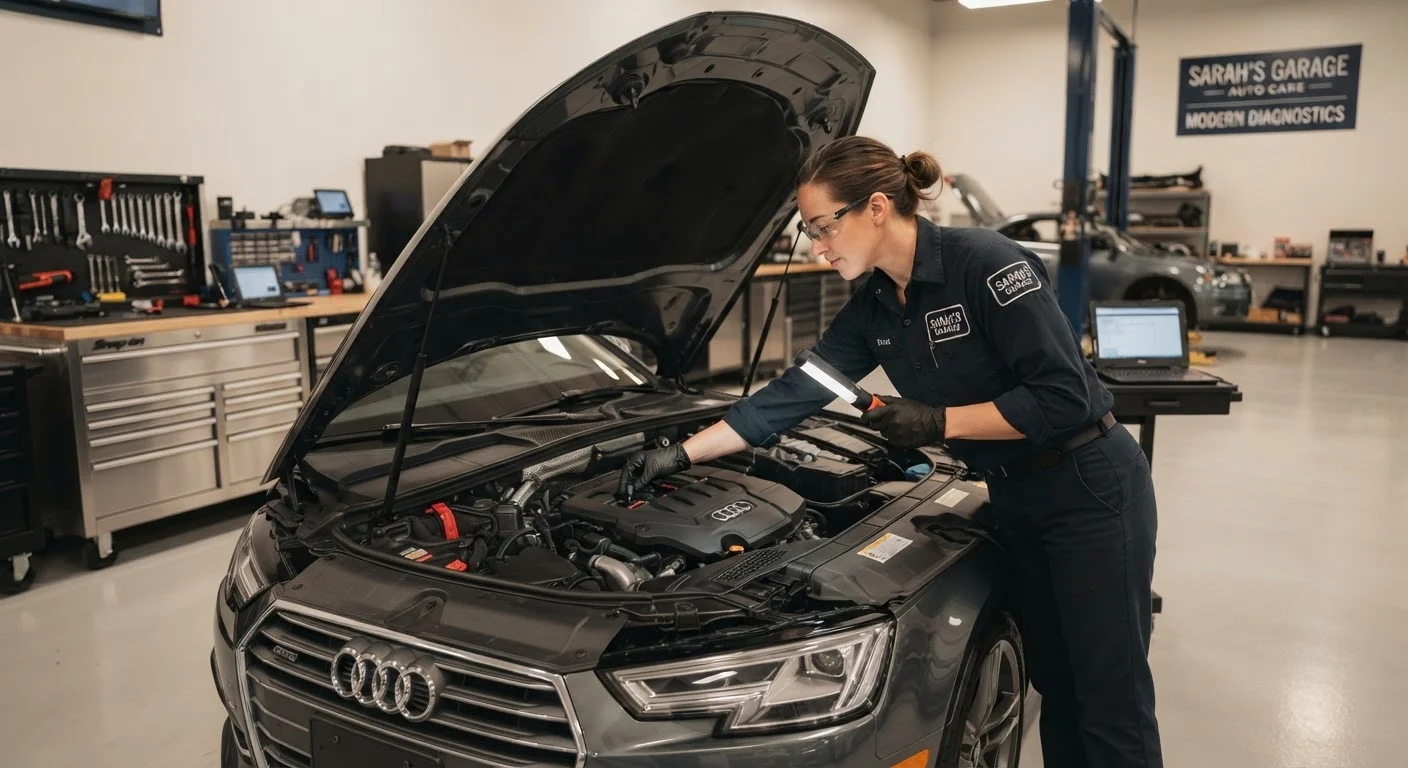
A full service is designed to give mechanics a thorough picture of your car's health — not just top it up and send you on your way. Here's what a qualified technician should inspect or address:
Interim service
A lighter, more frequent maintenance check covering oil, oil filter, and basic safety systems. Typically done every six months or 6,000 miles as a between-full-services top-up.
Full service
A comprehensive annual inspection covering fluids, brakes, tires, engine components, electrical systems, and safety items. The standard benchmark for routine vehicle upkeep.
Major service
The most thorough service tier, replacing wear items like air filters and timing belts in addition to everything covered in a full service. Usually performed every two years or 24,000 miles.
Diagnostic scan
An electronic check using an OBD-II reader to retrieve fault codes stored by the vehicle's onboard computer. Helps identify issues that may not yet produce noticeable symptoms.
Drive belt
A rubber belt that connects engine components such as the alternator, power steering pump, and air conditioning compressor. Wear or cracking indicates it should be replaced.
Service history
A documented record of all maintenance performed on a vehicle, typically stamped in a booklet or recorded digitally. A complete service history demonstrates consistent upkeep.
Fluids
- Engine oil and oil filter replacement
- Coolant level check and condition assessment
- Brake fluid level and contamination check
- Power steering fluid (where applicable)
- Windshield washer fluid top-up
Brakes and Steering
- Brake pad thickness measurement
- Brake disc condition (scoring, warping)
- Handbrake operation
- Steering rack and power steering system check
- Wheel bearing inspection
Tires and Wheels
- Tire tread depth across all four tires
- Sidewall condition for cracks or bulges
- Tire pressure set to manufacturer specification
- Wheel alignment check (visual; full alignment adjustment may cost extra)
Engine and Electrical
- Air filter inspection (replaced at major service)
- Spark plug condition check
- Battery voltage and terminal corrosion check
- Drive belt and serpentine belt condition
- Diagnostic scan for stored fault codes
Lights and Safety Systems
- All exterior lights verified functional
- Horn, wipers, and washers tested
- Seat belts checked for retraction and webbing damage
At the end of a proper full service, you should receive a written report noting any items flagged for attention — not just what was done. If you're weighing which tasks a professional must handle versus what you can realistically do yourself, our breakdown of DIY vs. mechanic tasks is a useful companion read.
How a Full Service Differs From a Pre-Purchase Inspection
A common point of confusion: a full service is not the same as a pre-purchase inspection (PPI). A service is ongoing, routine maintenance carried out on a car you already own. A PPI is a one-time buyer's due-diligence check designed to expose hidden faults and structural issues before you commit to a purchase.
If you're evaluating a used vehicle, a routine service record is a positive sign — but it doesn't replace a dedicated pre-purchase inspection. See what a pre-purchase inspection actually covers for a side-by-side look at what those checks involve.
Service Records and Resale Value
A complete, stamped service history is one of the most valuable documents a used-car seller can present. Buyers and dealerships typically view documented full services as evidence the car has been properly maintained, which can positively influence asking price. Always request receipts or a digital service record from your garage after each visit.
Keeping up with full services also has a practical ownership benefit: a documented service history can strengthen a vehicle's resale value and reassure future buyers that maintenance wasn't deferred.