

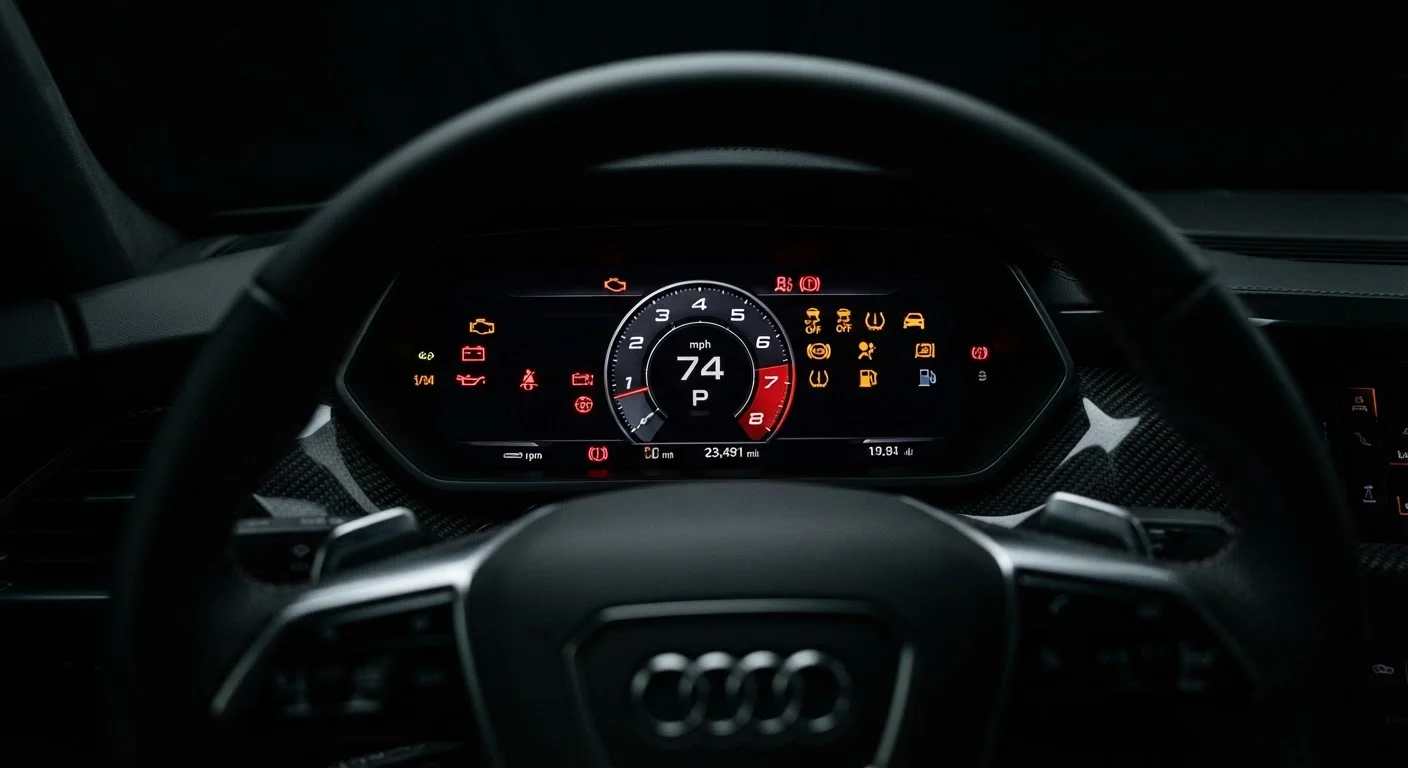
| Warning light colors | Red = urgent, Amber/Yellow = caution, Green/Blue = informational |
| Check engine light causes | Over 1,400 possible OBD-II fault codes (Society of Automotive Engineers OBD-II standard) |
| TPMS trigger threshold | 25% below recommended tire pressure (U.S. NHTSA TPMS regulation) |
| Vehicles required to have TPMS | All U.S. passenger cars and light trucks from model year 2008 onward (NHTSA Final Rule, 2007) |
| Safe distance to pull over (red lights) | Stop as soon as safely possible |
| OBD-II port location | Typically under the dashboard, driver's side |
The Color System: Your First Clue
Before diving into specific symbols, understand the color logic built into every modern dashboard. It works much like a traffic light:
- Red lights signal an urgent problem — stop driving or pull over as soon as it is safe. Examples include oil pressure, engine temperature, and brake system warnings.
- Amber or yellow lights indicate a condition that needs attention soon but doesn't necessarily require you to pull over immediately. The check engine light typically falls here.
- Green or blue lights are informational — they confirm that a system is active, such as high beams or cruise control.
This color hierarchy is consistent across virtually all vehicles sold in the United States, though the exact symbols can differ. See the
MIL (Malfunction Indicator Lamp)
The technical name for the check engine light. It signals that the vehicle's onboard diagnostic system has logged a fault code in one or more engine or emissions components.
OBD-II Scanner
A diagnostic tool that plugs into your car's onboard diagnostics port (standard on vehicles made after 1996) to read stored fault codes and help identify what triggered a warning light.
TPMS
Tire Pressure Monitoring System. A sensor-based system that alerts you when one or more tires drops significantly below the recommended pressure level.
ABS
Anti-lock Braking System. An active safety feature that prevents wheels from locking during hard braking, helping the driver maintain steering control. An ABS warning light indicates a fault in this system.
EPC
Electronic Power Control. A warning light found on many Volkswagen Group vehicles that indicates a fault in the throttle system or related electronics.
Coolant Temperature
A measure of how hot your engine's liquid cooling system is running. An overheating engine can sustain serious internal damage within minutes if not addressed.
| Warning light colors | Red = urgent, Amber/Yellow = caution, Green/Blue = informational |
| Check engine light causes | Over 1,400 possible OBD-II fault codes (Society of Automotive Engineers OBD-II standard) |
| TPMS trigger threshold | 25% below recommended tire pressure (U.S. NHTSA TPMS regulation) |
| Vehicles required to have TPMS | All U.S. passenger cars and light trucks from model year 2008 onward (NHTSA Final Rule, 2007) |
| Safe distance to pull over (red lights) | Stop as soon as safely possible |
| OBD-II port location | Typically under the dashboard, driver's side |
Red Lights: Don't Ignore These
Red warning lights should be treated seriously. Continuing to drive with some of these illuminated can turn a fixable problem into an expensive one — or a dangerous one.
Oil Pressure Warning
This looks like a small oil can or dripping faucet. If it lights up while driving, pull over safely and shut off the engine. Low oil pressure can destroy an engine within minutes. Check the oil level first; if it's adequate and the light stays on, call for assistance rather than driving further.
Engine Temperature
A thermometer symbol (sometimes with waves beneath it) means your engine is overheating. Turn off the A/C, pull over safely, and let the engine cool before opening the hood. Never open a hot radiator cap — coolant can spray and cause burns.
Battery Warning
A red battery symbol doesn't always mean the battery itself is dead — it often signals that the charging system (including the alternator) has stopped working. Your car may keep running temporarily on battery power alone, but it will eventually shut down. Drive directly to a mechanic or auto parts store if possible. For a deeper look at how batteries factor into breakdowns, see our battery health guide.
Brake System Warning
If your brake light illuminates while driving (and the parking brake is fully released), have the brake system inspected promptly. Low brake fluid or a hydraulic fault can compromise stopping ability.
Amber Lights: Schedule a Visit
Amber warning lights generally mean something needs attention within days or weeks — not necessarily right now, but don't put it off indefinitely.
Check Engine Light (MIL)
The most misunderstood light on any dashboard. It can be triggered by over 1,400 different fault codes, ranging from a loose gas cap to a misfiring cylinder. A solid amber check engine light warrants a diagnostic scan soon; a flashing check engine light is more urgent and usually points to an active engine misfire that can damage the catalytic converter — reduce your speed and seek service quickly.
An OBD-II scanner can pull the specific fault code and narrow down the cause. Many auto parts retailers will perform this scan at no charge.
TPMS (Tire Pressure)
A horseshoe symbol with an exclamation mark indicates that one or more tires is significantly underinflated. Check all four tires (including the spare if your vehicle monitors it) with a handheld gauge, since the system only triggers after a 25% pressure drop. See our tire pressure guide for how to check and interpret the numbers correctly.
ABS Warning
Your standard brakes will still work, but the anti-lock braking function is offline. Avoid hard braking situations if possible and get the system diagnosed.
Your Owner's Manual Is the Final Word
Warning light symbols and their meanings can vary between manufacturers and even between model years of the same vehicle. Some lights that look nearly identical can mean very different things across brands. Always cross-reference any unfamiliar light with your vehicle's owner's manual or the manufacturer's website for your exact trim and year.
Staying current with your vehicle's scheduled maintenance can prevent many amber lights before they appear. Review how service schedules work to build a proactive maintenance habit.