

Key Takeaways
- Simple tasks like air filter swaps and wiper replacements are genuinely manageable for most owners with basic tools.
- Work involving brakes, suspension, or onboard diagnostics carries real safety risk and warrants a qualified mechanic.
- DIY can reduce costs on routine items, but errors on complex systems can create far more expensive problems.
- Modern vehicles with advanced electronics and driver-assist features require specialist tools beyond typical home garages.
- Your owner's manual and service schedule are the most reliable guides for what needs doing and when.
Our Verdict
DIY servicing makes solid sense for straightforward, low-risk maintenance tasks where the cost of error is low. For anything touching safety-critical systems, emissions compliance, or advanced electronics, professional servicing is the more reliable — and often more cost-effective — path. The dividing line isn't about skill alone; it's about having the right tools, diagnostic access, and accountability.
| Best for | Recommended |
|---|---|
| Owners comfortable with basic tools doing routine upkeep | DIY Servicing |
| Safety-critical repairs involving brakes, suspension, or airbags | Professional Servicing |
| Vehicles under warranty or needing dealer-stamped records | Professional Servicing |
| Keeping ongoing maintenance costs down between shop visits | DIY Servicing |
The Real Question: Risk vs. Reward
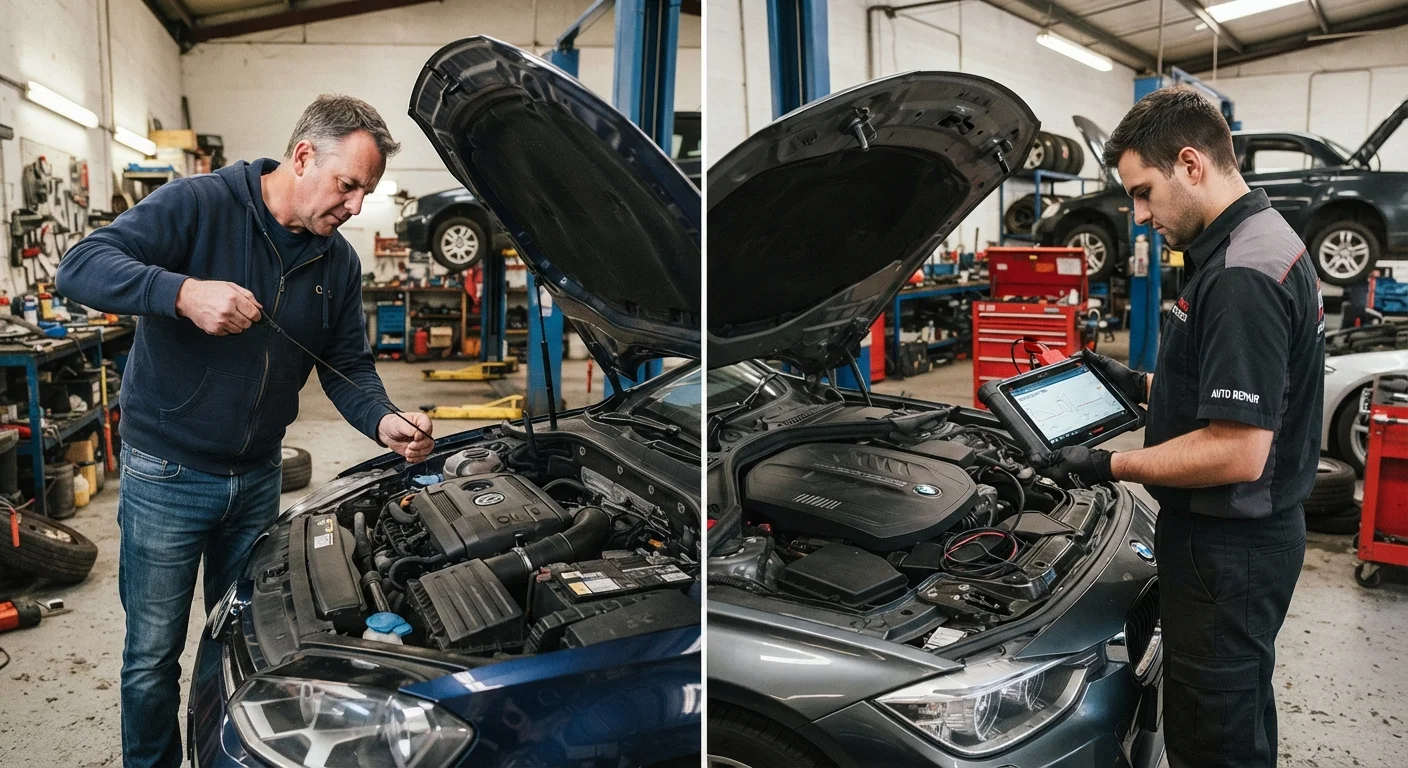
Every vehicle owner faces the same calculation: spend money at a shop, or invest time doing it yourself. The honest answer is that both approaches have a legitimate place — but the right choice depends on the specific task, your actual skill level, and what's at stake if something goes wrong.
As a starting point, it helps to understand what your car actually needs and when. See our guide to understanding your vehicle's service schedule for a clear breakdown of minor versus major service requirements. Once you know what's due, you can start sorting which jobs are DIY-friendly and which aren't.
| DIY Servicing | Professional Servicing | |
|---|---|---|
| Typical cost | Lower (parts only) | Higher (labour + parts) |
| Tools required | Basic hand tools | Specialised diagnostic equipment |
| Safety risk | Low on simple tasks | Managed by trained technician |
| Suitable tasks | Filters, wipers, fluids, tyres | Brakes, suspension, diagnostics, ADAS |
| Warranty impact | Potential risk if undocumented | Usually none when certified shop used |
| Error consequences | Low on simple jobs | Mitigated by expertise and accountability |
Maintenance Tasks Most Owners Can Handle
Several routine jobs are genuinely manageable for anyone willing to follow instructions carefully and use the right tools:
- Engine air filter replacement: Typically involves unclipping a housing, swapping the filter, and resealing. No special tools needed.
- Cabin air filter replacement: Usually accessible behind the glove box. Takes minutes and improves interior air quality.
- Windshield wiper blades: Blade kits come with fitting instructions and require no tools beyond patience.
- Tire pressure checks and inflation: A quality pressure gauge and a portable inflator are all you need.
- Checking and topping off fluids: Coolant, windshield washer fluid, and power steering fluid reservoirs are clearly marked in most vehicles.
- Battery terminal cleaning: Disconnecting a battery and cleaning corrosion from terminals is low-risk when done with the ignition off and proper gloves.
Oil changes also fall here for many drivers — though it's worth understanding your oil type first. Our guide to synthetic vs conventional engine oil explains the differences before you buy.
Start With Your Owner's Manual
Before attempting any maintenance task, consult your owner's manual for the manufacturer's procedure and torque specifications. What works for one model can be different — even slightly dangerous — on another. Manuals are often available as free PDFs from manufacturer websites if you don't have the physical copy.
Where Professional Servicing Earns Its Cost
Some jobs look approachable on a tutorial video but carry real consequences if done incorrectly. These belong with a qualified mechanic:
- Brake pad and rotor replacement: Brake systems are safety-critical. Improper installation — wrong torque, contaminated rotors, uneven pad seating — can cause brake failure. A professional can also inspect calipers and hydraulics that a DIYer might miss.
- Suspension and steering components: Control arms, tie rods, and wheel bearings affect how your vehicle handles at speed. Errors here can make a vehicle dangerous to drive.
- Timing belt or chain service: Requires precise alignment. Getting it wrong can cause catastrophic engine damage.
- Diagnostic fault codes: A check-engine light reflects a code, not a diagnosis. Clearing codes without addressing the root cause masks problems. Shops use professional-grade scan tools and live data that consumer OBD-II readers can't replicate.
- Anything involving airbags or advanced driver-assistance systems (ADAS): These systems require calibration after any related repair and can injure you if disturbed incorrectly.
Skipping professional attention on these systems rarely saves money in the long run. Our article on why skipping small repairs leads to bigger bills illustrates how deferred issues compound quickly.
Don't Guess on Safety-Critical Systems
Brake, steering, and suspension work done incorrectly can make a vehicle unsafe to drive at any speed. If you're not certain you have the right tools, the right knowledge, and access to manufacturer torque specs, these jobs should go to a qualified mechanic. The cost of a professional repair is almost always less than the cost of a collision.
Warranty, Liability, and Keeping Records
If your vehicle is still under a manufacturer or extended warranty, review the terms before doing any servicing yourself. Many warranties require that maintenance be performed by a certified technician and documented — not necessarily at a dealership, but with proper records. DIY work that isn't logged correctly can create gaps that complicate future warranty claims.
Even outside warranty periods, keeping a written log of every service interval — date, mileage, parts used — adds real value when selling the vehicle. A documented service history demonstrates responsible ownership and supports your asking price.
For a fuller picture of what mechanics inspect at each service level, our breakdown of what a full car service includes is worth reading before your next shop visit.
This article provides general information about vehicle maintenance practices and is not a substitute for advice from a qualified mechanic familiar with your specific vehicle.