

Key Takeaways
- A parked vehicle can develop serious mechanical issues within weeks if left without preparation.
- Battery drain, flat-spotted tires, and fuel degradation are the most common storage problems.
- A breathable car cover and regular short start-ups can meaningfully slow deterioration.
- Rodent damage and moisture are underestimated risks during extended storage.
- Reconnecting with your car's service schedule after storage is just as important as prep before it.
What you will need
Why a Sitting Car Is Not a Safe Car
Most drivers assume a parked vehicle is simply paused — inert, waiting. In reality, a car left stationary for more than a few weeks begins a gradual process of deterioration that can affect nearly every major system. Seals dry out, fuel oxidises, tires develop flat spots, and the battery quietly loses the charge it needs to start the engine. Understanding what actually happens to a vehicle during extended non-use is the first step toward preventing it.
The risks aren't uniform. A car stored in a climate-controlled garage faces different challenges than one left on a driveway in a humid summer or a freezing winter. Storage duration matters too — two weeks of sitting is a nuisance; six months without preparation can mean a car that won't start, unsafe tires, or a corroded brake system. For a broader view of how seasonal conditions affect vehicle health, the seasonal car care routine most drivers skip is worth reading alongside this guide.
What you will need
Preparing Your Vehicle Before Long-Term Storage
The steps below walk through each preparation task in a logical order — starting with the fuel system and working outward. Tackling them in sequence saves time and avoids missing anything critical. Most can be completed in an afternoon with basic supplies.
Fill the fuel tank and add a stabiliser
A full tank leaves less air space for condensation to form, which helps prevent moisture contamination. Add a fuel stabiliser according to the product's label directions before filling up, then run the engine for 5–10 minutes so the treated fuel circulates through the system. Untreated fuel can begin to degrade and gum up injectors within 30 days.
Change the engine oil if it's due or close
Used engine oil contains combustion byproducts and acids that can corrode internal engine components over a long rest period. If your oil change is within a few months or a few thousand miles of being due, do it before storage rather than after. Fresh oil is less corrosive during the period the engine won't be running. Check your owner's manual for the correct grade.
Address the battery
A vehicle battery self-discharges at roughly 1–25% per month depending on age and condition. After a month or more of sitting, many batteries will not have enough charge to start the engine. Connect a battery tender (also called a trickle charger or float charger) to maintain a safe charge level without overcharging. If storing somewhere without power access, disconnect the negative terminal to reduce parasitic drain — but note this will reset some vehicle electronics. The battery health guide covers warning signs and testing in more detail.
Inflate tires to the recommended pressure
Tires lose pressure gradually over time and can develop flat spots — slight deformities from sustained contact with the ground — after several weeks in one position. Inflate all four tires (including the spare) to the pressure listed on the driver's door jamb sticker, not the maximum pressure on the tire sidewall. For storage beyond 3 months, consider placing the vehicle on jack stands to relieve the tires of the vehicle's weight entirely, but only do this if you have proper equipment and a stable surface.
Clean and protect the interior and exterior
Wash and dry the exterior thoroughly before covering the car. Trapped dirt and moisture under a cover can scratch paint and accelerate oxidation. Apply a coat of wax for added protection. Inside the cabin, remove any food items and vacuum the seats and carpets to eliminate organic material that attracts pests. Leave a couple of packets of silica gel under the seats to absorb ambient moisture, especially in humid climates.
Cover the vehicle and seal entry points
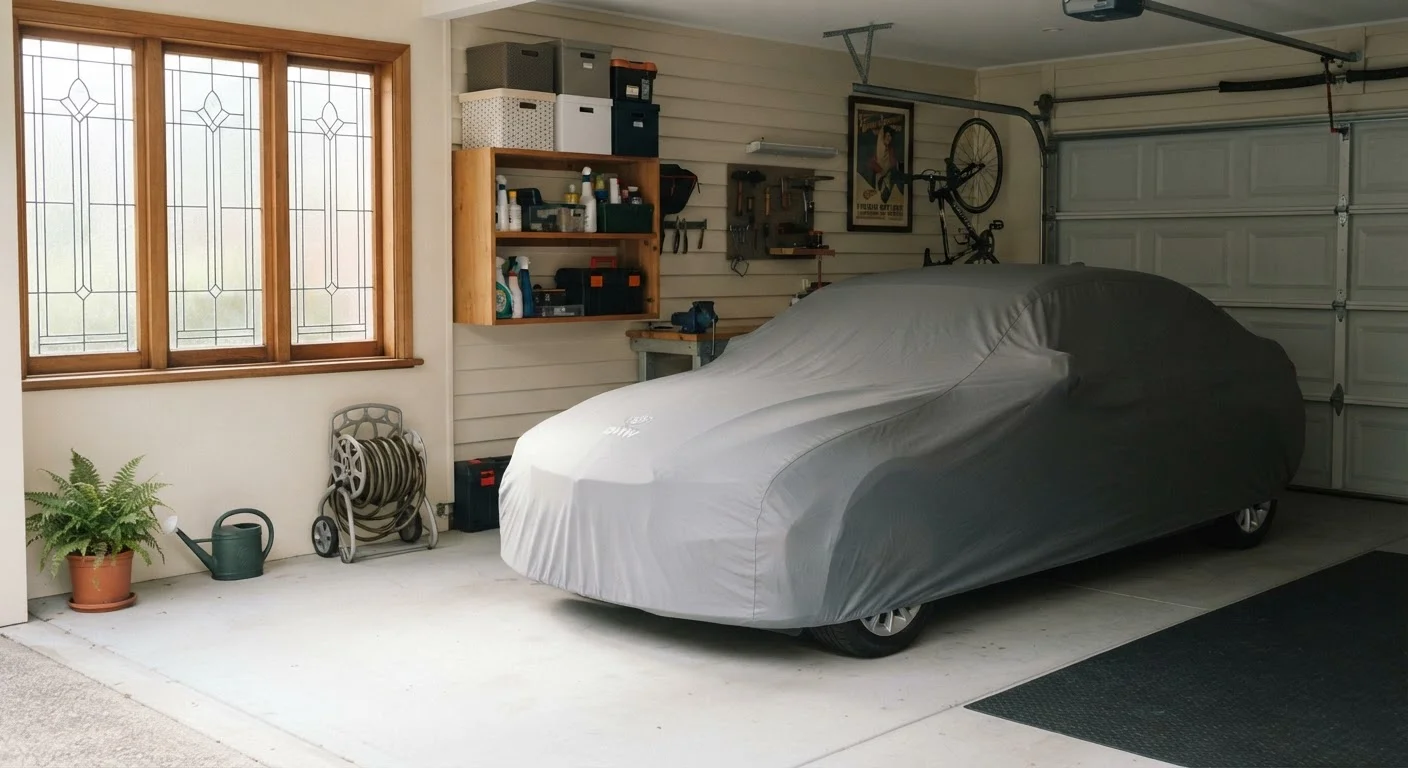
Use a breathable, fitted car cover rather than a tarp. Breathable fabric allows moisture vapour to escape while protecting against dust, bird droppings, and light debris. Loosely stuff the exhaust pipe opening with steel wool or wire mesh to deter rodents — attach a visible reminder to the steering wheel or key so you don't forget to remove it before starting the engine. Check on the vehicle every 2–3 weeks if possible to catch any developing issues early.
Consider a Periodic Short Drive
If your storage situation allows it, starting the engine and driving for at least 15–20 minutes every 2–3 weeks is one of the most effective ways to keep systems healthy. This circulates oil, charges the battery, exercises the brakes, and prevents seals from drying out. Even a short run around the block is meaningfully better than a cold start with no driving.
Once storage is over, treat the return to use with the same care as the prep phase. Check tire pressure, inspect brakes, and top up fluids before driving any distance. The car service schedule guide can help you figure out whether a maintenance interval was missed during the downtime period.
Common Problems That Catch Drivers Off Guard
Even drivers who do most things right during storage can be caught out by a few less-obvious risks.
- Rodent damage: Mice and other small animals frequently nest in parked vehicles, chewing through wiring, insulation, and even fuel lines. Placing wire mesh or steel wool over exhaust and intake openings (removable before driving) can reduce this risk. Avoid leaving food or scented items inside the cabin.
- Brake corrosion: Surface rust on brake rotors can form within days in damp conditions. A short, careful drive to scrub the rotors is the simplest fix after storage — have the brakes inspected if you notice persistent grinding or pulling.
- Moisture accumulation: Trapped moisture inside a sealed car accelerates mildew in upholstery and can corrode electrical connections. A breathable cover — rather than a sealed plastic tarp — allows airflow while keeping dust and debris out.
Neglecting these details is exactly the kind of oversight that turns a storage period into an expensive repair bill. The long-term costs of skipping routine maintenance illustrates how quickly deferred care compounds.
Do Not Skip a Post-Storage Inspection
Before driving any significant distance after a long storage period, walk around the vehicle and check tire condition and pressure, look under the car for fluid leaks, and verify that all lights function correctly. If the car sat for more than 3 months, a qualified mechanic inspection is a sensible precaution — especially for brake system integrity and fluid condition.