

Key Takeaways
- Begin every organization project with a full audit before buying any storage products.
- Group clothing by category first, then by color within each category for fastest retrieval.
- Match storage solutions to your actual space rather than trends or aspirational systems.
- Front-face or eye-level placement of most-worn items dramatically reduces morning friction.
- A five-minute reset each week prevents clutter from compounding over time.
Start With a Wardrobe Audit
No storage system fixes an overfull wardrobe. Before purchasing a single bin or hanger, the first step is understanding exactly what you own. Pull everything out — all shelves, rails, drawers, and floor piles — and lay it flat where you can see it. This visibility is the whole point.
For each item, ask three questions: Does it fit me right now? Is it in good condition? Have I worn it in the past 12 months? Anything that fails all three is a strong candidate for removal. A structured wardrobe audit checklist can help you work through the process methodically rather than relying on in-the-moment feelings.
Create three physical piles as you go: keep, donate or rehome, and discard. Damaged items that cannot be repaired should go to textile recycling rather than landfill where possible. Once you have only the keepers left, you have an accurate picture of what your storage actually needs to hold.
Audit in Good Lighting
Natural or bright overhead light makes it much easier to assess the true condition of fabric — fading, pilling, and staining are harder to spot under dim closet lighting. Do your initial sort in a well-lit area of your home, not inside the wardrobe itself.
Sorting and Categorizing What Stays
With your edited collection in front of you, the next task is grouping. Start broad — tops, bottoms, dresses, outerwear, workwear, activewear, formal — then within each category arrange by color from light to dark. This two-level system makes it easy to find a specific item quickly and helps you spot gaps or over-duplications in your collection.
If you have been thinking about a more intentional approach to what you own, this is the moment to evaluate whether your kept items genuinely work together. The capsule wardrobe concept offers a framework for ensuring each piece earns its space by pairing with several others.
80%
Clothes worn only 20% of the time
Wardrobe behavior research consistently finds that most people regularly wear a small fraction of what they own, leaving the majority of clothing underutilized.
~12 min
Average daily time spent choosing outfits
Surveys on morning routines suggest many adults spend significant time on clothing decisions, much of which can be reduced with a well-structured wardrobe.
Seasonal items — heavy coats, ski layers, summer-only dresses — should be identified and set aside for secondary storage rather than occupying prime rail space year-round.
Choosing the Right Storage Solutions
Storage decisions should follow the audit, not precede it. Once you know how many items you have across each category, you can select tools that actually match your space and clothing types.
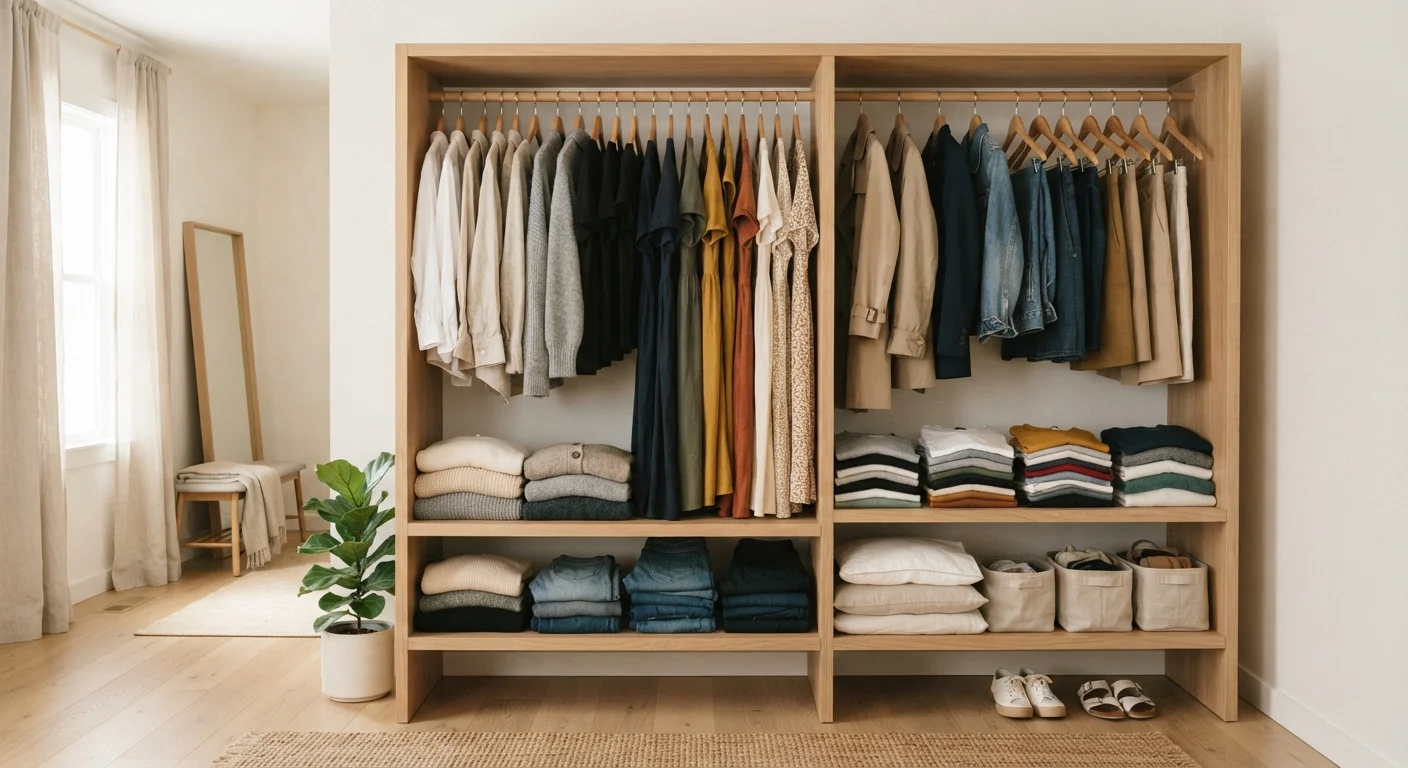
- Hanging rail: Best for dresses, blazers, blouses, and trousers. Use uniform slim hangers to reduce crowding and prevent shoulder distortion.
- Shelves: Ideal for folded knitwear, jeans, and t-shirts. Stacking folded items vertically (file-folding) lets you see every piece without disturbing the pile.
- Drawers: Suit underwear, socks, and lightweight layering pieces. Dividers inside drawers prevent items from mixing and becoming invisible.
- Shelf bins or baskets: Useful for accessories, belts, and seasonal items in secondary storage areas.
The same organizational logic applies beyond the bedroom — if you are tackling other high-traffic spaces, garage storage principles offer scalable zoning ideas that translate well to any room.
Match Storage to Your Actual Habits
The most beautifully styled wardrobe fails if it does not reflect how you actually behave. If you rarely fold items neatly, a folding-heavy system will collapse within weeks. Choose methods that require the least friction for your real daily routine, not an idealized one.
Arranging Your Wardrobe for Daily Use
Placement within your wardrobe should reflect frequency of use. Items worn most often belong at eye level and within easy reach. Less-used pieces — formalwear, specialty occasion items — can live higher up or further back.
Group outfits mentally as you arrange: if you wear certain combinations regularly, place those pieces near each other. This small step reduces morning decision time noticeably. Understanding how colors work together can further streamline how you arrange and pair your clothing day to day.
If your wardrobe needs to serve multiple dress contexts — office, casual, and formal — consider dedicating a distinct zone to each. Mixing contexts across the same rail makes it harder to get dressed efficiently. A clear reference on dress codes can help you identify which items belong in each zone.
Turn all your hangers backward at the start of each season. After wearing an item, rehang it the correct way. After three months, anything still backward has not been worn and is a genuine candidate for removal.
This passive tracking method removes the guesswork from future audits and gives you objective wear data without any additional effort.
Store folded knitwear flat or on a shelf rather than hanging it. Hanging stretches the shoulder seams of heavier knits over time, distorting the shape in a way that is difficult to reverse.
Knitwear is particularly vulnerable to gravity-related distortion on hangers, and proper flat storage significantly extends garment life.
Building Habits That Keep It Organized
A well-arranged wardrobe only stays that way if everyday habits support it. Three practical routines make the biggest difference:
- Return items to their designated spot immediately after wearing or laundering. Piling on a chair is the most common way organization unravels.
- Do a brief weekly reset — five minutes to refold anything that has shifted, rehang items that landed on the wrong section, and clear any surface clutter.
- Apply a one-in-one-out rule when adding new clothing. When something new enters the wardrobe, something that no longer earns its place should leave. Intentional shopping habits make this discipline far easier to maintain over time.
Major life changes — a new job, a move, or a shift in daily routine — are natural moments to revisit your wardrobe structure entirely. Wardrobe transitions at new life stages are easier when the underlying system is already in place. If you are starting from a very sparse wardrobe after clearing out, building a wardrobe from scratch provides a grounded starting point.