

Key Takeaways
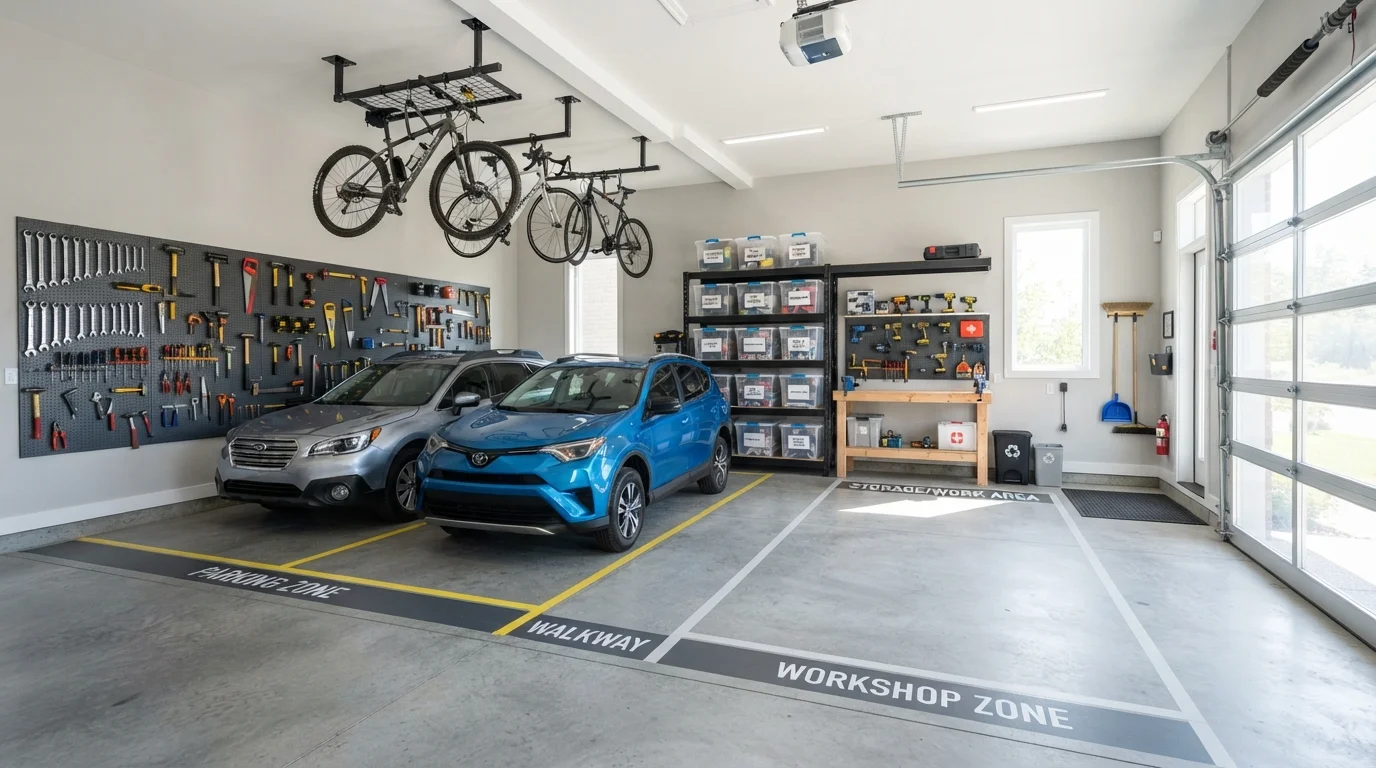
- Dividing your garage into functional zones is the single most effective organizational step you can take.
- Vertical wall space is underused in most garages and can dramatically expand storage capacity.
- Adding more storage containers without a system often makes disorganization worse, not better.
- Seasonal rotation and regular decluttering prevent the garage from becoming a permanent holding area.
- Matching storage type — open or closed — to what you're storing improves both access and appearance.
Why Garages Fall Apart (and How to Change That)
Garages attract clutter precisely because they sit at the edge of the home — out of sight, out of mind. Tools, sports gear, holiday décor, and half-finished projects accumulate without a system to push back. The result is a space that technically holds things but functionally works for no one.
The fix isn't more bins. It's a repeatable logic that governs what goes where and why. Once that logic is in place, maintaining the garage becomes far easier than the initial overhaul. Understanding basic organization terms like zoning and negative space helps make that logic concrete and easier to apply.
Divide the garage into distinct functional zones before buying any storage.
Without zones, items migrate freely and the garage becomes a catch-all. Zoning creates mental ownership over each area, making it obvious when something is out of place. It also prevents different categories — tools, recreation gear, garden supplies — from intermixing in ways that make retrieval inefficient.
Prioritize vertical wall space for the majority of your storage.
Floor space in a garage is a premium resource — once it's covered, the room becomes hard to navigate and difficult to clean. Walls, by contrast, are largely unused in most garages. Mounting shelving, pegboards, and track systems keeps the floor clear and puts tools within arm's reach. Our guide on vertical storage for small spaces covers the mechanics in detail.
Store items at a height that reflects how often you use them.
Frequency of access should directly determine placement. Daily-use items belong at eye level or within easy reach. Seasonal or rarely used items can go up high or in harder-to-reach spots. This reduces handling time and prevents frequently used items from getting buried.
Label every storage container, shelf, and zone clearly.
Unlabeled bins become mystery boxes within a few months. Clear labeling removes the cognitive effort of searching and makes it straightforward for every household member — including children — to return items to the correct location. Labels are also an early warning system: when the label no longer matches the contents, it signals drift.
Schedule a seasonal declutter pass, not a one-time overhaul.
Garages don't stay organized from a single effort. Gear accumulates seasonally, items break, and needs change year to year. A twice-yearly review — ideally in spring and fall — catches problems before they compound and keeps the system honest. This is more sustainable than a major purge every few years.
Core Principles for a Garage That Stays Organized
The following practices are drawn from the logic of how garages actually get used — not idealized versions of them. Apply these as a framework, not a checklist.
Storage Style Choices That Affect Long-Term Function
One of the most overlooked decisions in garage organization is choosing the right type of storage for each category. Open shelving gives fast visual access to frequently used items like hand tools or sporting gear, but it accumulates dust quickly and can look chaotic. Closed cabinets or bins work well for anything seasonal or messy — paint cans, automotive fluids, or fertilizers.
For a detailed comparison of when each approach makes sense, see our article on open versus closed shelving. The key is intentionality: matching the storage method to how often you access the item and how much visual tidiness matters in that zone.
Safety Considerations for Garage Chemical Storage
Chemicals such as pesticides, automotive fluids, and solvents require specific storage conditions — typically cool, dry, and locked away from children and pets. Check product labels for storage guidance and local disposal instructions for any chemicals you're discarding. Never store flammable materials near heat sources or electrical panels.
It's also worth recognizing when adding storage furniture creates more problems than it solves. Too much storage furniture can actually reduce usable floor space, make items harder to find, and signal that a declutter is overdue.