

Key Takeaways
- Effective wardrobes are built around your real life, not an idealised version of it.
- A small number of versatile, well-fitting pieces outperforms a crowded closet full of impulse buys.
- Colour cohesion and proper fit do more for your appearance than following trends.
- Intentional shopping — buying with a specific gap in mind — prevents clutter and wasted money.
- A wardrobe is never truly finished; it should evolve gradually as your life does.
Start here
Start With Your Actual Life, Not an Aesthetic
Next
The Core Pieces Every Wardrobe Needs
Build on it
Colour, Fit, and Why They Matter More Than Trends
Shop smarter
How to Shop With Intention
Maintain it
Keeping Your Wardrobe Working Over Time
Start With Your Actual Life, Not an Aesthetic
Before you buy a single thing, the most useful question you can ask yourself is: What does my average week actually look like? Not the life you aspire to, but the one you're living right now — the commute, the errands, the dinner plans you actually make, the weekends you spend.
A wardrobe built for your real life is one you'll reach into confidently every day. A wardrobe built for a fantasy version of your schedule will hang untouched and make getting dressed feel harder than it should.
Take a rough inventory of how you spend your time. If you work from home five days a week, the number of formal blazers you need is probably very small. If you spend weekends outdoors, you need gear that functions — not just looks the part. Use this honest self-audit as your planning base.
Capsule wardrobe
A small, curated collection of versatile garments that combine easily with each other, reducing decision fatigue and maximising outfit options from fewer pieces.
Colour palette
A limited set of colours you build your wardrobe around so that most items work together without clashing.
Fit
How well a garment sits on your specific body — including sleeve length, shoulder alignment, and overall silhouette. Good fit makes any piece look more polished.
Intentional shopping
Buying clothing with a specific purpose in mind — filling a known gap, matching existing pieces — rather than responding to impulse or sale pricing.
Wardrobe audit
A deliberate review of everything you own to identify what you wear, what you don't, and what gaps or duplicates exist.
Once you understand your contexts, think about what emotions you want clothes to support. Confidence, ease, creativity, professionalism — these aren't trivial. Clothes are a daily communication tool, both to others and to yourself. Getting clear on why you want a stronger wardrobe sharpens every decision that follows.
The Core Pieces Every Wardrobe Needs
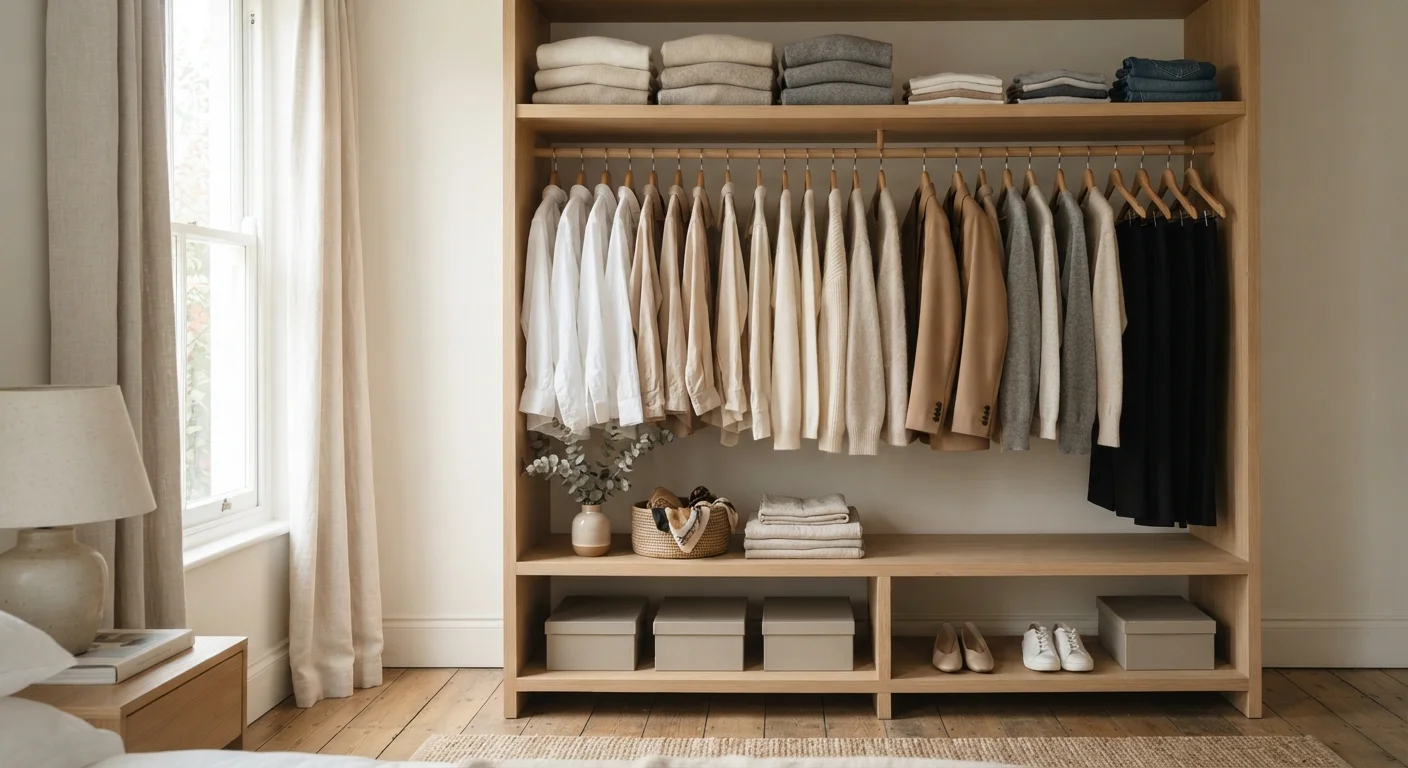
A functional wardrobe rests on a small number of versatile pieces — often called a capsule — that work across multiple contexts and combine easily with one another. The exact list varies by lifestyle, climate, and body, but the underlying logic is consistent: fewer, more flexible items create more daily outfit options than a crowded rail of singles that don't connect.
Useful starting categories include:
- Bottoms: One or two pairs of well-fitting trousers or jeans in neutral tones form the base of many outfits.
- Tops: Plain, well-constructed T-shirts, shirts, or blouses in colours you can layer and mix.
- Layering pieces: A jacket, cardigan, or structured overshirt bridges casual and smart contexts.
- Footwear: A pair of clean, neutral everyday shoes and one smarter option covers most situations.
- A versatile dress or suit component depending on your lifestyle demands.
This isn't a rigid checklist — it's a framework. The goal is a set of pieces where almost any combination produces a coherent, appropriate outfit. When you're ready to move beyond the basics, practical guidance on wardrobe transitions can help you evolve your style as your life changes.
Colour, Fit, and Why They Matter More Than Trends
Two factors consistently do more for how clothes look on a person than price, brand, or trendiness: colour harmony and fit.
Colour: Building around a cohesive palette — typically two or three neutrals and one or two accent tones — means almost everything you own works together. Neutrals like navy, white, grey, camel, and black are reliable anchors. Your accent colours can reflect personal preference and still stay mix-and-match friendly. Limiting the palette isn't about being boring; it's about maximising the outfits you can create from what you own.
Fit: Even an inexpensive garment looks polished when it fits well. Even a costly one looks sloppy when it doesn't. Fit refers to how a garment sits on your body — sleeves at the right length, shoulders aligned, fabric not pulling or bunching. Because bodies vary widely, tailoring a few key pieces (trousers and blazers especially) is often worth the modest cost.
Try the 'three outfits' rule before buying
Before committing to any new piece, mentally style it into at least three distinct outfits using items you already own. If you struggle to get to three, the piece probably won't earn regular wear. This single habit eliminates a significant proportion of purchases that would otherwise sit unused.
Trends are a fine source of inspiration, but they cycle quickly and can lead to purchasing decisions that feel dated within a year. Think of trends as accents — small additions to a stable foundation — rather than the foundation itself.
How to Shop With Intention
Intentional shopping starts before you enter a store or open an app. It means knowing specifically what you're looking for, why you need it, and how it fits with what you already own. Compare that to impulse shopping, which starts with a feeling and produces a purchase that may never be worn. Understanding the difference between intentional and impulsive buying can reshape how your wardrobe develops over time.
A practical before-you-buy checklist:
- Does this fill a specific gap I've identified?
- Does it work with at least three items I already own?
- Does it suit the life I actually live?
- Am I buying it because I love it, or because it's reduced in price?
Secondhand and resale channels are also worth considering — not just for budget reasons, but because they expand your options beyond what's currently in retail. Shopping secondhand with a clear strategy can help you build something distinctive without accumulating clutter.
Keeping Your Wardrobe Working Over Time
A wardrobe is a living system, not a finished project. As your life evolves — new job, new climate, new priorities — your clothing needs shift too. Building in a light seasonal review habit helps you stay on top of what's working, what needs replacing, and what's just taking up space.
Practical maintenance habits include:
- Rotating out items that haven't been worn in six to twelve months.
- Noting recurring gaps — if you're always searching for the right layer or shoe, that's a signal.
- Caring for garments properly so they last — following care labels, storing knits folded rather than hung, and addressing minor repairs promptly.
For a more structured approach to editing and organising what you own, a complete wardrobe organisation guide covers everything from initial audit to long-term storage habits.
The goal is a wardrobe that gets easier over time — where getting dressed is simple because every item earns its place.
Wardrobe Audit Worksheet
A structured self-audit template that helps you categorise what you own, identify gaps, and plan purchases with purpose rather than impulse.
Colour Palette Builder
An online tool that helps you visualise complementary colour groupings so you can plan a cohesive wardrobe palette before buying.
Budgeting Basics
Practical strategies for managing everyday spending — useful for setting a realistic wardrobe budget without derailing other financial priorities.