

Key Takeaways
- A capsule wardrobe prioritizes versatility and quality over volume and trend.
- The concept originated in the 1970s as a practical approach to dressing well with fewer pieces.
- There is no universal number — capsule wardrobes are sized to fit individual lifestyles.
- The approach can reduce spending waste by directing attention to cost-per-wear value.
- Capsule dressing works best when built around your actual daily life, not an idealized one.
Capsule Wardrobe
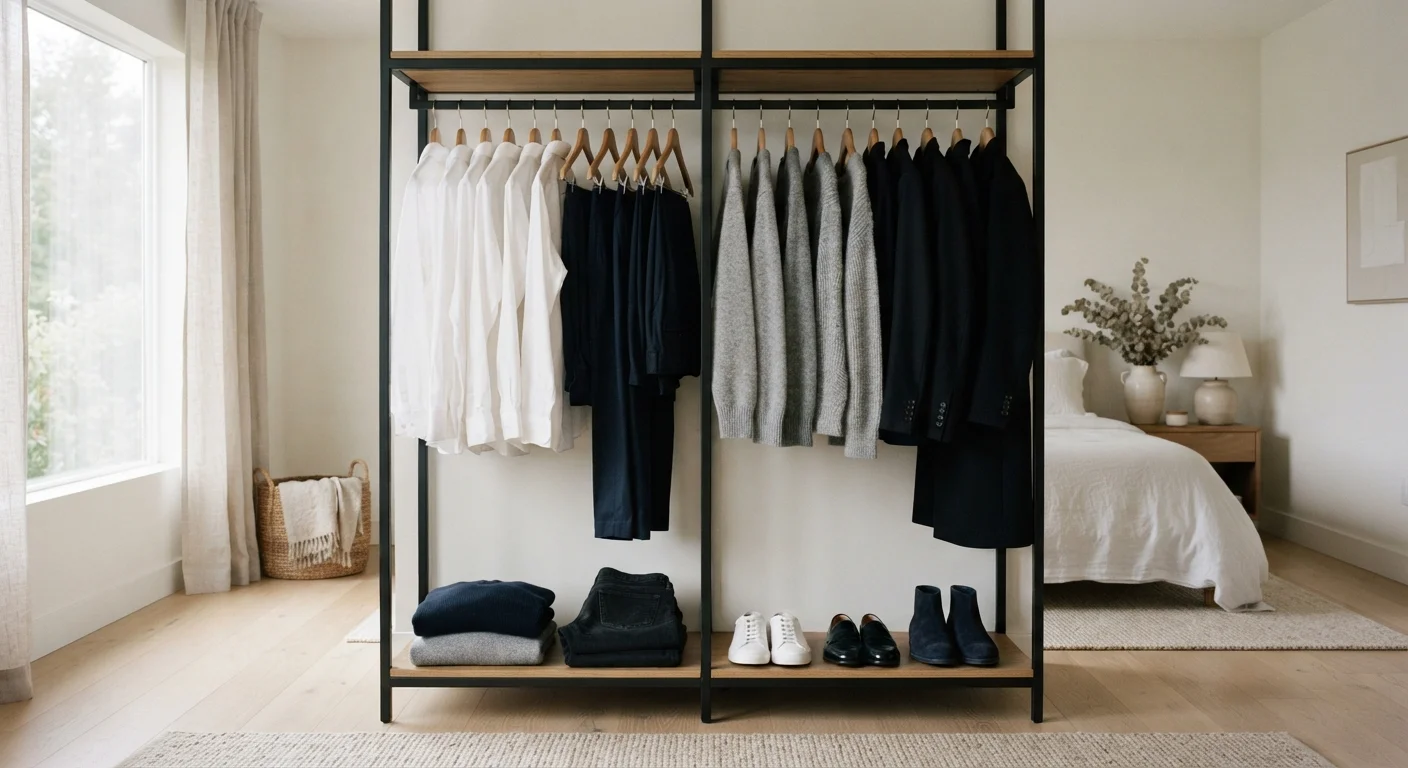
A capsule wardrobe is a small, intentionally curated collection of clothing where every piece is versatile, fits well, and works with the others. The goal is a closet with less overall volume but more usable combinations — reducing decision fatigue while maintaining a consistent, put-together appearance. Items are chosen for longevity and adaptability rather than trend-driven appeal.
The term was coined by London boutique owner Susie Faux in the 1970s and later popularized by designer Donna Karan's "Seven Easy Pieces" collection in 1985, which demonstrated how a handful of core garments could build a complete wardrobe.
Where the Idea Came From
The capsule wardrobe concept has a concrete origin. London boutique owner Susie Faux introduced the term in the 1970s to describe a compact collection of high-quality essentials that would never go out of fashion. The idea was practical: anchor your wardrobe in timeless pieces, then refresh around the edges each season with a few additions.
Designer Donna Karan brought the concept to mainstream attention in 1985 with her "Seven Easy Pieces" collection — a set of interchangeable work and evening garments that demonstrated how a small number of well-chosen items could serve a full life. The idea resonated because it solved a real problem: most people own more clothing than they use, yet still feel they have nothing to wear.
The approach has gained renewed interest alongside broader conversations about sustainability and intentional consumption, but its core logic has always been about function — dressing well without unnecessary complexity.
How a Capsule Wardrobe Actually Functions
The mechanics are straightforward: every item in the collection is chosen because it fits you well, suits your actual lifestyle, and pairs with multiple other pieces already in the wardrobe. The result is high combinatorial value — a small number of garments generates a large number of usable outfits.
80%
Of clothing worn only 20% of the time
The 80/20 principle, commonly observed in wardrobe behavior studies, suggests most people regularly wear only a small fraction of what they own.
~33
Average capsule wardrobe item count
Project 333, a minimalist fashion challenge founded by Courtney Carver, popularized the idea of dressing with 33 items or fewer for a three-month period.
This matters practically. When everything in your closet works together, getting dressed becomes faster and less stressful. There are fewer poor decisions to make, fewer impulse purchases to justify, and less guilt about items sitting unworn. The wardrobe earns its cost-per-wear value over time rather than depreciating unused on a hanger.
Fit and fabric quality become especially important in this model. Because each piece is relied upon more heavily, durability and comfort are not optional considerations — they are central to whether the system actually works. For a deeper look at how clothing cost relates to long-term value, see The Real Cost of a Wardrobe.
Start With What You Already Own
You don't need to buy anything to begin a capsule wardrobe. Pull out everything you own, set aside what you haven't worn in over a year, and see what remains. That core — the pieces you actually reach for — is usually the foundation of your natural capsule. Build deliberately from there, filling only genuine gaps.
Building One Around Your Actual Life
The most common mistake is building a capsule wardrobe around an aspirational life rather than a real one. If you work from home three days a week and attend formal events rarely, a wardrobe weighted toward tailoring and eveningwear will fail regardless of how curated it looks.
A useful starting point is auditing what you currently wear most frequently — not what you paid the most for or what you intend to wear eventually. That honest assessment forms the foundation. From there, gaps become visible: items that are missing, roles that are being played by pieces that don't quite fit, or categories that are redundant. A structured wardrobe audit is a practical way to make that process methodical.
For those starting with very little or rebuilding after a major life change, building a wardrobe from scratch using capsule principles can prevent the accumulation of mismatched pieces that don't serve a coherent purpose. Life transitions — a new role, a new city, a new decade — are also natural moments to reconsider the whole system. See Dressing for a New Life Stage for a structured approach to those moments.
Is It Right for Everyone?
A capsule wardrobe is a tool, not a mandate. It suits people who value simplicity in decision-making, want to reduce spending on clothing that goes unused, or prefer a consistent personal aesthetic. It works less naturally for people whose daily contexts vary dramatically — someone who needs professional, athletic, and formal attire in the same week faces genuine wardrobe complexity that a single tight collection may not solve cleanly.
The concept also requires honest self-knowledge. It demands that you know what you actually need, what you genuinely enjoy wearing, and what you're willing to maintain. Once that clarity exists, the physical side — storage, organization, and upkeep — becomes far more manageable. A comprehensive wardrobe organization guide can help translate the capsule philosophy into a functioning physical system.
“Style is knowing who you are, what you want to say, and not giving a damn. A capsule wardrobe is simply that principle made practical.”
— Susie Faux, London boutique owner and originator of the capsule wardrobe concept
Ultimately, the capsule wardrobe works not because of any specific number of items, but because every item in it was chosen with purpose. That intentionality — applied consistently — is what makes a closet feel both sufficient and coherent.