

Key Takeaways
- Raised beds offer better drainage, warmer soil, and greater control over soil quality from the start.
- In-ground gardens cost less to establish and can support a wider variety of deep-rooted crops and trees.
- Raised beds reduce back strain and can deter some soil-borne pests, making them accessible for many gardeners.
- In-ground soil typically retains moisture longer, which can reduce watering frequency in warm climates.
- Your native soil quality, budget, and physical needs should drive the decision between the two methods.
Option A
Raised Bed Gardening
The structured, controlled growing environment.
Best for: Gardeners dealing with poor native soil, limited mobility, or small defined spaces who want fast results and tidy aesthetics.
Option B
In-Ground Growing
The traditional, expansive approach to cultivating plants.
Best for: Gardeners with good native soil and larger planting areas who want a low-cost setup and room to scale over time.
If your native soil is compacted, rocky, or heavily clay-based
Raised Bed Gardening
Raised beds let you bypass poor native soil entirely by filling with a custom, well-draining growing mix suited to your crops.
If you're starting a large vegetable garden on a tight budget
In-Ground Growing
In-ground plots require no lumber or purchased fill soil, making the initial setup far less expensive for gardeners with adequate native soil.
If you have mobility limitations or back and knee pain
Raised Bed Gardening
An elevated bed (12–18 inches tall) significantly reduces bending and kneeling, making gardening more comfortable and sustainable long-term.
If you want to grow fruit trees, large squash, or deeply rooted crops
In-Ground Growing
Unrestricted root depth and the natural soil ecosystem support larger, deeply rooted plants far better than a bounded raised bed.
If you're a first-time gardener who wants reliable early success
Raised Bed Gardening
Controlled soil conditions, improved drainage, and earlier spring warming give beginners a more forgiving growing environment to learn in.
How Each Method Works
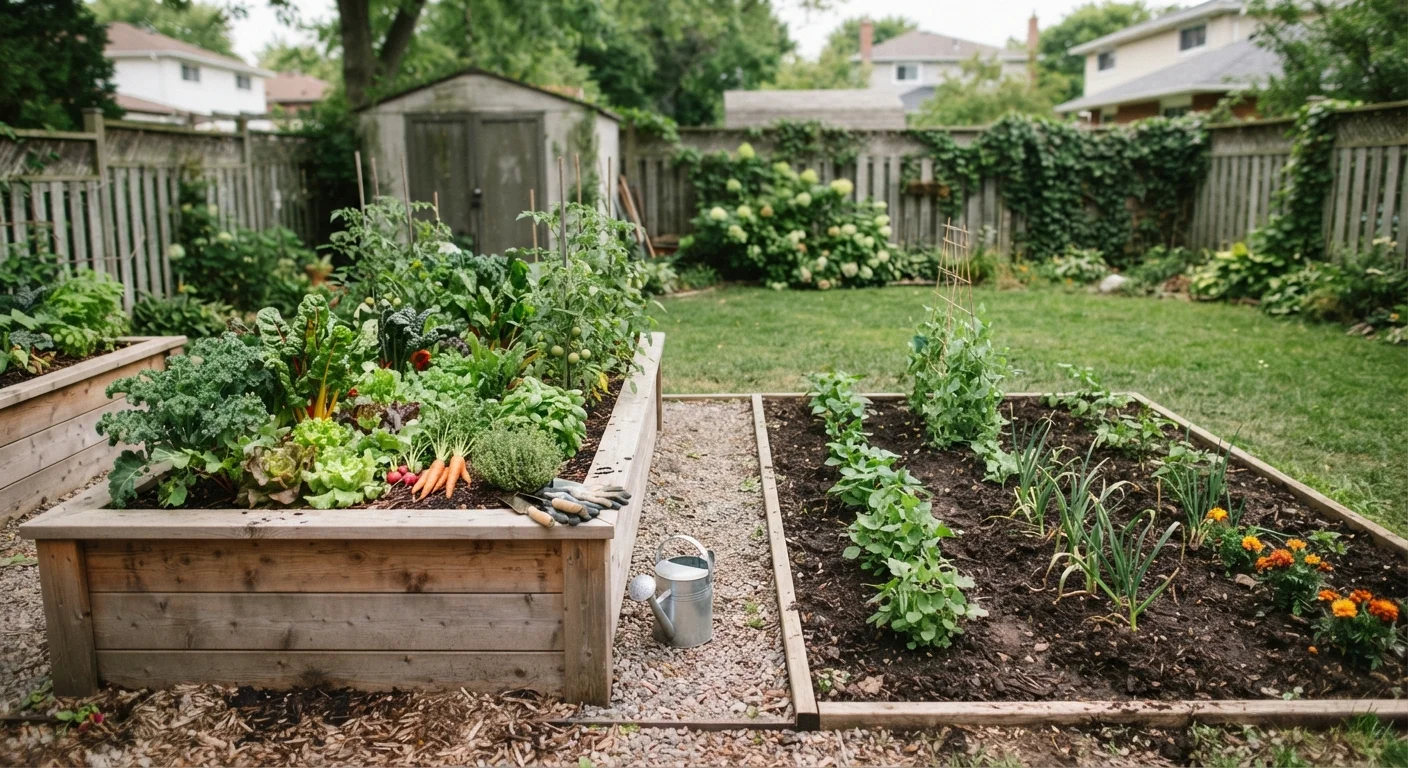
Raised bed gardening involves building a frame — commonly from untreated wood, galvanized metal, or composite materials — set directly on the ground or a hard surface, then filled with a custom soil mix. Plants grow entirely within this contained environment, separate from whatever exists below.
In-ground growing, by contrast, means planting directly into your yard's native soil, amended as needed with compost or other organic matter. There are no physical boundaries; roots can travel as deep and wide as the soil allows. For a comprehensive beginner's walkthrough of both soil prep and planting basics, see our ground-up vegetable garden guide.
| Criterion | Raised Beds | In-Ground Growing |
|---|---|---|
| Upfront cost | Moderate to high (materials + fill soil) | Low (tools and amendments only) |
| Soil control | Full — you choose the mix | Dependent on native soil quality |
| Drainage | Excellent; may dry out faster | Varies; risk of waterlogging in clay |
| Root depth | Limited by bed depth (12–18 in. typical) | Unrestricted |
| Accessibility | High; reduces bending and kneeling | Lower; requires ground-level work |
| Scalability | Requires additional beds and materials | Easy to expand with minimal cost |
| Soil ecosystem | Isolated; slower to develop | Rich; earthworms and microbes present |
| Weed pressure | Lower, especially with landscape fabric base | Higher; ongoing weed management needed |
Soil, Drainage, and Root Health
One of the clearest practical advantages of raised beds is immediate soil control. You choose your growing medium from the start — typically a blend of topsoil, compost, and a perlite or coarse material for drainage. This matters enormously if your yard has compacted clay, sandy soil with no nutrient retention, or rocky ground that resists digging.
In-ground gardens depend on what's already there. Improving native soil takes time — adding compost each season gradually builds organic matter and microbial activity — but that living soil ecosystem, once established, is genuinely valuable. Earthworms and beneficial microbes colonize in-ground beds naturally in ways that are harder to replicate in an isolated raised bed. Whichever method you choose, understanding fertilizer options is essential: see our guide to organic vs. synthetic fertilizers for practical soil nutrition guidance.
6–8 weeks
Earlier soil warming in raised beds vs. ground
University cooperative extension programs consistently note that raised beds can warm up several weeks earlier in spring, extending the growing season in colder US regions.
~35%
Reduction in water use with in-ground native soil
Well-amended in-ground clay-loam soils retain significantly more moisture than fast-draining raised bed mixes, which can reduce irrigation needs in moderate climates.
4×8 ft
Most common raised bed dimension for home gardens
This size allows a gardener to reach the center from either side without stepping in, a widely recommended ergonomic and soil-compaction guideline from extension educators.
Drainage is another point of contrast. Raised beds drain freely, which is a major advantage in wetter climates or during heavy rain. In low-lying in-ground gardens, waterlogging can suffocate roots. However, that fast drainage can also mean raised beds dry out quicker in summer heat, requiring more frequent watering.
Cost, Effort, and Long-Term Maintenance
Setup costs differ significantly. A standard 4×8-foot raised bed requires lumber or alternative framing materials plus enough quality soil to fill it — typically several cubic feet. For a single bed, that's manageable; scaling to six or eight beds across a growing season adds up quickly.
In-ground plots require little upfront material investment beyond basic tools, seeds, and any soil amendments like compost. The labor investment, however, can be higher initially — especially if you need to break compacted ground, remove sod, or excavate rocks.
Materials Matter for Raised Bed Safety
If you're building wooden raised beds, choose rot-resistant untreated wood such as cedar or black locust, or materials specifically labeled safe for food gardening. Avoid repurposed lumber treated with older preservatives, as some contain compounds that can leach into soil. Galvanized metal beds are generally considered safe for vegetable growing, but always verify the source and coating type before use.
Maintenance patterns also diverge over time. Raised beds may need their soil refreshed with compost annually, since the enclosed volume loses organic matter faster than open ground. In-ground gardens benefit from crop rotation and cover cropping to maintain fertility across seasons. Both approaches pair well with companion planting strategies that improve yields and reduce pest pressure organically.
Plant Selection and Growing Variety
Raised beds shine for vegetables, herbs, salad greens, and flowers that thrive in 10–18 inches of soil depth. Compact crops like lettuce, radishes, carrots, bush beans, and most culinary herbs are excellent candidates. The contained environment also makes it easier to manage intensive planting strategies. For guidance on choosing plants that return year after year versus those you replant each season, understanding annuals vs. perennials is a useful starting point.
In-ground growing handles a broader range of plant types. Deep-rooted crops like parsnips, large tomato varieties, winter squash, asparagus, rhubarb, and fruit-bearing shrubs or trees all benefit from unrestricted root depth and access to the wider soil ecosystem. If space is a constraint and neither option feels practical, container gardening offers a third path worth exploring.