
Container Gardening: Balconies, Patios, and Small Spaces That Can Still Grow Food

Key Takeaways
- Container gardening lets renters and apartment dwellers grow food without owning land.
- Containers dry out faster than ground soil, so consistent watering is essential.
- Choosing the right container size for each crop is one of the most important decisions.
- Most vegetables and herbs thrive in containers if given adequate sunlight and nutrients.
- Weight limits and drainage management require planning before setting up a balcony garden.
No land ownership required
Renters and condo residents can grow food without modifying the property or accessing shared green space.
Portable containers follow the sun
Pots can be moved to maximize light exposure or relocated indoors ahead of frost, extending the growing season.
Easier pest and disease control
An affected container can be isolated or removed immediately, limiting the spread that commonly occurs in open beds.
Better drainage control
Gardeners can select potting mixes tailored to each crop, reducing root rot and waterlogging that often affect heavy native soils.
Accessible at a comfortable height
Raised containers reduce bending and kneeling, making gardening more comfortable for those with mobility limitations.
Dries out quickly, demands frequent watering
Container soil can dry out within a day or two in hot weather, requiring attentive daily watering that ground gardens typically do not demand.
Limited root volume restricts large crops
Deep-rooted vegetables like corn, full-size pumpkins, and asparagus are impractical in containers and rarely produce well.
Nutrients deplete faster than in ground soil
The finite soil volume in containers means regular fertilizing is essential throughout the growing season, adding ongoing cost and effort.
Balcony weight limits require planning
Multiple large, wet containers can collectively weigh several hundred pounds; exceeding structural load limits is a real safety concern.
Total yield is lower than a ground garden
Container gardens supplement rather than replace a grocery supply; expectations should be calibrated to enjoy the harvest rather than depend on it.
Our Verdict
Container gardening is a genuinely productive way to grow food in small spaces, and it removes many of the barriers that come with traditional in-ground gardening. The trade-offs — frequent watering, limited yield volume, and ongoing fertilizing — are manageable with good habits. It works best when gardeners match their plant choices to the space available and commit to regular maintenance.
Ideal for renters, apartment dwellers, and anyone with a patio, balcony, or small outdoor area who wants to grow fresh herbs, greens, and vegetables without a traditional garden plot.
What Container Gardening Actually Involves
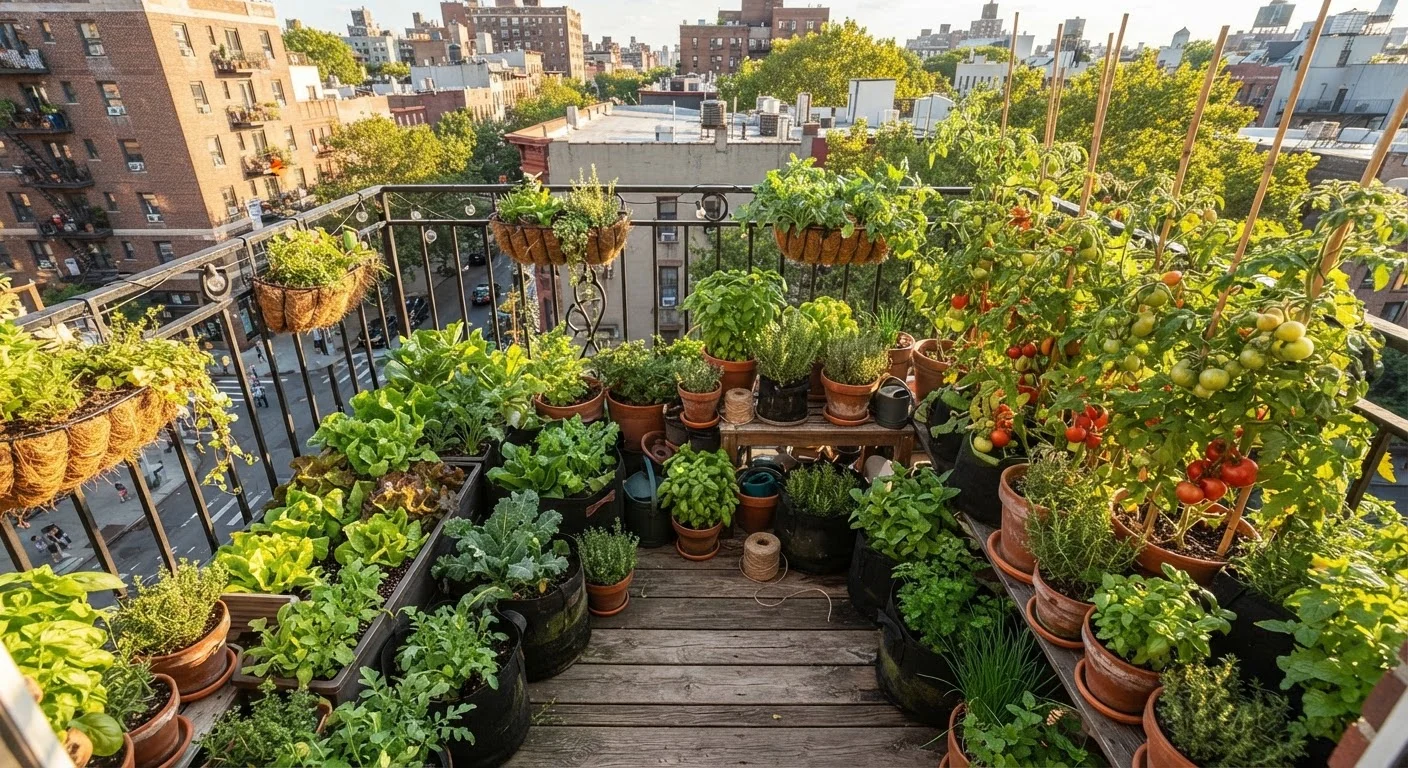
Container gardening means growing plants in portable vessels — pots, fabric grow bags, window boxes, half-barrels, or repurposed buckets — rather than in the ground. The approach suits a wide range of outdoor spaces: apartment balconies, paved patios, rooftop terraces, front stoops, and narrow side yards.
The fundamentals differ meaningfully from in-ground growing. Containers isolate roots from the broader soil ecosystem, so the gardener becomes directly responsible for fertility, drainage, and moisture. That's both a strength and a limitation. For a deeper comparison of growing methods, see raised beds vs. in-ground growing to weigh the full range of options.
The most productive container gardens share a few common traits: they use high-quality potting mix (not garden soil, which compacts in containers), they prioritize sun exposure, and they match container volume to crop needs. A cherry tomato plant needs at least a five-gallon container; lettuce can thrive in just a few inches of depth.
Potting Mix vs. Garden Soil
Always use a quality bagged potting mix in containers, not soil dug from the yard or garden. Garden soil compacts in pots, restricts root growth, and drains poorly. Potting mixes are formulated to stay loose and drain well in the confined space of a container. Look for mixes that include perlite or vermiculite for improved aeration.
The Real Advantages of Growing in Containers
Container gardening offers genuine, practical benefits that go beyond simple convenience.
No land ownership required
Renters and condo residents can grow food without modifying the property or accessing shared green space.
Portable containers follow the sun
Pots can be moved to maximize light exposure or relocated indoors ahead of frost, extending the growing season.
Easier pest and disease control
An affected container can be isolated or removed immediately, limiting the spread that commonly occurs in open beds.
Better drainage control
Gardeners can select potting mixes tailored to each crop, reducing root rot and waterlogging that often affect heavy native soils.
Accessible at a comfortable height
Raised containers reduce bending and kneeling, making gardening more comfortable for those with mobility limitations.
Mobility is one of the most underappreciated advantages. Containers can follow the sun across a patio throughout the season, or be brought indoors when frost threatens — extending the growing window without a greenhouse. Pest and disease management is also simpler: an infected container can be isolated immediately, preventing spread to other plants.
For renters especially, containers represent a form of food growing that requires no permanent modification to the property. That flexibility opens gardening to a much larger share of the population.
The Limitations You Should Know Before You Start
Understanding the real constraints of container growing helps gardeners plan realistically rather than being caught off guard mid-season.
Dries out quickly, demands frequent watering
Container soil can dry out within a day or two in hot weather, requiring attentive daily watering that ground gardens typically do not demand.
Limited root volume restricts large crops
Deep-rooted vegetables like corn, full-size pumpkins, and asparagus are impractical in containers and rarely produce well.
Nutrients deplete faster than in ground soil
The finite soil volume in containers means regular fertilizing is essential throughout the growing season, adding ongoing cost and effort.
Balcony weight limits require planning
Multiple large, wet containers can collectively weigh several hundred pounds; exceeding structural load limits is a real safety concern.
Total yield is lower than a ground garden
Container gardens supplement rather than replace a grocery supply; expectations should be calibrated to enjoy the harvest rather than depend on it.
Water management is the challenge most container gardeners underestimate. Containers — especially terracotta and fabric bags — lose moisture rapidly in warm weather, sometimes requiring daily watering. Pairing water-efficient practices with your containers can help; drought-tolerant gardening strategies offer useful techniques for reducing water demand.
Structural load is another concern specific to balconies. Wet soil is heavy — a single large container can weigh 50 to 80 pounds or more. Before setting up multiple large pots, check with your building manager or a structural professional about your balcony's rated load capacity.
5 gal
Minimum container size for tomatoes
Most cooperative extension programs in the US recommend a minimum five-gallon container for cherry tomatoes and ten gallons for full-size varieties.
6 hrs
Daily direct sun needed for fruiting crops
Fruiting vegetables like tomatoes and peppers generally require at least six hours of direct sunlight per day for productive harvests.
Choosing What to Grow and How to Feed It
Not all food crops are equally well suited to containers. The highest-performing choices for small-space gardeners include:
- Herbs: Basil, parsley, chives, mint (keep mint in its own pot to prevent spreading), and thyme all thrive in containers and yield harvests quickly.
- Leafy greens: Lettuce, spinach, arugula, and kale grow well in shallow containers and tolerate partial shade better than fruiting crops.
- Compact fruiting vegetables: Cherry tomatoes, peppers, and dwarf varieties of cucumbers and squash perform well in five-gallon or larger containers with adequate sun.
- Radishes and green onions: Fast-growing and space-efficient, ideal for filling gaps in a container lineup.
Because containers hold a finite volume of growing medium, nutrients deplete faster than in ground soil. A slow-release granular fertilizer mixed into the potting medium at planting, supplemented with a diluted liquid feed every two to three weeks during peak growth, typically supports strong production. Adding worm castings or finished compost — which you can make yourself using kitchen scraps, as outlined in composting from kitchen scraps — improves both nutrition and moisture retention.
For those new to food growing entirely, the foundational principles of spacing, sunlight, and variety selection covered in a beginner's vegetable garden guide apply directly to container growing and are worth reviewing before your first season.