

Key Takeaways
- Companion planting combines plants to create mutually beneficial growing conditions.
- Some pairings have strong scientific support; others are based primarily on gardening tradition.
- The Three Sisters combination of corn, beans, and squash is one of the most studied examples.
- Pest deterrence through companion planting is real but not guaranteed — it works best as part of a broader strategy.
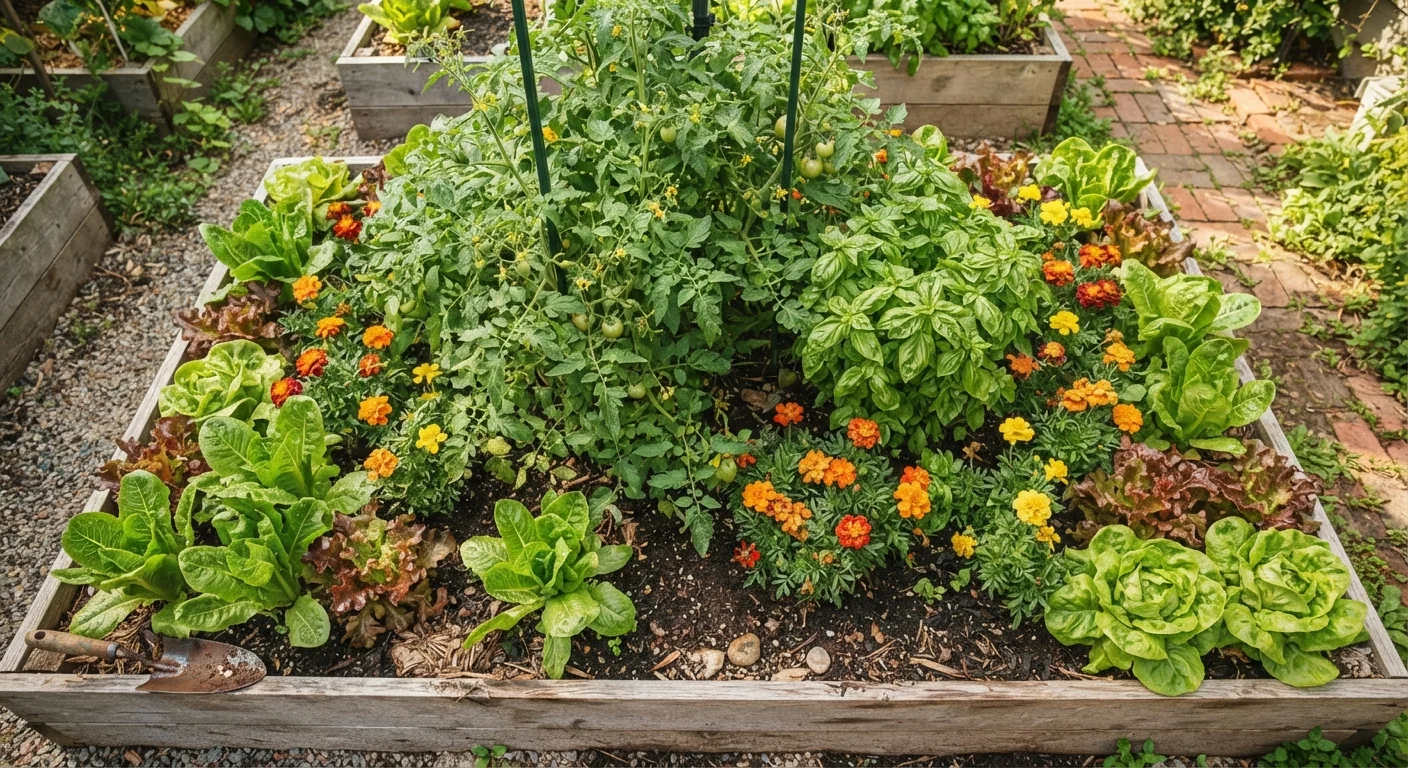
- Container and raised-bed gardeners can apply companion planting principles in smaller spaces.
Companion Planting
Companion planting is the practice of growing different plant species in close proximity so they can benefit one another. These benefits can include deterring pests, attracting pollinators, improving soil fertility, or making more efficient use of garden space. The approach draws on both traditional agricultural knowledge and ongoing ecological research.
Some companion planting effects are well-documented in peer-reviewed studies (e.g., nitrogen fixation by legumes), while others remain largely anecdotal and vary significantly by soil type, climate, and local pest pressure.
What Companion Planting Actually Does
Plants growing side by side don't simply coexist — they interact through root systems, volatile chemical compounds, and by altering the physical environment around them. Companion planting harnesses these interactions deliberately.
The main documented mechanisms include:
- Nitrogen fixation: Legumes like beans and peas host soil bacteria that convert atmospheric nitrogen into a plant-available form, enriching the surrounding soil for neighboring plants.
- Pest disruption: Strong-scented plants can mask the chemical signals that attract insects to target crops, or physically obstruct pest movement.
- Pollinator attraction: Flowering companions draw bees and other pollinators to the garden, improving fruit set on vegetables and fruits nearby.
- Physical support and shade: Taller plants can shelter lower-growing neighbors from intense afternoon sun or wind.
Not every claimed benefit has equal research support. Before planning your garden around a particular pairing, it helps to distinguish between well-studied effects and those that are passed down through gardening tradition.
Tradition vs. Evidence in Companion Planting
Much companion planting advice has circulated for generations before being studied scientifically. Where research exists, results are often context-dependent — what works in one climate or soil type may not replicate elsewhere. Approach new pairings as informed experiments and update your practice based on what you actually observe in your garden.
Pairings With Strong Support
A handful of companion planting combinations stand out for having consistent, research-backed results.
The Three Sisters
Corn, beans, and squash — a combination long cultivated by Indigenous peoples of North America — is perhaps the most well-documented example. Corn provides a vertical structure for beans to climb. Beans fix atmospheric nitrogen, feeding the corn and squash. Squash spreads wide, shading the soil to retain moisture and reduce weeds. Each plant contributes something the others benefit from.
Marigolds and Vegetable Crops
French marigolds (Tagetes patula) have been shown in multiple studies to suppress root-knot nematodes — microscopic soil organisms that damage root systems — when grown densely alongside or before susceptible crops. Their pest-deterring reputation extends to repelling whiteflies, though results vary by garden context.
Legumes as Soil Builders
Intercropping legumes with heavy feeders like brassicas or corn is well-supported by agricultural science. The nitrogen benefit is real, though the timing matters: it becomes most available to neighbors after legume roots decompose, making rotation as important as proximity.
For a broader understanding of how soil health supports plant relationships, see our guide on soil pH and nutrient availability.
30–40%
Potential nematode reduction with marigold intercropping
Research published in agricultural journals has shown French marigolds can significantly reduce root-knot nematode populations when grown densely for a full season before or alongside susceptible crops.
3-in-1
Functions delivered by the Three Sisters combination
Corn, beans, and squash each serve a distinct role — structural support, nitrogen fixation, and ground cover — making the Three Sisters one of the most efficient multi-crop systems documented in agroecological research.
Traditional Pairings Worth Testing — With Realistic Expectations
Many popular companion planting recommendations stem from decades or centuries of gardening observation rather than controlled experiments. That doesn't make them wrong — but it does mean results can vary.
- Basil and tomatoes: Frequently cited as mutually beneficial. Some studies show modest aphid reduction; anecdotal reports of flavor improvement lack scientific confirmation.
- Nasturtiums as trap crops: Nasturtiums are said to attract aphids away from vegetables. This can work, but requires monitoring — a nasturtium smothered in aphids near your lettuce is only helpful if you remove or manage the infested plant.
- Dill and brassicas: Dill attracts parasitic wasps that prey on caterpillars — a plausible mechanism — though effectiveness depends on local wasp populations.
Treat these pairings as worthwhile experiments rather than guarantees. Track what works in your specific garden over seasons. Companion planting pairs well with the natural pest control approaches described in our related guide.
Keep a Simple Garden Journal
Because companion planting results depend heavily on local soil, climate, and pest populations, a season-by-season record of what you planted together and what you observed is invaluable. Note pest levels, plant vigor, and yield. Over two or three seasons, patterns specific to your garden will emerge — far more useful than generic pairing charts.
Putting Companion Planting Into Practice
Translating companion planting principles into a real garden layout doesn't require a complete redesign. Start with a few targeted decisions:
- Identify your main crops first. Plan around the vegetables or fruits you most want to protect or boost, then choose companions that address a specific goal — nitrogen, pest pressure, or pollination.
- Mind spacing. Companions placed too close can compete for water and light rather than cooperate. Research each plant's mature spread before positioning.
- Rotate annually. Many of the soil benefits from companions — especially nitrogen fixation — build over time with thoughtful rotation. Use your seasonal garden planning checklist to map this out before planting.
- Include flowering plants. Even if pest deterrence results are mixed, flowers consistently attract beneficial insects. Incorporate them throughout the garden rather than in a separate border.
Container gardeners can apply these principles at smaller scale — see container gardening for small spaces for practical guidance. Pairing good companions with well-prepared soil — including homemade compost (see composting from kitchen scraps) — gives every planting combination the best possible foundation.