

Key Takeaways
- Annuals complete their full lifecycle in one growing season; perennials return year after year from the same root system.
- Annuals typically cost less upfront but require repurchasing each season; perennials carry a higher initial cost that pays off over time.
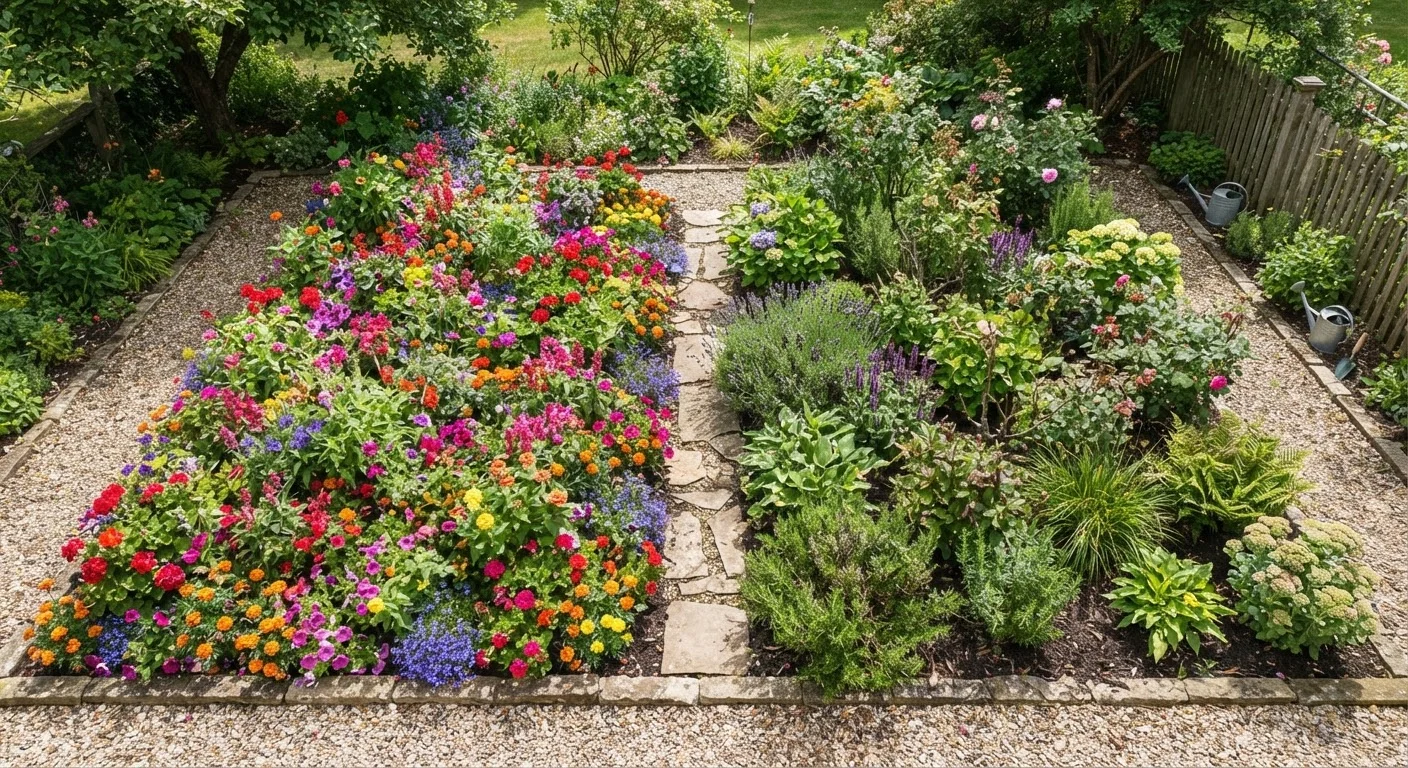
- Most thriving gardens combine both types — annuals for seasonal color, perennials for structure and continuity.
- Perennials generally demand less seasonal labor once established; annuals need replanting but reward you with non-stop blooms.
- Climate and USDA hardiness zone directly influence which perennials survive winter in your specific location.
Option A
Annual Plants
The flexible, high-impact seasonal performer.
Best for: Gardeners who want season-long color, seasonal experimentation, or gap-filling in existing beds.
Option B
Perennial Plants
The long-term foundation of a low-maintenance landscape.
Best for: Gardeners building lasting structure, reducing replanting costs, and supporting local ecosystems year after year.
If you want maximum color and flexibility each season
Annual Plants
Annuals bloom continuously from planting until frost, making them ideal for pots, window boxes, and any spot where you want bold, changeable color without long-term commitment.
If you want to reduce yearly replanting effort and cost
Perennial Plants
Once established, perennials regrow each spring without repurchasing, making them the more economical and labor-efficient choice over a three-to-five year horizon.
If you are designing a new garden from scratch
Perennial Plants
Perennials provide the structural backbone and seasonal rhythm that a new garden needs, with annuals added later to fill gaps and boost visual impact.
If you rent your home or garden in containers
Annual Plants
Annuals thrive in containers and require no long-term soil investment, making them practical for gardeners without permanent outdoor space.
If you want to support pollinators and local wildlife consistently
Perennial Plants
Native perennials establish deep root systems and reliable seasonal bloom cycles that pollinators, birds, and beneficial insects come to depend on each year.
Lifecycle: The Core Difference
The distinction between annuals and perennials is rooted in biology. An annual plant germinates, flowers, sets seed, and dies within a single growing season. It channels all its energy into prolific blooming and seed production — which is why annuals like marigolds, zinnias, and petunias deliver such relentless color from spring through fall. Once the first hard frost arrives, the plant's lifecycle is complete.
A perennial plant, by contrast, survives for three or more years. Above-ground growth dies back in winter in most climates, but the root system remains dormant and sends up new growth each spring. Plants like coneflowers, hostas, and black-eyed Susans follow this pattern reliably, expanding their clumps and deepening their root systems with each passing year.
There is a third category worth knowing: biennials, which complete their lifecycle over two years, blooming in year two before dying. Foxglove and hollyhock are common examples. They are less frequently discussed but can behave like short-lived perennials when they self-seed freely.
Before you choose which plants to buy, a seasonal planning checklist can help you assess your space, soil, and timing so each plant gets the right start.
Cost, Maintenance, and Long-Term Value
| Criterion | Annual Plants | Perennial Plants |
|---|---|---|
| Lifecycle | One growing season | Three or more years |
| Upfront cost | Lower per plant | Higher per plant |
| Long-term cost | Recurring each year | Reduces over time |
| Bloom duration | Continuous until frost | Defined seasonal window |
| Replanting required | Every season | Rarely, if ever |
| Winter hardiness | Not applicable | Zone-dependent |
| Best use in design | Color, flexibility, containers | Structure, continuity, borders |
Annuals tend to be inexpensive at point of sale — a six-pack of transplants or a seed packet costs relatively little. However, that cost recurs every single season. Over five years, a bed replanted annually with purchased transplants can represent a significant cumulative expense.
Perennials carry a higher upfront price per plant, but once established they return without repurchasing. Many perennials can also be divided every three to four years, multiplying your stock for free and filling new areas of the garden. This makes them the more economical choice over the medium to long term.
On the maintenance side, annuals demand more seasonal labor — soil preparation and replanting every year. However, they rarely require the division, staking, or winter mulching that some perennials need. A well-chosen perennial suited to your hardiness zone generally asks for less intervention once it is settled in.
Soil health affects both plant types. Understanding fertilizer inputs — covered in detail in our guide to organic vs. synthetic fertilisers — will help you feed each type appropriately without overworking your beds.
Design Strategy: Using Both in the Same Garden
3–5 yrs
When perennials typically break even vs. annuals
General horticultural guidance suggests perennials offset their higher upfront cost within three to five seasons, depending on plant cost and division potential.
~70%
US gardeners who mix both plant types
The National Gardening Association has reported that the majority of home gardeners incorporate a combination of annuals and perennials in their landscapes.
2–4x
Root depth advantage of established perennials
Perennial root systems typically grow significantly deeper than annuals, improving drought tolerance and reducing the need for frequent watering once established.
Experienced gardeners rarely choose sides. A well-designed border typically uses perennials as its structural backbone — providing reliable foliage, defined bloom windows, and year-round presence — while annuals fill the gaps with sustained color during the weeks when perennials are not yet in bloom or have already finished.
A practical approach is to plant perennials first, note where bare soil appears between clumps, then fill those spaces with annuals. This prevents the "all or nothing" look that comes from relying entirely on one type. It also gives your perennials time to establish without visual gaps making the bed look unfinished.
Check Your USDA Hardiness Zone First
Whether a perennial truly returns each year depends heavily on your local climate. The USDA Plant Hardiness Zone Map divides the US into zones based on average minimum winter temperatures. A perennial rated to Zone 6 may not survive a Zone 5 winter without extra protection. Always confirm zone compatibility on plant tags or reputable nursery resources before purchasing, and verify your zone at the USDA website.
When integrating both types, consider bloom timing carefully. Early-season bulbs and spring perennials can be paired with summer annuals that take over as perennial foliage fades. This succession planting keeps the garden interesting from late winter through the first frost.
Mixing plant types also opens the door to companion planting — a practice explored in depth in our companion planting guide — where strategic plant combinations support pest management, soil health, and pollination naturally.