

Key Takeaways
- Most vegetables need at least 6–8 hours of direct sunlight daily to produce well.
- Improving your soil with compost is the single most effective thing a beginner can do.
- Starting with easy crops like lettuce, radishes, and zucchini builds confidence quickly.
- Consistent, deep watering is better for plants than frequent shallow watering.
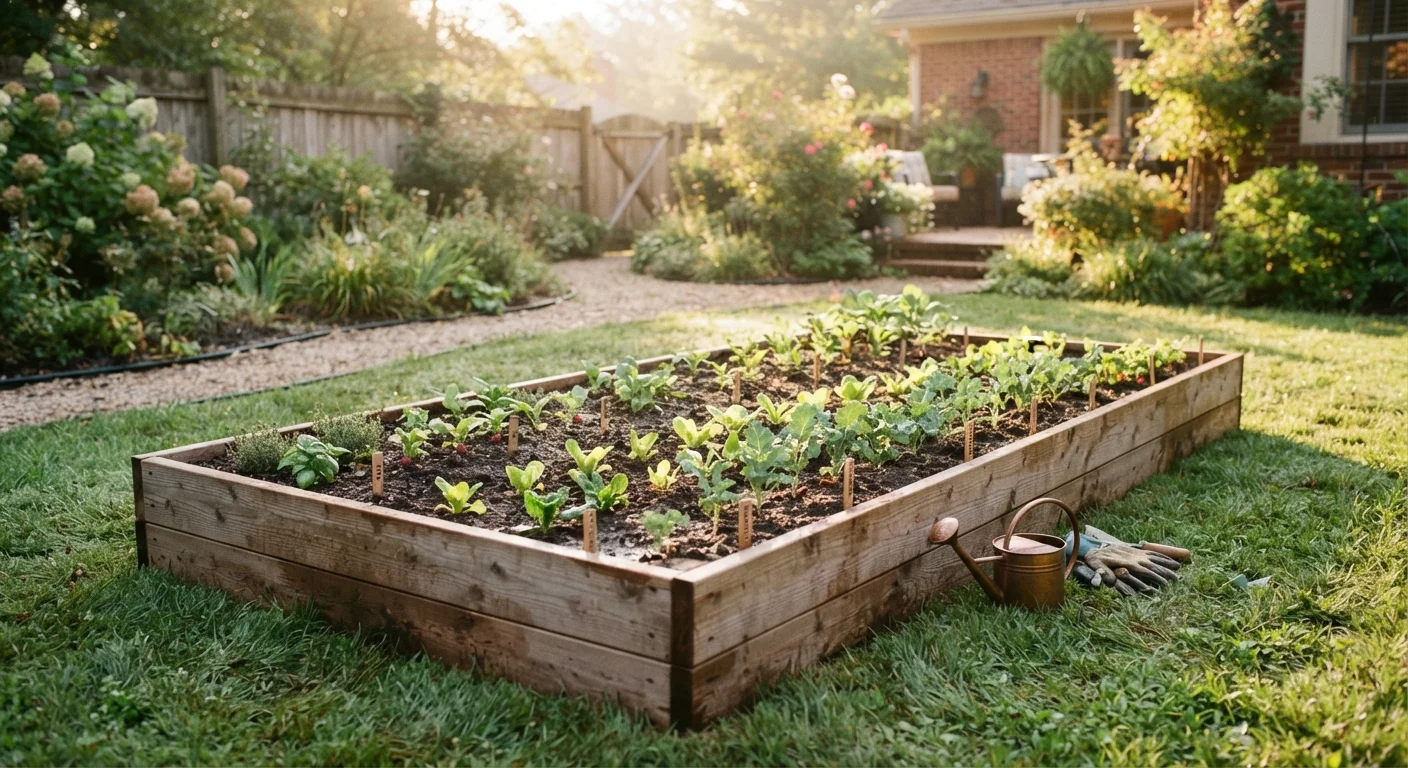
- A small, well-tended 4×8-foot bed will outperform a large, neglected plot every time.
Start here
Choosing the Right Spot
Next
Understanding and Preparing Your Soil
Then
The Easiest Vegetables to Start With
When you're ready
Spacing, Watering, and Basic Care
Final step
Planning Your Season and Next Steps
Choosing the Right Spot
Before you buy a single seed, walk your yard at different times of day and observe where sunlight falls. Most food-producing vegetables require a minimum of 6 to 8 hours of direct sun daily — this is non-negotiable for crops like tomatoes, peppers, and beans. Leafy greens and herbs can tolerate as few as 4 to 6 hours, making them better candidates for partially shaded areas.
Proximity to water is your second consideration. You will be watering frequently, especially during dry spells, so a spot within easy reach of a hose or spigot makes the job far less burdensome. Avoid low-lying areas where water pools after rain — prolonged waterlogging suffocates roots and promotes disease.
Observe Before You Plan
Spend at least a full day tracking how sunlight and shade move across your intended garden area before you commit to a location. Patterns can shift dramatically from morning to afternoon, and what looks sunny at 9 a.m. may be fully shaded by 2 p.m. This 30-minute investment prevents costly placement mistakes.
If your only available outdoor space is a balcony, patio, or rooftop, a traditional in-ground or raised bed may not be an option. See our guide to container gardening in small spaces for an approach suited to confined areas.
Understanding and Preparing Your Soil
Soil is the foundation of every productive vegetable garden. Good garden soil is loose, drains well, contains plenty of organic matter, and supports the microbial life that feeds your plants. Before planting, dig a small hole about 12 inches deep. Clay-heavy soil will feel sticky and dense; sandy soil will crumble apart with almost no cohesion. Both can be improved significantly with compost.
Compost
Decomposed organic matter — such as kitchen scraps and yard waste — that enriches soil with nutrients and improves its structure.
Direct-sow
Planting seeds directly into garden soil outdoors, rather than starting them indoors first and transplanting later.
Soil pH
A measure of how acidic or alkaline your soil is, on a scale from 0 to 14. A pH of 7.0 is neutral; most vegetables grow best between 6.0 and 7.0.
Frost date
The average date of the last spring freeze or first fall freeze in your area, used to time when it is safe to plant cold-sensitive crops.
Mulch
A layer of material — straw, wood chips, or shredded leaves — spread over soil to retain moisture, moderate soil temperature, and reduce weeds.
Organic matter
Any material derived from living things — leaves, compost, manure — that, when added to soil, improves its fertility and texture.
Work 2 to 4 inches of finished compost into the top 8 to 10 inches of soil before planting. This single step improves drainage in clay soils, boosts water retention in sandy soils, and adds the nutrients vegetables need. A soil pH between 6.0 and 7.0 suits most common vegetables — inexpensive test kits from garden centers or your local cooperative extension office can confirm where yours falls.
If your native soil is very poor or compacted, consider building a simple raised bed and filling it with a quality growing mix rather than struggling to amend problem ground.
The Easiest Vegetables to Start With
Choosing forgiving crops in your first season helps you learn without discouragement. The following vegetables are widely recommended for beginners across most US growing regions:
- Lettuce and salad greens: Fast-growing, harvestable within 30–45 days, and tolerant of partial shade. Direct-sow seeds in rows and thin as they grow.
- Radishes: Among the quickest crops available, often ready in 3–4 weeks. An excellent gap-filler between slower plants.
- Bush beans: Direct-sow after your last frost date. They grow vigorously with minimal fuss and produce heavy yields on compact plants.
- Zucchini and summer squash: Notoriously productive — a single plant can supply a household. They grow large, so allow adequate space.
- Cherry tomatoes: More forgiving than large slicing varieties and faster to fruit. Provide a stake or cage for support.
Start small — a selection of three or four crops is easier to manage than a large mixed planting in your first season.
USDA Plant Hardiness Zone Map
The official US reference for identifying your growing zone based on your ZIP code. Essential for timing planting dates and selecting appropriate crops.
Cooperative Extension Service (Land-Grant Universities)
Each US state's cooperative extension program publishes free, regionally accurate planting calendars and soil guides. Search for your state's extension service for locally tailored advice.
Seasonal Garden Planning Checklist
A structured checklist to help you assess your space, amend soil, and schedule crops before each growing season — ideal once you've completed this beginner's guide.
Spacing, Watering, and Basic Care
Crowding is one of the most common beginner mistakes. Plants placed too closely compete for light, water, and nutrients, and restricted airflow encourages fungal disease. Always follow the spacing recommendations on seed packets or transplant tags — they exist for good reason.
Water deeply rather than frequently. Aim for about 1 inch per week, delivered in two or three sessions rather than a daily sprinkle. Deep watering encourages roots to grow downward, making plants more resilient during dry periods. Laying 2 to 3 inches of organic mulch — such as straw or wood chips — around your plants slows moisture evaporation and suppresses weeds at the same time.
Don't Skip Regular Garden Checks
Neglecting a vegetable garden for more than a few days during peak growing season can allow small pest populations to multiply rapidly or allow plants to bolt, dry out, or develop disease. Build a short walk-through into your daily routine. Early intervention is almost always easier and more effective than managing a serious problem after the fact.
Check your plants at least every two to three days during the growing season. Catching pest damage, wilting, or disease signs early is far more effective than trying to reverse significant problems later. Remove damaged or diseased leaves promptly to prevent spread.
Planning Your Season and Next Steps
A productive vegetable garden requires some advance planning. Mapping out what you want to grow, when to plant it, and how much space each crop needs before the season begins pays dividends in productivity and reduced stress. Our seasonal garden planning checklist walks through this process step by step, from assessing your space in late winter to scheduling successive plantings through the growing season.
Keep a simple garden journal — even just a notebook with planting dates, what worked, and what didn't. This record becomes surprisingly valuable by your second season. Growing your own food is a skill that compounds over time: each season you learn your local climate better, understand your soil more deeply, and refine your plant selections. Begin with a manageable plot, tend it consistently, and the results will build your confidence to expand.