

Key Takeaways
- Soil pH controls which nutrients plants can absorb, not just whether nutrients are present.
- Most vegetables and ornamentals prefer a pH between 6.0 and 7.0.
- A simple home test kit or lab soil test can reveal your current pH level.
- Lime raises pH; sulfur lowers it — changes take weeks or months to fully register.
- Different plants genuinely thrive at different pH levels, so matching soil to plant matters.
Soil pH
Soil pH is a measure of how acidic or alkaline your soil is, expressed on a scale from 0 to 14. A pH of 7.0 is neutral; anything below 7 is acidic, and anything above 7 is alkaline (also called basic). Most garden plants grow best in slightly acidic to neutral soil, roughly between 6.0 and 7.0.
pH stands for 'potential of hydrogen' and reflects the concentration of hydrogen ions in the soil solution. This chemical balance directly controls how readily mineral nutrients dissolve and become available to plant roots.
Why pH Is the Master Lever of Soil Fertility
You can add compost, fertilizer, and water in perfect measure, yet your plants may still struggle — and the culprit is often pH. Soil pH determines whether nutrients that are physically present in the soil are actually available to plant roots. Nutrients like iron, manganese, and phosphorus become chemically locked in forms plants cannot absorb when pH strays too far in either direction.
Think of it as a gate. Nitrogen, phosphorus, potassium, and a dozen micronutrients are waiting in the soil, but pH controls whether that gate is open or closed. In highly acidic soils (below 5.5), phosphorus binds tightly to iron and aluminum and becomes largely inaccessible. In alkaline soils (above 7.5), iron and manganese deficiencies frequently appear even when the minerals are present. Understanding pH helps explain why a struggling plant may not need more fertilizer — it needs the right conditions to use what's already there. See our guide to organic vs. synthetic fertilisers for more on how fertilizer type interacts with soil chemistry.
6.0–7.0
Optimal pH range for most vegetables
University extension services across the US consistently cite this range as the target for productive vegetable gardens.
4.5–5.5
Preferred pH range for blueberries
Blueberries are among the most pH-sensitive common garden crops, requiring strongly acidic soil for healthy fruit production.
13
Essential nutrients affected by pH
Of the 17 essential plant nutrients, the availability of at least 13 is directly influenced by soil pH, according to soil science literature.
What Different pH Levels Mean in Practice
The 0–14 pH scale may look abstract, but the practical range for most gardens is narrow: roughly 5.5 to 7.5. Here's how common points on that range translate to real gardening conditions:
- Below 5.5 (strongly acidic): Common under conifers or in areas with high rainfall. Blueberries and azaleas thrive here, but most vegetables and lawn grasses struggle. Toxic aluminum and manganese levels are a risk.
- 6.0–6.5 (mildly acidic): The sweet spot for the widest range of vegetables, fruits, and ornamentals. Nutrient availability is broad, and beneficial soil microbial activity is high.
- 6.5–7.0 (near neutral): Excellent for most crops. Slightly above this, brassicas like cabbage and broccoli often do well.
- Above 7.5 (alkaline): Common in arid western US regions and areas with limestone-heavy soils. Lavender and many Mediterranean herbs tolerate this range, but most fruiting vegetables show yellowing (chlorosis) from iron deficiency.
Knowing where your soil falls helps you select plants suited to existing conditions — or make targeted amendments. This pairs directly with understanding your plant hardiness zone, another foundational piece of garden planning.
Test Before You Amend
Never apply lime or sulfur based on guesswork. Soil pH can vary significantly even within the same garden bed, and over-amending is common. A baseline test costs very little and tells you exactly how much — if anything — to add. Retest every two to three years or after major soil additions.
How to Test and Adjust Your Soil pH
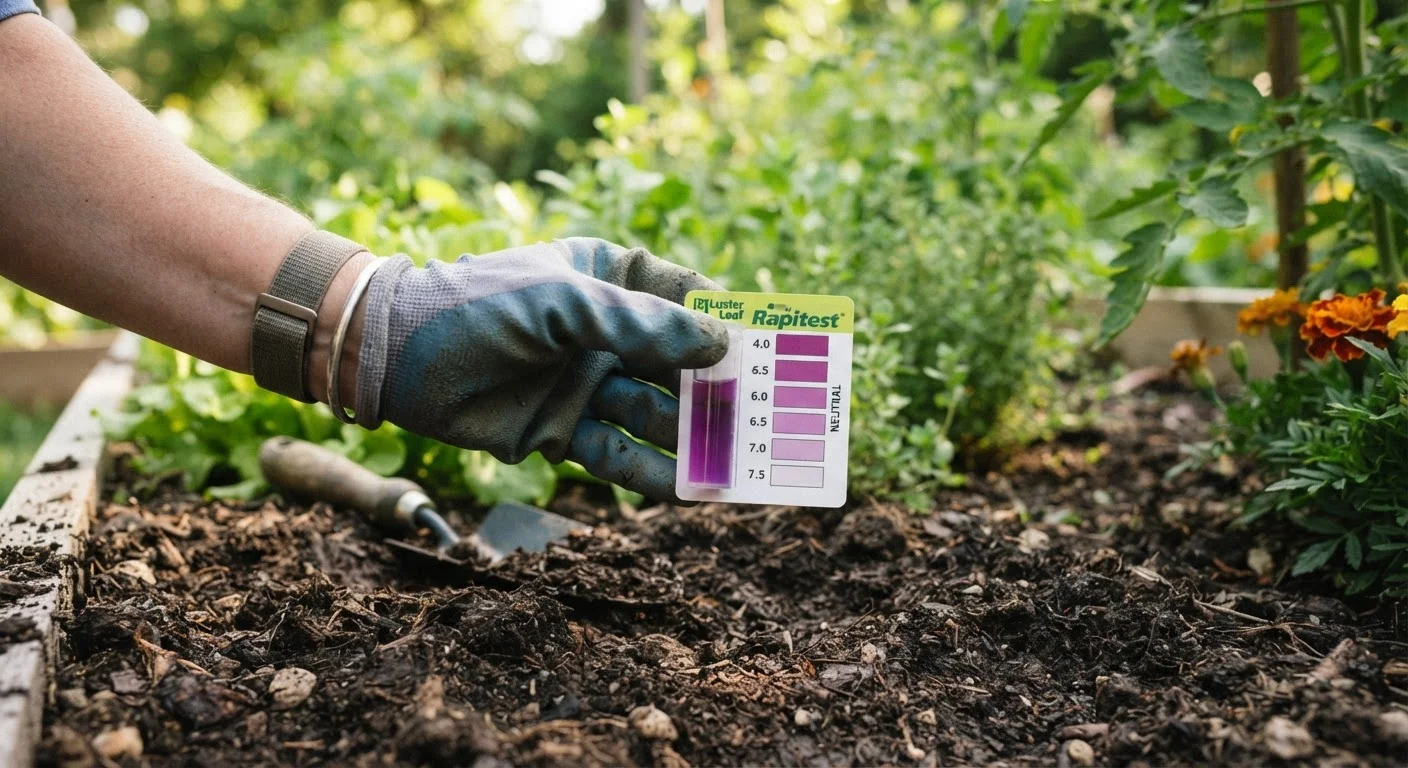
Testing is straightforward. Home test kits (strips or liquid) give a usable estimate within one to two pH units. For a more reliable reading — and a full nutrient profile — submit a sample to your state's cooperative extension service or a certified soil lab. Collect small amounts of soil from several spots in your garden, mix them together, and test from that combined sample.
Raising pH (making soil less acidic): Ground agricultural limestone (calcitic or dolomitic) is the standard choice. The amount needed depends on current pH, target pH, and soil texture — clay soils require more amendment than sandy ones. Work lime into the top several inches of soil and retest after a few months.
Lowering pH (making soil more acidic): Elemental sulfur is the most common approach. Soil bacteria convert it to sulfuric acid over time, gradually dropping pH. Acidifying fertilizers and incorporating organic matter like peat or composted pine bark also nudge pH downward over time.
Whichever direction you're adjusting, move in small increments and retest. Overcorrecting is common and creates new problems. If you're working in raised beds, pH is easier to manage from the start by selecting a purpose-mixed growing medium — a key advantage covered in our article on raised beds vs. in-ground growing.
pH Changes Take Time
Soil pH does not shift overnight. Even after correct application of lime or sulfur, it typically takes several weeks to several months for the full effect to appear in a soil test. Plan amendments ahead of planting season — ideally in the fall before a spring garden — rather than trying to correct pH once plants are already in the ground.