

Key Takeaways
- Assess your site's sun, drainage, and soil before committing to any planting plan.
- Soil preparation done weeks ahead of planting leads to stronger root development.
- Matching plants to your USDA hardiness zone reduces losses from late frosts or heat stress.
- A simple written planting schedule prevents gaps and overcrowding across the season.
- Checking and cleaning tools before the season starts saves time once planting is underway.
Summary
22 items · 45–90 minutes
Why Pre-Season Planning Pays Off
Most gardening problems — patchy germination, crowded beds, pest outbreaks, waterlogged roots — trace back to decisions made before a single seed was sown. A structured pre-season checklist replaces guesswork with a replicable process you can revisit every year.
This checklist is designed for home gardeners working with any combination of in-ground beds, raised beds, or container setups. Work through it at least two to four weeks before your target planting window. If you also manage a lawn, the year-round lawn care reference pairs well with this checklist for a complete outdoor seasonal plan.
Site Assessment
Soil Preparation
Variety Selection and Timing
Planting Schedule
Tools and Infrastructure
Tools and Resources You'll Need
Having the right materials on hand before you start speeds up each step considerably. Run through this list before your first planning session.
Soil Test Kit
Measures pH, nitrogen, phosphorus, and potassium levels so you can amend accurately before planting.
Garden Notebook or Planning App
Records your site map, planting calendar, and amendment log in one place for easy year-over-year comparison.
Measuring Tape
Confirms bed dimensions so you can calculate planting density and spacing accurately on paper before digging.
Compost or Aged Organic Matter
Improves soil structure, drainage, and nutrient availability when incorporated ahead of planting.
Hand Pruners and Sharpening Stone
Clean, sharp pruners reduce tissue damage and limit the spread of soilborne disease between cuts.
Frost Date Reference (USDA or Local Extension)
Provides the average last spring and first fall frost dates needed to anchor your planting calendar.
Seed-Starting Trays and Sterile Growing Medium
Supports healthy germination of crops that need a head start indoors before outdoor conditions are safe.
Row Cover or Frost Cloth
Protects frost-sensitive transplants from unexpected late cold snaps after they've been moved outdoors.
For guidance on managing what you find during your site assessment — particularly unwanted insects and competing wildlife — see our article on ecology-based pest control for approaches that work with your garden's biology rather than against it.
Don't Skip the Soil Test
Amending soil without knowing your baseline pH or nutrient levels can create imbalances rather than fix them. For example, adding lime to already alkaline soil can lock out iron and manganese, causing yellowing even in well-fertilized beds. A basic soil test — available through most cooperative extension offices at low or no cost — takes the guesswork out of amendment decisions and is worth doing every two to three years at minimum.
Putting the Plan Into Practice
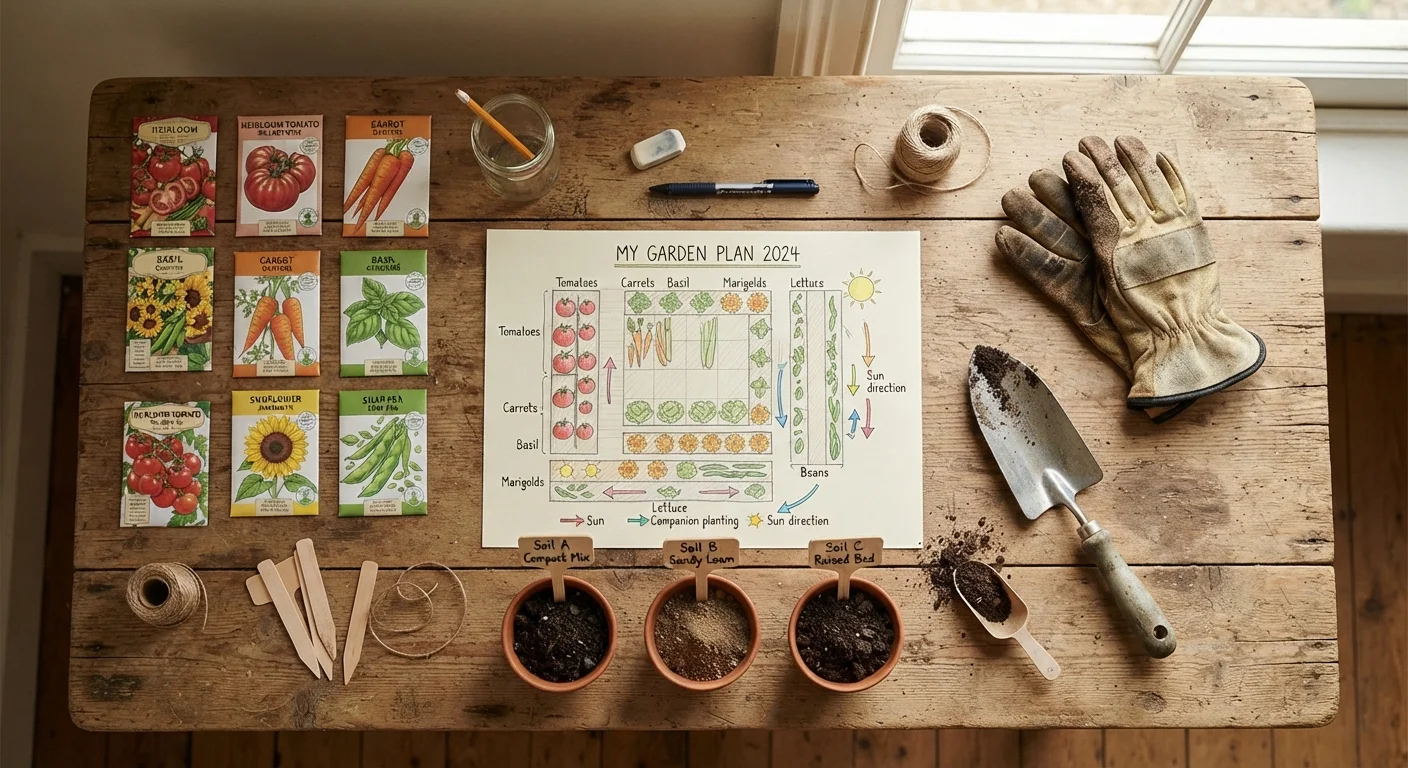
A completed checklist is only useful if it translates into a written plan you'll actually follow. After working through the items above, consolidate your notes into three documents: a site map showing bed locations and sun exposure, a planting calendar with variety names and target dates, and a soil amendment log noting what was added and when.
Store these together — digitally or in a dedicated garden notebook — so you can compare results year over year. Gardeners who track what worked in previous seasons consistently make better variety selections and timing decisions going forward.
Written Plans Outperform Memory Every Time
Even experienced gardeners find that relying on memory leads to replanting the same problem variety, forgetting rotation schedules, or missing narrow transplant windows. A written record — even a simple notebook page — consistently produces better outcomes across seasons. Treat documentation as a core step, not an optional extra.
If your planning process also involves rotating stored gear, tools, or seasonal supplies in and out of your garage or shed, the seasonal rotation system offers a practical organizational method that works alongside garden prep. For water-conscious gardeners in drier regions, drought-tolerant garden design can inform how you lay out beds and choose varieties from the very first planning stage.