

Key Takeaways
- Healthy soil and well-chosen plants are the first line of defense against garden pests.
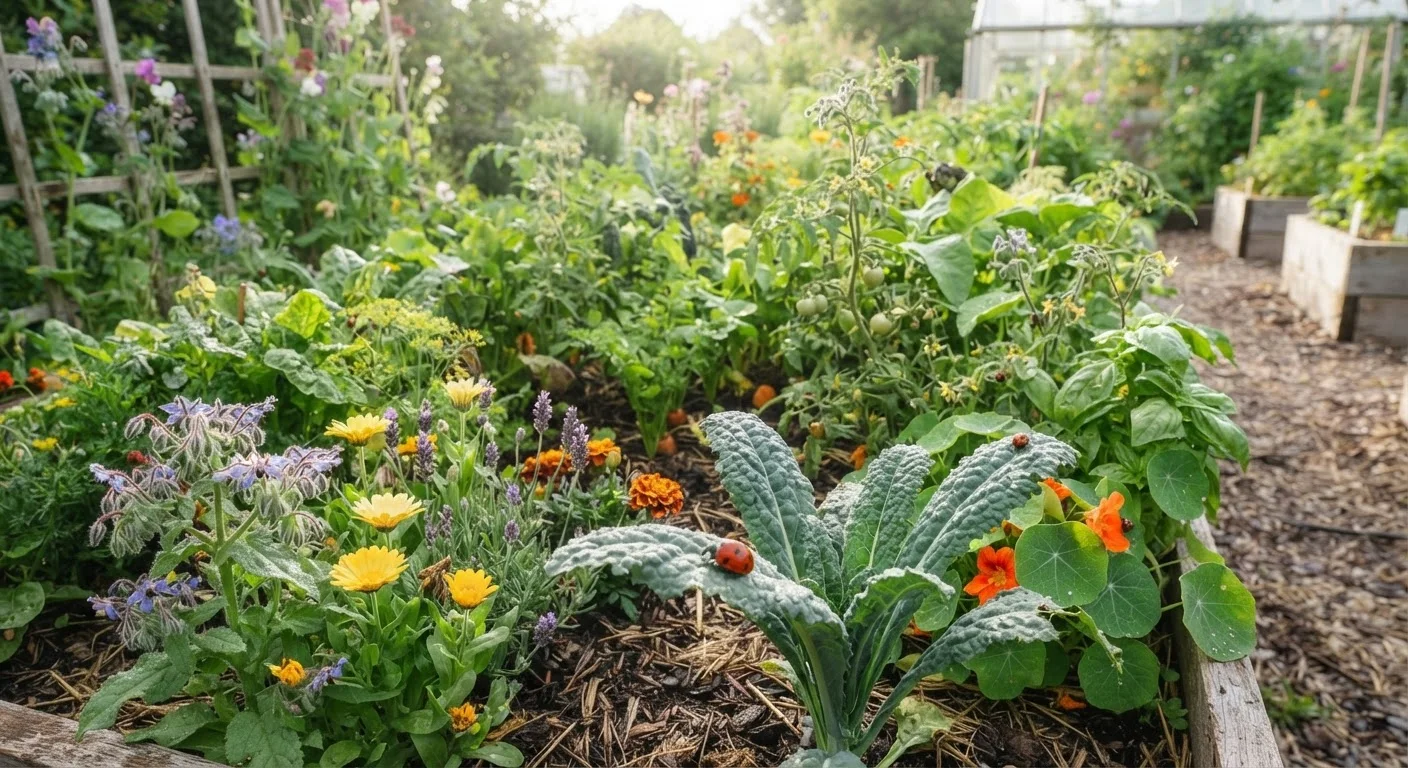
- Attracting beneficial insects like ladybugs and lacewings can reduce pest populations naturally.
- Physical barriers, crop rotation, and companion planting all reduce pest pressure without chemicals.
- Observation and early intervention prevent minor pest issues from becoming serious infestations.
- Ecological pest management builds long-term garden resilience rather than just addressing symptoms.
Why Ecology-Based Pest Control Works
Most garden pest problems don't emerge in a vacuum. They're often a signal — of stressed plants, depleted soil, or a food web out of balance. When chemical treatments are applied repeatedly, they can disrupt the very predators and soil organisms that would otherwise keep pest populations in check, creating a cycle that demands more intervention over time.
Ecology-based approaches work differently. Instead of targeting individual pest species after damage has already occurred, they address the conditions that allow pests to thrive in the first place. The result is a garden that becomes progressively more self-regulating — and far less dependent on external inputs.
Starting with good planning is essential. A seasonal garden checklist helps you assess your space and identify vulnerabilities before planting begins. Below are seven practical strategies drawn from ecological principles that home gardeners can apply in any growing season.
Build Healthy Soil First
Plants grown in biologically active, nutrient-balanced soil are better equipped to withstand pest pressure. Stressed or nutrient-deficient plants emit chemical signals that many insects use to locate weak hosts. Improving soil health — through compost, reduced compaction, and minimizing bare soil — makes your plants less attractive targets from the outset.
Organic matter feeds the microbial communities that regulate nutrient availability, which in turn supports stronger cell walls and more robust immune responses in plants. A home composting system is one of the most practical ways to steadily improve soil biology without external inputs.
Healthy soil produces vigorous plants that are naturally less appealing to common garden pests.
Attract and Support Beneficial Insects
Beneficial insects — including ladybugs, ground beetles, parasitic wasps, lacewings, and hoverflies — prey on or parasitize many common garden pests. Supporting these populations is one of the most effective long-term pest management strategies available to home gardeners.
To attract beneficials, plant a diversity of flowering species that provide nectar and pollen across multiple seasons. Shallow-flowered plants like dill, fennel, yarrow, and sweet alyssum are particularly effective. Avoid broad-spectrum pesticides, which kill beneficial insects alongside target pests. Providing habitat — such as mulched areas and undisturbed ground — also encourages ground-dwelling predators like beetles and spiders.
Planting pollen-rich flowers across the season invites the natural predators that regulate pest populations.
Use Companion Planting Strategically
Companion planting uses plant relationships to deter pests, confuse host-seeking insects, or attract natural enemies. Some combinations have solid observational support — for example, interplanting basil near tomatoes may help deter thrips, and marigolds are widely used to reduce nematode pressure in the soil.
Diversity itself is part of the mechanism. Monocultures allow pest species to locate and spread between hosts easily, while mixed plantings create visual and chemical complexity that disrupts this process. For a research-informed overview of which pairings have the most support, see our guide to companion planting science and practice.
Mixed plantings create complexity that makes it harder for pests to locate and colonize their preferred hosts.
Apply Physical Barriers
Physical barriers are among the most reliable, non-disruptive tools in ecological pest management. Row covers made from lightweight fabric can exclude flying insects — including cabbage moths, squash vine borers, and cucumber beetles — without affecting soil biology or beneficial insect populations in the wider garden.
Copper tape can deter slugs and snails around raised beds, while collars placed around transplant stems discourage cutworms. Sticky traps provide useful early-warning information about pest species present in your garden, helping you time other interventions more precisely. Remove row covers when flowering begins if your crops require pollination.
Row covers and physical collars stop pests at the plant without disrupting the wider garden ecosystem.
Rotate Crops Each Season
Crop rotation disrupts the life cycles of soil-dwelling pests and pathogens that overwinter near their preferred host plants. Many common problems — including clubroot in brassicas, corn rootworm, and certain nematode species — build up in soil when the same plant family is grown in the same location year after year.
A basic rotation moves plant families (brassicas, nightshades, alliums, legumes) to different beds each season on a three- to four-year cycle. This strategy works best when combined with good seasonal planning — our pre-season garden checklist can help you map out rotations alongside your planting schedule.
Moving plant families to new beds each season breaks the cycles of soil-dwelling pests and pathogens.
Mulch to Suppress Soil-Borne Pests
Mulching provides several pest-management benefits alongside its well-known roles in moisture retention and weed suppression. A consistent mulch layer can physically impede pupating insects trying to emerge from or return to the soil, and it maintains the moist, moderate conditions preferred by ground beetles and other beneficial predators.
Reflective mulches have been shown to confuse aphids and thrips, reducing their ability to locate host plants. Organic mulches also feed soil organisms as they break down, contributing to the broader soil health that underlies plant resilience. For material choices and depth guidance, mulching done right covers the techniques that deliver the most benefit.
The right mulch supports beneficial ground predators while disrupting the emergence of soil-dwelling pest insects.
Monitor Regularly and Intervene Early
Consistent, close observation is the foundation of any successful pest management approach. Walking your garden two to three times per week — checking leaf undersides, stems, and soil — allows you to catch pest populations when they're still small and manageable. Many pest problems can be resolved manually at this stage: hand-picking caterpillars, spraying aphid clusters off plants with water, or pruning out heavily infested stems.
Keeping simple records of when and where problems appear helps identify patterns over seasons, making future interventions more targeted and timely. Early action also preserves the balance of the broader food web, giving natural predators time to respond before the situation escalates into a large-scale infestation.
Catching pest problems while populations are small is the most effective — and least disruptive — form of intervention.
Building a Garden That Manages Itself
Ecological pest control isn't a single technique — it's a layered approach where each strategy reinforces the others. Healthy soil supports vigorous plants; vigorous plants attract fewer pests; diverse plantings invite natural predators; and physical barriers catch what biology misses.
Tolerance Thresholds Matter
Not every insect you see in the garden is a problem worth addressing. Before taking action, try to identify whether what you're seeing is a pest, a beneficial, or simply a neutral visitor. A small number of pest insects often supports predator populations that will naturally bring numbers back into balance. Acting only when damage is visible and increasing — rather than at the first sight of any pest — reduces unnecessary disruption to your garden's ecology.
It's also worth understanding that some pest presence is normal and even beneficial. A small aphid population, for example, provides food for lacewings and ladybugs. The goal isn't a pest-free garden — it's a balanced one, where no single species overwhelms the system.
For gardeners who want to go deeper into supporting soil health through organic inputs, composting kitchen scraps is one of the most accessible ways to build the kind of rich, biologically active soil that underpins a resilient garden.