

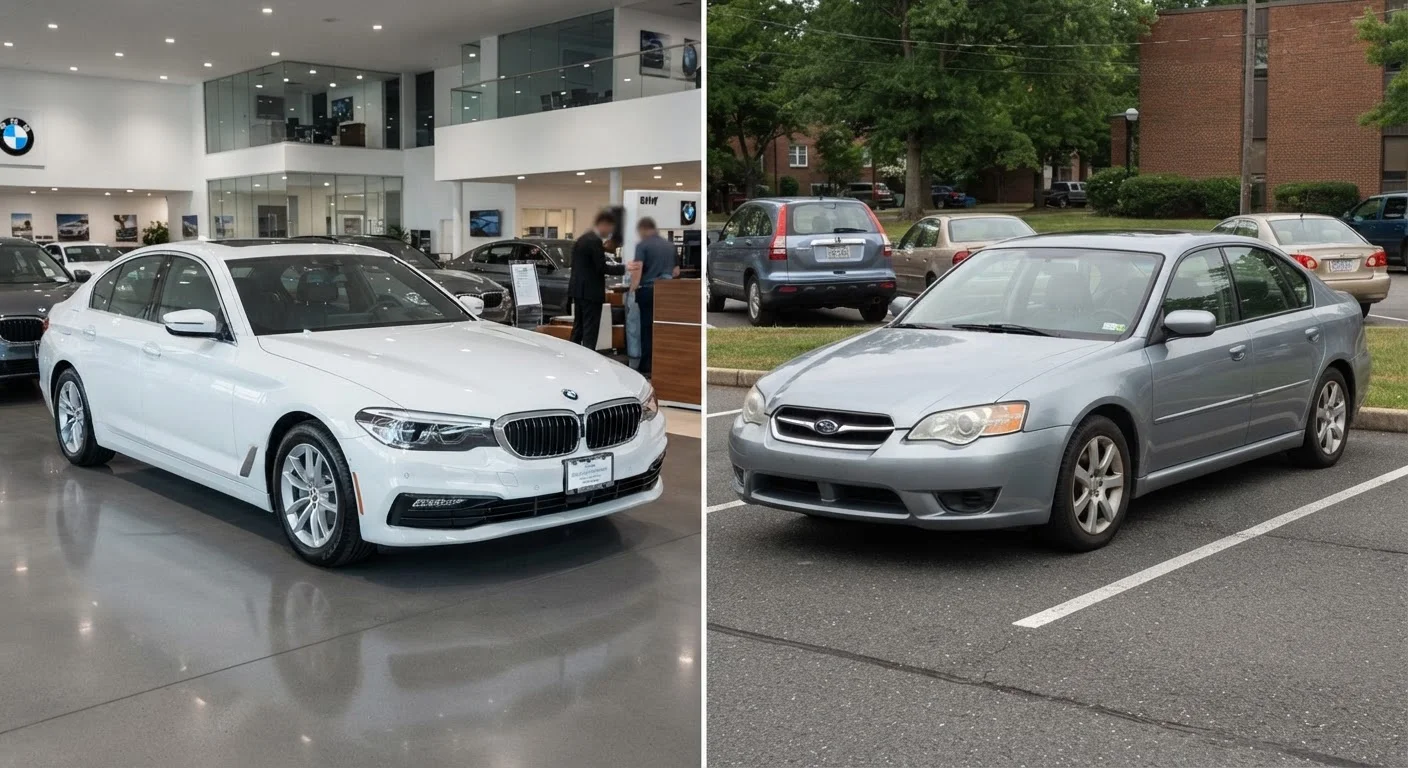
Key Takeaways
- New cars depreciate fastest in the first two to three years, making used cars a strong value proposition.
- New car financing rates are typically lower, but used cars' lower sticker prices can offset that advantage.
- Manufacturer warranties on new cars offer peace of mind that used cars generally don't match.
- A used car's true cost depends heavily on its condition, mileage, and service history.
- Certified pre-owned programs offer a middle ground between new and standard used vehicles.
Option A
New Car
The full-warranty, latest-features option with a premium price tag.
Best for: Buyers who prioritize reliability guarantees, the newest safety technology, and lower financing rates.
Option B
Used Car
The depreciation-smart, lower-cost alternative with added research requirements.
Best for: Budget-conscious buyers willing to do their homework to get more vehicle for less money.
If you want maximum financial value per dollar spent
Used Car
Depreciation hits hardest in a vehicle's first few years. Buying used lets someone else absorb that loss, giving you more car for your budget.
If long-term reliability and warranty coverage matter most
New Car
A factory warranty with roadside assistance gives you predictable costs and recourse if something goes wrong early on.
If you're financing and want the lowest possible interest rate
New Car
Lenders typically offer their most competitive rates on new vehicles, which can partially close the price gap depending on the loan term.
If you need low monthly payments with minimal commitment
Used Car
Lower purchase prices generally translate to smaller loan amounts and more manageable monthly payments, even at slightly higher rates.
If you want the latest safety and technology features standard
New Car
Modern vehicles include advanced driver-assistance systems and connectivity features that may not be available or may have been optional on older models.
The Depreciation Reality
Depreciation is the single largest cost most car owners never see coming at the dealership. A new vehicle can lose a significant portion of its value within the first few years of ownership — estimates vary by make, model, and market conditions, but the sharpest drop typically occurs in years one through three.
When you buy used, you're letting that initial depreciation curve work in your favor. A three-year-old vehicle with reasonable mileage may have absorbed a substantial price drop compared to its original sticker price, yet still have most of its functional life ahead of it. That's the core financial argument for used. For a deeper look at how this math plays out over the life of ownership, see our guide to depreciation and total ownership cost.
| Criterion | New Car | Used Car |
|---|---|---|
| Purchase Price | Higher upfront cost | Lower upfront cost |
| Depreciation Hit | Steepest in years 1–3 | Initial drop already absorbed |
| Financing Rate | Typically lower APR | Typically higher APR |
| Warranty Coverage | Full factory warranty | Limited or none |
| Insurance Cost | Generally higher premiums | Often lower premiums |
| Technology & Safety Features | Latest standard features | Varies by model year |
| Maintenance Uncertainty | Low — known history | Higher — history varies |
| Selection | Any current model/trim | Limited to market supply |
Warranties, Reliability, and Hidden Costs
A new car comes with a manufacturer's warranty — typically bumper-to-bumper coverage for three years or 36,000 miles and a powertrain warranty for longer. That coverage creates cost predictability: if the engine, transmission, or electronics fail early, you're protected without a large out-of-pocket expense.
Used cars are a different equation. Older vehicles may carry no remaining factory warranty, meaning repair costs fall entirely on you. Mechanical surprises — worn brakes, aging belts, or failing sensors — can add up quickly if the car hasn't been well maintained. This is why a pre-purchase inspection by an independent mechanic is strongly advisable before buying any used vehicle. Our used car inspection checklist covers the key areas to check before you negotiate.
One option worth understanding is the certified pre-owned (CPO) category — manufacturer-backed programs that add a limited warranty to qualifying used vehicles. It's a useful middle ground, though not without its own trade-offs. Our comparison of CPO vs. standard used explains what those programs actually include.
~20%
Typical first-year depreciation
Industry data generally suggests new vehicles lose around 15–20% of their value in the first year alone, though this varies by make and model.
1–2%+
Typical APR difference, new vs. used
Used car loan rates are generally higher than new car rates from the same lender, though actual rates depend on creditworthiness and market conditions.
3 yrs
Typical bumper-to-bumper warranty
Most U.S. new vehicle manufacturers offer a three-year or 36,000-mile bumper-to-bumper warranty as standard coverage.
Financing Rates and Total Out-of-Pocket Cost
New cars generally attract lower annual percentage rates (APRs) from lenders. Manufacturers sometimes offer promotional financing — such as 0% or low-rate deals — that simply aren't available on used vehicles. However, promotional offers are tied to specific models and credit profiles, and not every buyer qualifies.
Used car loans typically carry higher interest rates, which can erode some of the savings from the lower purchase price depending on the loan term. The key is to compare the total amount paid over the life of the loan, not just the monthly payment or the sticker price. Where you secure your financing also matters significantly — see our breakdown of dealer financing vs. bank or credit union lending for a clear comparison.
Insurance costs can also differ. New cars often cost more to insure because replacement parts and repair costs are higher. Older vehicles may carry lower collision and comprehensive premiums, though this varies by model, location, and insurer. These numbers are worth running before you sign anything.
This article provides general financial information for educational purposes only and does not constitute personalized financial or purchasing advice. Consult a licensed financial professional for guidance specific to your situation.
Making the Decision That Fits Your Situation
Neither choice is universally better — each fits a different set of circumstances. If predictable ownership costs, the latest safety systems, and manufacturer support are priorities, a new car offers genuine advantages. If stretching your budget further and absorbing less depreciation are more important, a well-researched used car is hard to beat.
The most common mistake buyers make is evaluating the sticker price in isolation. The real comparison lives in total cost of ownership: depreciation, financing, insurance, maintenance, and repairs over your anticipated ownership period. It's also worth thinking about whether you're buying from a dealer or a private seller — each has distinct protections and risks, which our guide to private vs. dealership purchases covers in detail.
For a comprehensive walkthrough of the entire process — from setting a realistic budget through signing the paperwork — our car buying guide from start to finish is a practical next step regardless of which direction you choose.
A Note on Market Conditions
Vehicle prices — both new and used — fluctuate with supply chain conditions, interest rate environments, and regional demand. The general principles in this article are durable, but specific price gaps between new and used inventory can narrow or widen significantly depending on market timing. Always check current local pricing before drawing conclusions about relative value.