

Key Takeaways
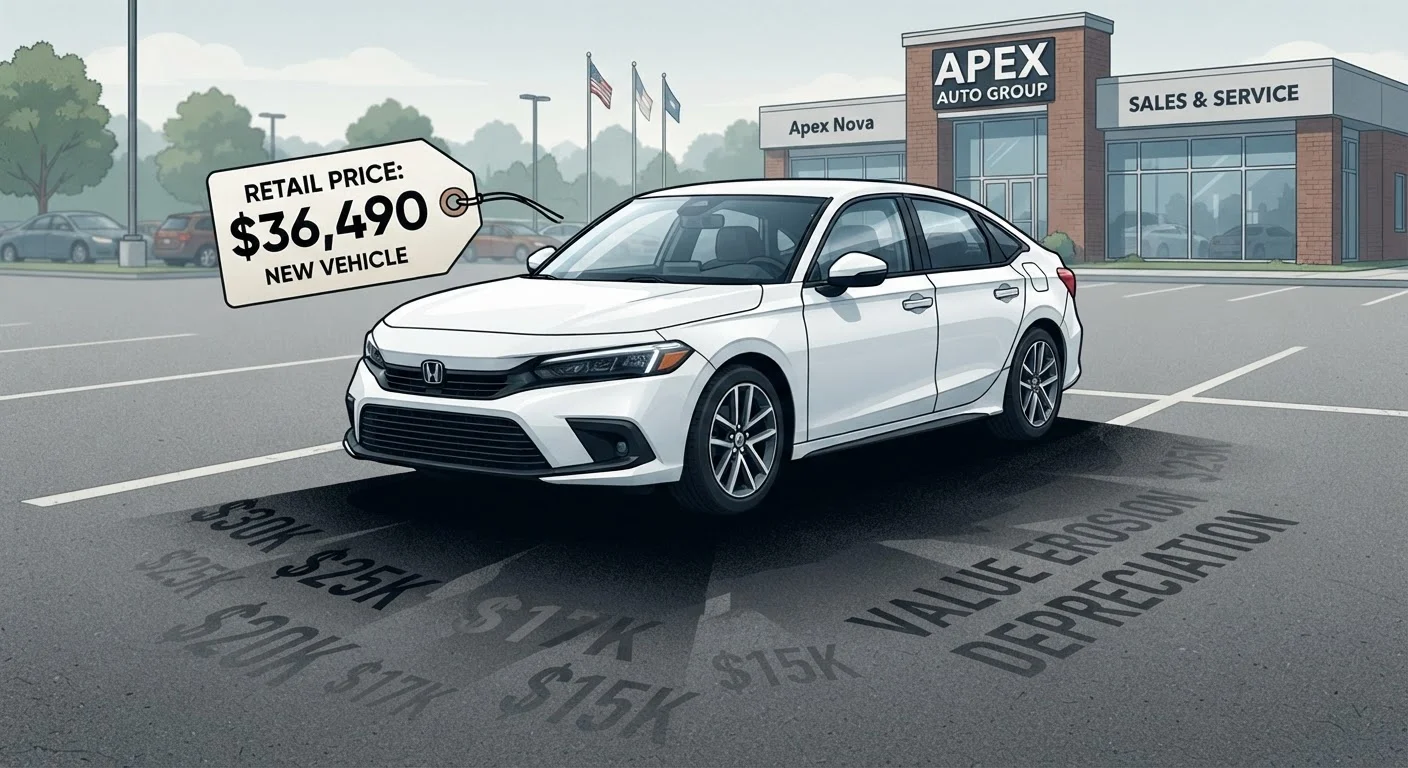
- A new car can lose 15–25% of its value in the first year of ownership.
- Depreciation is typically the single largest component of the total cost of owning a car.
- Vehicle type, mileage, condition, and brand reputation all affect how fast a car loses value.
- Buying a used car that has already absorbed steep early depreciation can reduce this cost significantly.
- Understanding depreciation before you buy helps you make a smarter long-term financial decision.
Vehicle Depreciation
Depreciation is the loss in a vehicle's monetary value over time. Every car depreciates — it's simply worth less the older and more used it becomes. For most drivers, depreciation represents a bigger financial hit than fuel, insurance, or maintenance combined.
Depreciation is calculated as the difference between a vehicle's purchase price and its resale or trade-in value at any given point. It is typically expressed as a dollar amount or percentage of original purchase price.
What Depreciation Actually Means for Your Wallet
When people calculate the cost of owning a car, they typically add up payments, fuel, and insurance. What rarely makes the list is depreciation — and that's a problem, because for many owners it quietly outweighs all those other costs combined.
Depreciation isn't a bill you pay monthly. It's the difference between what you paid for your vehicle and what it's worth when you sell or trade it in. That gap is real money lost, even if it never shows up on a statement.
15–25%
Value lost by a new car in its first year
Industry valuation analysts consistently estimate new vehicles lose a significant share of their purchase price within the first 12 months of ownership.
~40–60%
Typical value lost after five years
Depreciation curves vary by model and market, but many vehicles retain only 40–60% of their original value after five years of typical use.
#1
Depreciation's rank among car ownership costs
For many owners, depreciation exceeds fuel, insurance, and maintenance as the largest single component of total vehicle ownership cost.
Consider a vehicle purchased for $35,000. If it's worth $22,000 three years later, the owner absorbed $13,000 in depreciation — roughly $360 per month. That's often more than the insurance premium and fuel costs put together. For a complete picture of what car ownership actually costs, see how recurring maintenance expenses stack up alongside this figure.
Why Cars Lose Value So Quickly at First
The steepest depreciation happens early. A new car can shed 15–25% of its value in its first year alone — much of it in the first few months. This happens for several reasons.
- Buyer perception: Once a car has had an owner, it's classified as used, which immediately reduces what most buyers are willing to pay.
- Warranty coverage: New vehicles come with factory warranties that used buyers may not fully inherit, reducing their appeal.
- Market supply: Dealers consistently offer new versions of most models, giving used buyers an alternative that keeps used prices in check.
After that initial drop, depreciation typically slows — though it never fully stops. By years three through five, many vehicles are losing value at a more gradual pace.
Check Depreciation Before You Commit
Before finalizing a vehicle purchase, look up the model's projected resale value at three and five years using a reputable industry valuation guide. Even a rough estimate can reveal whether two similarly priced vehicles will cost very different amounts to own over the long term.
Factors That Speed Up or Slow Down Depreciation
Not all vehicles depreciate at the same rate. Several factors influence how quickly a car loses value:
- Brand and model reputation
- Vehicles perceived as reliable and durable tend to hold value better. Market perception matters as much as engineering reality.
- Mileage
- Higher mileage is a direct signal of wear. Vehicles driven well above average annual mileage typically depreciate faster.
- Condition
- Dents, worn interiors, and maintenance gaps all reduce resale value. A well-maintained vehicle with service records holds up better.
- Vehicle category
- Pickup trucks and certain SUVs have historically depreciated more slowly than sedans in many U.S. markets, largely due to sustained demand.
- Fuel type and technology
- Electric vehicles and hybrids present a more complex picture — battery concerns and rapid technology changes can accelerate depreciation for some models.
Understanding these variables before you buy gives you a meaningful edge. Comparing new versus used vehicles becomes much clearer once depreciation is part of the equation.
Depreciation Rates Shift With the Market
Vehicle values don't follow a fixed formula — supply, demand, fuel prices, and broader economic conditions all influence how fast specific models lose value. A vehicle category that held value well historically may depreciate faster in a changed market. Treat any projected depreciation figures as estimates, not guarantees.
Using Depreciation to Make a Smarter Purchase Decision
Knowing how depreciation works changes how you evaluate a car purchase. A vehicle with a lower sticker price isn't always the cheaper long-term choice if it loses value faster. Conversely, a slightly higher purchase price can be worth it if the vehicle holds its value well.
One practical strategy: buying a vehicle that's two to four years old lets someone else absorb the steepest early depreciation. You pay less upfront and may lose less in percentage terms when you eventually sell. This is one reason used cars can represent strong value — though they come with their own trade-offs, as a closer look at new vs. used trade-offs makes clear.
It's also worth checking estimated depreciation curves for specific models before you commit. Resources like industry valuation guides can give you a rough sense of what a vehicle is likely to be worth in three to five years.
Depreciation should also factor into how you think about your insurance deductible choices — as a car's value drops, the calculus on coverage levels can shift. And watch out for common car-buying myths that cause buyers to overlook long-term costs like this one.
This article is for general informational purposes only and does not constitute financial or purchasing advice. Vehicle values vary widely based on market conditions, individual vehicle history, and other factors. Consult a qualified professional for guidance specific to your situation.