

Key Takeaways
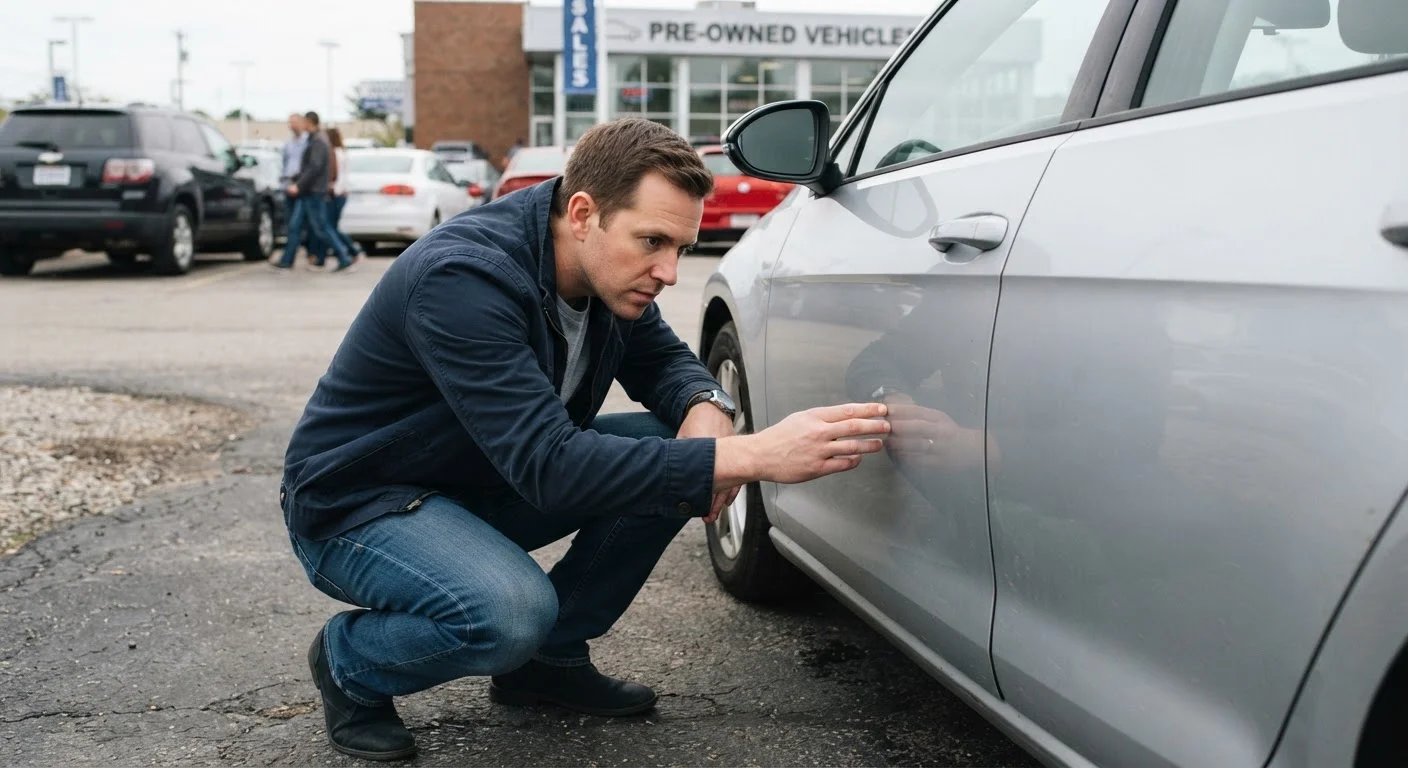
- Inspect the body in daylight — panel gaps, paint overspray, and rust are easier to spot outdoors.
- Check fluid levels and look for active leaks under the engine before considering any price.
- Tyre wear patterns can reveal alignment, suspension, or brake problems that cost real money.
- A test drive should include highway speeds, hard stops, and tight turns to expose hidden faults.
- Your inspection findings are legitimate leverage — document everything before you start negotiating.
Summary
28 items · 45–90 minutes
Why Your Eyes and Ears Are Your First Negotiating Tool
Walking onto a used car lot without a checklist is a bit like grocery shopping when you're hungry — you miss what you came for and pick up things you didn't want. A structured inspection gives you two things at once: a clear picture of what the car actually costs to own, and documented evidence to support a lower asking price.
Before you start, pull up the vehicle history report. Reading a vehicle history report without missing the red flags will help you understand which entries — title brands, odometer gaps, reported accidents — should sharpen your focus during the physical inspection below.
Work through the checklist in the order it's written. Start outside the car where light is best, move inside, then open the hood, and finish with a test drive. That sequence keeps you from missing anything in a rush.
Never Inspect in Poor Light or Rain
Paint defects, rust, and panel misalignment are significantly harder to spot on overcast days or under artificial lot lighting. Always schedule your inspection for daylight hours and avoid wet conditions, which can mask surface rust and conceal bodywork imperfections. If a seller won't accommodate a daytime visit, treat that as a red flag in itself.
The Inspection Checklist
Use the grouped checklist below as your on-the-lot guide. Flag every item that doesn't pass and photograph it on your phone — both for your own records and because photos are harder to dismiss in a price negotiation than verbal descriptions.
Exterior Body & Paint
Interior Condition
Engine Bay
Tyres & Brakes
Test Drive
Once you've completed the physical walkthrough, consider going one step further. A pre-purchase inspection by an independent mechanic can catch problems that aren't visible to an untrained eye — things like frame damage, hidden rust, or worn internal components. It's a modest upfront cost that frequently pays for itself.
Turning Your Findings Into Negotiating Leverage
Everything you document during the inspection becomes a negotiating data point. A worn set of tyres represents a near-term replacement cost — that's a number you can put on paper. Mismatched paint suggests previous body repair, which raises questions about structural integrity. Minor issues add up quickly when you itemise them.
Bring your list to the conversation calmly and specifically. Effective price negotiation is about preparation, not pressure — and a thorough inspection is the preparation that makes the difference.
Tread depth gauge
Measures remaining tyre tread precisely — more accurate than the coin method and costs only a few dollars.
OBD-II code reader
Plugs into the vehicle's diagnostic port to check for stored fault codes, including issues that have been temporarily cleared.
Flashlight or phone torch
Essential for inspecting the engine bay, under the car, and interior floor areas where overhead light is poor.
Vehicle history report
Documents accident history, title status, and reported odometer readings before you spend time on a physical inspection.
This article is for general informational purposes only. Always consult a qualified mechanic before making a used vehicle purchase decision, particularly for any item flagged during your inspection.