

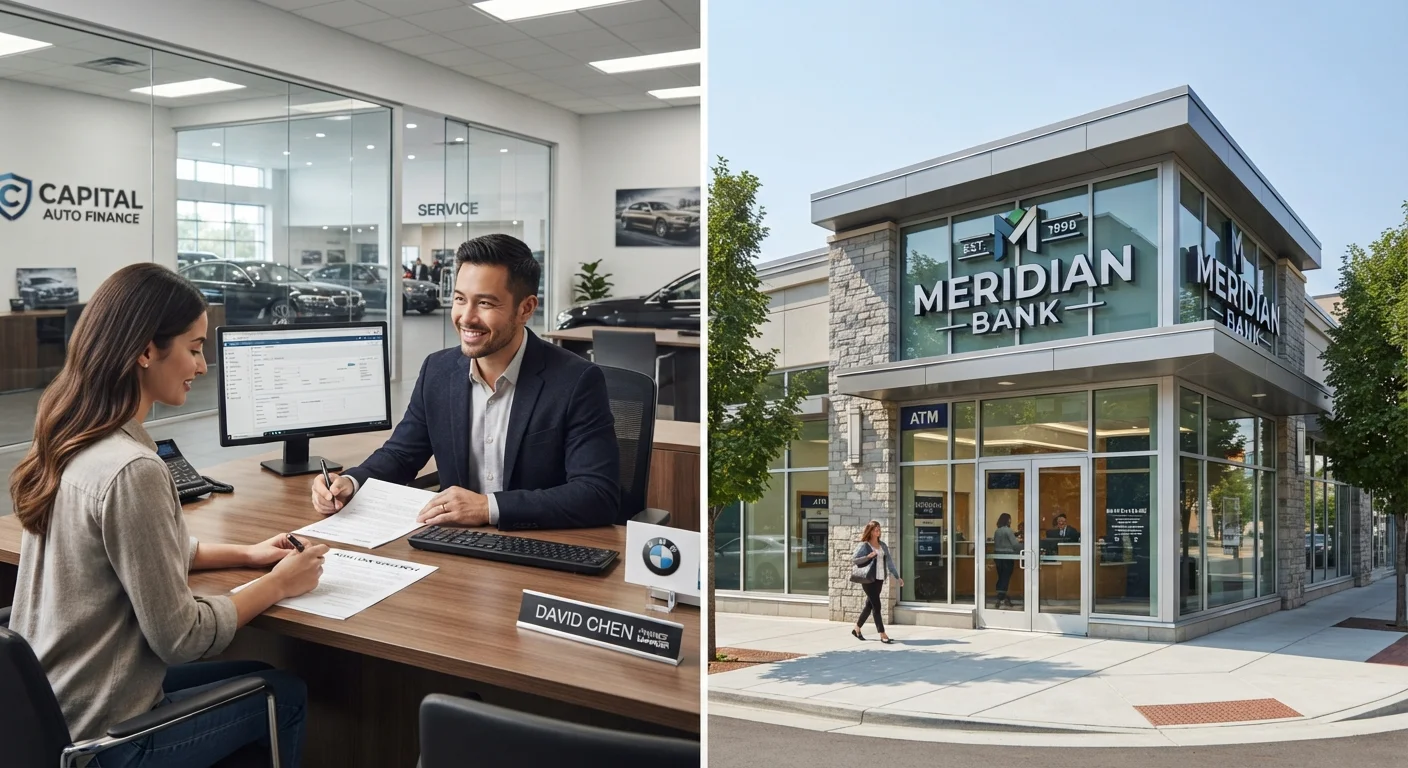
Key Takeaways
- Dealer financing is convenient but may carry a higher interest rate than you'd get directly from a lender.
- Banks and credit unions let you shop with a pre-approval, giving you a negotiating baseline at the dealership.
- Dealers earn a markup — called a reserve — on loans they arrange, which increases your cost.
- Manufacturer-subsidized rates from dealerships can sometimes beat outside lenders, especially on new vehicles.
- Comparing both options before signing is the most reliable way to avoid overpaying on financing.
Our Verdict
Neither channel is universally better — it depends on your credit profile, the vehicle, and the rates available at the time. The clearest advantage of going to a bank or credit union first is that it gives you a concrete number to compare against whatever the dealer offers. If a dealer's rate beats your pre-approval, take it; if it doesn't, you already have your financing lined up.
| Best for | Recommended |
|---|---|
| Buyers who want maximum rate transparency and negotiating leverage | Bank or credit union pre-approval |
| Buyers purchasing new vehicles eligible for manufacturer incentive rates | Dealer-arranged financing |
| Buyers prioritizing a streamlined, single-stop process | Dealer-arranged financing |
| Members of a credit union with competitive auto loan programs | Credit union direct lending |
Two Paths to the Same Loan
When you finance a car, someone is lending you money and charging you interest. The question isn't whether you'll need a lender — it's which one you'll use. Broadly, you have two routes: direct lending (going to a bank or credit union yourself before or after shopping) or dealer-arranged financing (letting the dealership connect you with a lender through its finance and insurance, or F&I, office).
Both options produce an auto loan with a principal, an interest rate, and a repayment term. The meaningful differences lie in how the rate is set, who benefits from the arrangement, and how much control you have over the final terms. For a broader look at how financing fits into the overall buying process, see common car-buying myths that can cost you money at the dealership.
How Dealer Financing Actually Works
Dealerships don't lend their own money. Instead, they act as intermediaries, submitting your credit application to a network of banks and captive finance companies (lenders owned by automakers, like a manufacturer's financing arm). The lender sets a buy rate — the minimum rate at which it will approve your loan — and the dealer is typically permitted to mark that rate up by a set amount, often up to 2–2.5 percentage points. That markup, called a dealer reserve, is paid to the dealership by the lender as compensation for originating the loan.
This isn't hidden, but it isn't always disclosed either. A buyer who qualifies for a 6% buy rate might be quoted 7.5% without knowing the difference exists. Over a 60-month loan on a $30,000 vehicle, that kind of spread can add hundreds of dollars in interest.
The notable exception is manufacturer-subsidized financing — promotional rates that automakers offer through their captive lenders, sometimes as low as 0% APR on new vehicles. These rates are genuine and not subject to dealer markup, but they're typically reserved for buyers with strong credit and may require forgoing a cash rebate. The F&I office is also where add-on products are sold, so it pays to understand what's happening in that room.
| Dealer-Arranged Financing | Bank or Credit Union | |
|---|---|---|
| Convenience | High — handled at point of sale | Moderate — requires separate application |
| Rate transparency | Lower — markup not always disclosed | Higher — you see the lender's direct offer |
| Potential for low promotional rates | Yes — manufacturer-subsidized rates available | No manufacturer incentives |
| Negotiating leverage | Less — rate often presented as given | More — pre-approval sets a baseline |
| Eligibility for older/used vehicles | Generally flexible | May have vehicle age or mileage limits |
| Speed of approval | Often same-day | One to two business days typically |
What Banks and Credit Unions Offer
Going directly to a bank or credit union before you shop lets you obtain a pre-approval — a conditional loan offer stating the rate, term, and maximum amount you qualify for. You walk into the dealership as a cash buyer in practical terms, which separates the financing negotiation from the vehicle price negotiation.
Credit unions in particular are worth noting. As member-owned nonprofits, they often offer lower auto loan rates than commercial banks, and their loan officers typically have more flexibility. You don't have to be a longtime member — many credit unions allow you to join when you apply for a loan.
Get Pre-Approved Before You Shop
Applying for a pre-approval at a bank or credit union before visiting a dealership typically involves only a soft or single hard credit inquiry and gives you a real rate to compare against. It also shifts the conversation at the dealership — you're evaluating their offer rather than accepting it by default. Bring the pre-approval letter with you and let the dealer know you already have financing arranged.
One limitation: some direct lenders won't finance older used vehicles or private-party sales, and their approval process may take a day or two rather than being instant. If you're buying from a private seller, confirming your lender's vehicle eligibility requirements upfront is essential.
Making the Comparison Work for You
The most practical approach is to get at least one pre-approval before visiting a dealership, then compare that rate against what the dealer offers. If the dealer comes in lower — either because of a promotional rate or genuine competition — take the better deal. If the dealer's rate is higher, use your pre-approval or decline and use your outside financing.
A few things to keep in mind when comparing offers:
- Focus on the APR, not the monthly payment. Dealers can lower a monthly payment by extending the loan term, which increases total interest paid.
- Check the total cost of the loan, not just the rate. A slightly higher rate on a shorter term can cost less overall than a lower rate stretched over more months.
- Understand whether promotional rates require forgoing rebates. Sometimes taking a cash-back incentive and financing at a higher rate through an outside lender saves more money.
Whether you're weighing a new or used vehicle also matters — financing terms and available rates can differ considerably between the two. New versus used car trade-offs are worth understanding before you commit to either path.
This article is for general informational purposes only and does not constitute personalized financial or lending advice. Loan terms, rates, and eligibility vary by lender, credit profile, and market conditions. Consult a licensed financial professional for guidance specific to your situation.