

Key Takeaways
- CPO programs are run by manufacturers, not dealerships — standards and benefits vary significantly between brands.
- CPO vehicles typically cost more upfront but include extended warranty coverage and a documented multi-point inspection.
- Standard used cars can be excellent value, especially when paired with an independent pre-purchase inspection.
- Neither option eliminates all risk — understanding what each program actually covers is essential before buying.
- Financing rates on CPO vehicles are sometimes lower than those on standard used cars, which affects total cost.
- Always read the actual CPO warranty document, not just the dealership's verbal summary, before signing.
Option A
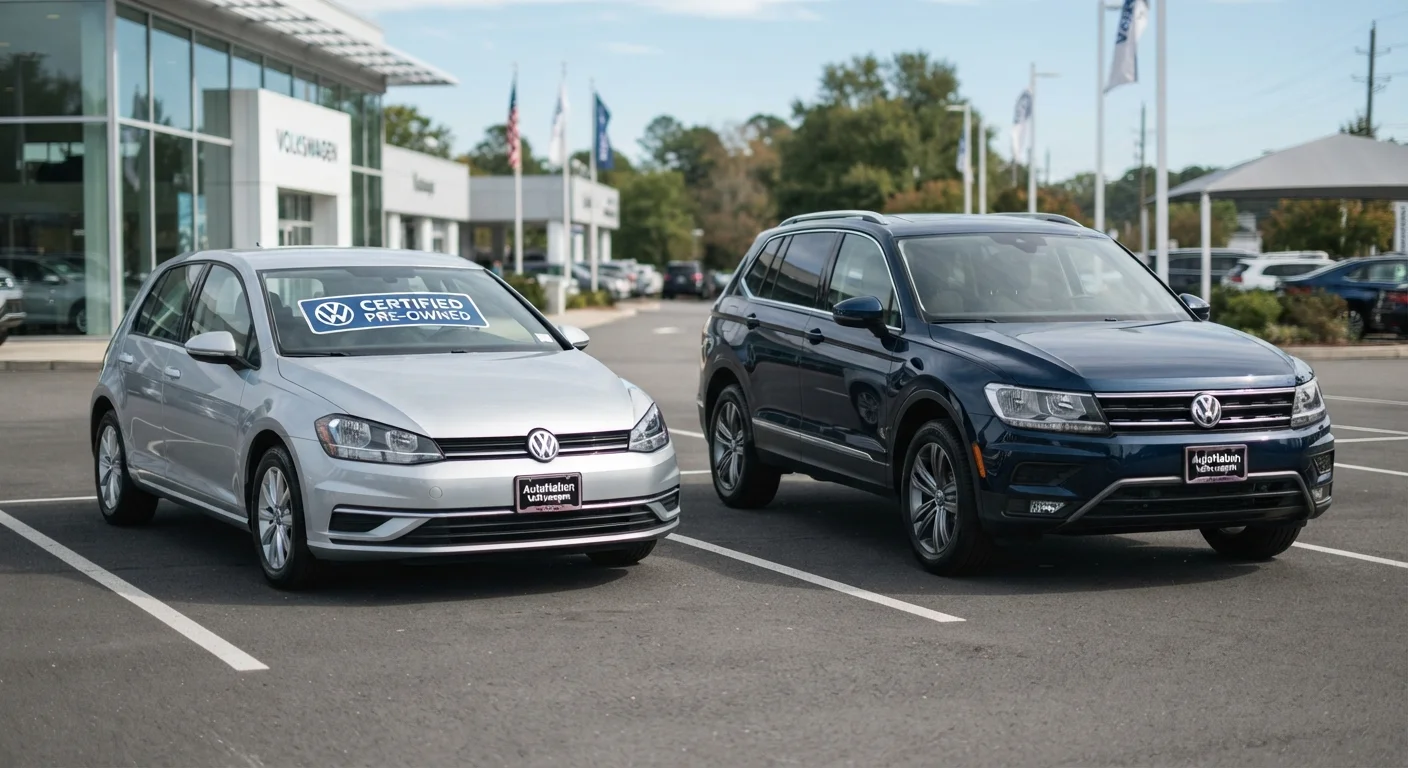
Certified Pre-Owned (CPO)
The manufacturer-backed, inspected used car with added warranty coverage.
Best for: Buyers who want documented peace of mind and are willing to pay a modest premium for standardized protections.
Option B
Standard Used
The flexible, lower-cost used car purchased without a formal certification program.
Best for: Buyers comfortable doing their own due diligence and prioritizing the lowest possible purchase price.
If you want predictable, warranty-backed protection after purchase
Certified Pre-Owned (CPO)
CPO programs provide documented inspection results and extended manufacturer warranties, reducing the chance of an expensive surprise in the first few years of ownership.
If keeping the purchase price as low as possible is the top priority
Standard Used
Standard used cars skip the certification premium, and pairing the purchase with an independent inspection can provide comparable confidence at a lower cost.
If you're buying a vehicle that's still within its original factory warranty period
Standard Used
Remaining factory coverage may make the CPO program's added warranty redundant, so paying the CPO premium delivers little extra benefit.
If you're financing the purchase and care about the interest rate
Certified Pre-Owned (CPO)
Some manufacturers offer promotional financing rates specifically on CPO inventory that aren't available on standard used vehicles, potentially reducing total interest paid.
What a CPO Program Actually Is
A certified pre-owned program is a formal framework created and administered by a vehicle manufacturer — not simply a label a dealership applies. To qualify, a vehicle must typically meet age and mileage thresholds (commonly under five or six years old with fewer than 80,000 miles), pass a multi-point inspection conducted according to the manufacturer's checklist, and be reconditioned to meet defined standards. Once it clears those hurdles, it's sold with an extended warranty backed by the manufacturer rather than the dealer.
That last detail matters. Because the warranty comes from the manufacturer, it's generally honored at any authorized dealership nationwide — a meaningful advantage if you move or travel. The inspection checklist is also standardized: a Toyota CPO inspection follows the same criteria in Texas as it does in Ohio. However, what those criteria actually require differs from one automaker to the next. A 172-point inspection at one brand may be more or less rigorous than a 150-point inspection at another, depending on what each point covers.
As part of a broader car-buying decision, see how CPO fits into the full picture in our plain-language car buying walkthrough.
How Standard Used Cars Work — and Where the Risk Sits
A standard used vehicle comes with no manufacturer certification. It may be sold by a franchised dealership, an independent lot, or a private seller. The condition and history of the vehicle are only as transparent as the information the seller chooses to share — and verifying that history falls on you.
This is exactly where an independent pre-purchase inspection earns its value. Having a mechanic you trust evaluate the vehicle before you commit can surface hidden mechanical issues, deferred maintenance, or prior damage that a vehicle history report might miss. Learn more about what that process involves in our article on what a pre-purchase inspection covers and how to arrange one.
The risk isn't that standard used cars are inherently bad — many are excellent value. The risk is informational: you're working with less standardized data than a CPO purchase provides. The upside is price. Standard used vehicles typically sell for less than equivalent CPO units, and that difference can be significant.
| Criterion | Certified Pre-Owned (CPO) | Standard Used |
|---|---|---|
| Who sets the standards | Vehicle manufacturer | No formal standard |
| Inspection requirement | Mandatory multi-point checklist | None required (optional independent) |
| Extended warranty | Included (manufacturer-backed) | Not included (aftermarket optional) |
| Typical purchase price | Higher (certification premium) | Lower |
| Financing rate options | May include promotional rates | Standard used-car rates |
| Where warranty is honored | Any authorized brand dealership | N/A (no standard warranty) |
| Vehicle age/mileage limits | Yes — eligibility thresholds apply | No restrictions |
The Real Cost Difference: More Than the Sticker
CPO vehicles generally carry a price premium of several hundred to a few thousand dollars over a comparable non-certified used car, depending on the brand, model, and current market conditions. But the sticker gap isn't the only number worth examining.
$1,000–$3,500
Typical CPO price premium over comparable standard used
Industry estimates suggest CPO vehicles commonly carry a premium in this range, though it varies by brand, model, and market conditions.
100–200 pts
Range of inspection checklist items across CPO programs
Manufacturer CPO checklists vary widely in scope; the number of points inspected differs significantly between automakers.
$100–$300
Typical cost of an independent pre-purchase inspection
A mechanic's pre-purchase inspection generally costs a fraction of the CPO premium and can surface similar information.
Warranty coverage is the primary thing you're buying with that premium. A typical manufacturer CPO warranty extends powertrain coverage (engine, transmission, drivetrain) for several years or tens of thousands of miles beyond what the original factory warranty provided. Some programs also include roadside assistance, loaner vehicles during covered repairs, and complimentary maintenance. Others offer only the basic powertrain extension. Reading the actual warranty document — not the brochure summary — tells you which category you're in.
Financing is another variable. Some manufacturers offer lower interest rates on CPO inventory through their captive finance arms. If you're financing, running the math on total interest paid at a promotional CPO rate versus a standard used-car rate can shift the true cost comparison meaningfully.
For context on how used versus new purchases compare more broadly, our breakdown of new car vs. used car trade-offs covers depreciation, financing, and warranty dynamics in detail.
Making a Smart Decision Either Way
Neither path is automatically superior. A CPO vehicle is only as valuable as the warranty backing it — so confirming what's covered, for how long, and under what conditions is non-negotiable before you sign. Ask specifically about deductibles, what the inspection actually checked, and whether any issues found were repaired or simply noted.
A standard used car can be equally reliable when chosen carefully. Combining a vehicle history report with an independent mechanic's inspection gives you a substantial portion of the assurance a CPO label provides — often at lower total cost. See our detailed look at what a pre-purchase vehicle inspection actually covers for specifics on what mechanics examine.
If you're weighing whether to buy from a dealer or privately, that channel decision also shapes your options — dealerships can offer CPO inventory; private sellers cannot. Our comparison of buying privately versus through a dealership walks through the protections and trade-offs on each side.
The bottom line: CPO programs deliver real value when the warranty coverage is substantive and the price premium is reasonable. Standard used cars deliver real value when you do the homework. In both cases, that homework is what actually protects you.
This article is for general informational purposes only and does not constitute financial or legal advice. Consult a licensed professional for guidance specific to your situation.