

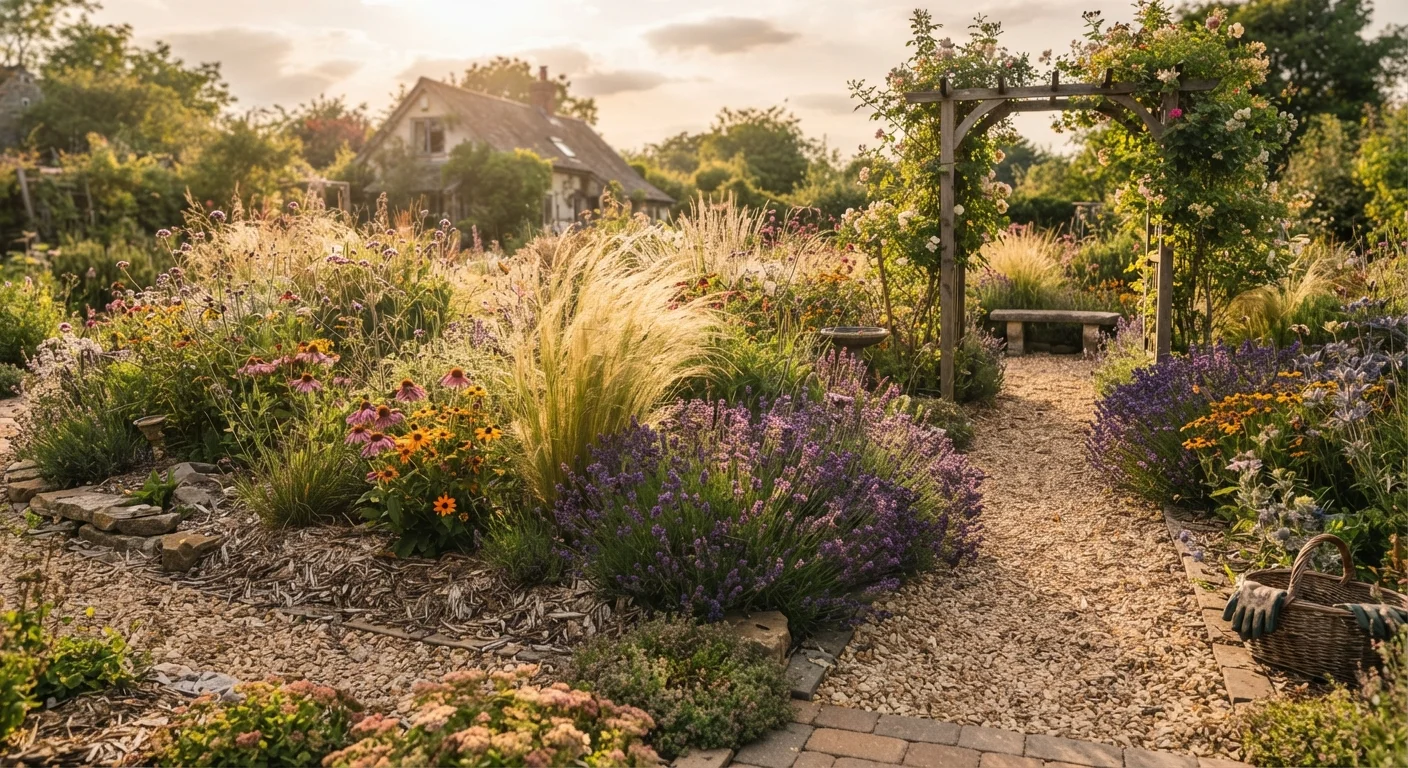
Key Takeaways
- Choosing plants native or adapted to your region dramatically reduces irrigation needs over time.
- Soil improvement with organic matter helps retain moisture where plant roots need it most.
- Drip irrigation and deep, infrequent watering outperform frequent shallow watering in dry conditions.
- Mulching is one of the single most effective tools for conserving soil moisture in drought-prone gardens.
- Grouping plants by water needs — called hydrozoning — minimizes waste and supports plant health.
Why Water-Wise Design Matters
Across much of the United States, water scarcity is no longer a regional concern — it's a growing reality for everyday gardeners. Whether you're gardening through a dry summer in the Southwest or managing an unexpectedly parched season in the Mid-Atlantic, designing with drought in mind protects both your plants and your water bill.
Drought-tolerant gardening isn't about settling for bare, brown landscapes. It's about working with your climate rather than against it — selecting the right plants, preparing your soil thoughtfully, and delivering water where and when it's truly needed. Before your first seed goes in the ground, a structured site assessment can help. See our seasonal garden planning checklist for a practical starting framework.
30%
Outdoor water use as share of US residential consumption
According to the U.S. Environmental Protection Agency, as much as 30% of household water use is devoted to outdoor watering, with significant portions lost to evaporation and runoff.
50%+
Potential water savings with efficient irrigation
The EPA's WaterSense program has noted that switching from conventional sprinkler systems to drip irrigation and weather-based controllers can cut outdoor water use by 50% or more in some landscapes.
Choosing the Right Plants
Plant selection is the foundation of any water-wise garden. Native plants — species that evolved in your specific region — are generally the most resilient choice, having adapted to local rainfall patterns, soil types, and seasonal temperature swings. Many drought-tolerant non-natives, such as lavender, agave, and Russian sage, also perform reliably in low-water landscapes.
Understanding your hardiness zone is a useful starting point, but drought tolerance depends on more than cold hardiness. Our guide to reading plant hardiness zone maps explains what these designations do and don't tell you.
Select plants native or regionally adapted to your local climate and rainfall patterns.
Native and adapted plants have evolved with local conditions and require far less supplemental water once established. They're also typically more resistant to local pests and diseases, reducing maintenance overall.
Amend your soil with compost before planting to improve water retention and drainage.
Healthy, well-structured soil holds moisture at the root zone longer and resists crusting — the surface hardening that causes water to run off rather than soak in. Compost improves both sandy and clay soils in this way.
Apply a consistent 2–4 inch layer of organic mulch over all planting beds.
Mulch slows evaporation from the soil surface, moderates soil temperature, and suppresses weeds that compete for available moisture. It also breaks down gradually, adding organic matter back into the soil.
Water deeply and infrequently rather than lightly and often.
Deep watering encourages root systems to grow downward toward more stable moisture reserves. Shallow, frequent watering keeps roots near the surface and makes plants more dependent on regular irrigation.
Group plants by water needs to create hydrozones within your garden.
Applying the same watering schedule to every area of a garden wastes water on low-need plants and may still under-water thirsty ones. Hydrozoning tailors irrigation to each group's actual requirements.
Soil Preparation and Mulching
Even drought-adapted plants struggle in compacted, nutrient-poor soil that sheds water rather than absorbing it. Incorporating organic matter — compost, aged bark, or leaf mold — improves the soil's capacity to hold moisture at the root zone. For sandy soils that drain too quickly, compost acts as a sponge. For heavy clay soils that pool water and suffocate roots, it improves drainage and aeration simultaneously.
Once your beds are prepared and planted, mulch is your most reliable ally. A 2–4 inch layer of organic mulch (such as wood chips or shredded bark) over bare soil can dramatically slow evaporation and suppress moisture-stealing weeds. For a deeper look at mulch types, depth, and timing, our article on mulching techniques that actually protect your garden covers the specifics.
Mulch Matters More Than You Think
Many gardeners underestimate how much bare soil contributes to water loss. In hot, dry conditions, uncovered soil can lose a substantial portion of its surface moisture within hours of watering. Keeping soil consistently covered with mulch is one of the simplest and most cost-effective drought strategies available to home gardeners. Refresh your mulch layer annually as it breaks down, particularly in high-traffic or high-heat areas of the garden.
Smarter Irrigation Strategies
How you water matters as much as how often. Frequent, shallow watering encourages plants to keep roots near the surface, where they're most vulnerable to drying out. Deep, infrequent watering — allowing soil to partially dry between cycles — trains roots to grow downward, where moisture lingers longer. Our article on common garden watering myths addresses several misconceptions that lead gardeners to overwater.
Drip irrigation systems deliver water slowly and directly to the root zone, dramatically reducing the evaporation losses that come with overhead sprinklers. Soaker hoses offer a lower-cost alternative with similar benefits. Pairing either system with a simple timer and a rain sensor eliminates guesswork and prevents watering after rainfall.
Hydrozoning — grouping plants with similar water requirements together — is another principle that reduces waste. It allows you to run different irrigation zones at different frequencies, rather than watering your entire garden on the same schedule regardless of need.