

Key Takeaways
- Style archetypes are frameworks for self-understanding, not boxes you must fit into perfectly.
- Most people identify with elements of two or three archetypes rather than just one.
- Knowing your archetype helps you shop with intention and build a more cohesive wardrobe.
- Archetypes evolve — your aesthetic preferences can shift with life stage, culture, and context.
- The goal is clarity and confidence, not conformity to a label.
Style Archetype
A style archetype is a broad aesthetic category that describes a consistent set of visual preferences, silhouettes, colors, and moods in how someone dresses. Think of it as a shorthand vocabulary for your personal taste — not a costume to wear, but a framework for understanding what consistently appeals to you. Common archetypes include minimalist, romantic, classic, edgy, bohemian, and preppy.
The concept draws loosely from Carl Jung's psychological archetypes, adapted by fashion theorists and stylists as a practical tool for identifying recurring patterns in aesthetic preference rather than as a rigid personality classification.
What Style Archetypes Actually Are
Style archetypes aren't about following rules or pledging loyalty to a single look. They're mental models — structured ways of describing what you're instinctively drawn to when you get dressed. When a stylist or fashion educator talks about someone being a "classic" or a "romantic," they're pointing to a constellation of consistent preferences: the colors that keep appearing in your closet, the silhouettes you reach for without thinking, the overall mood your outfits tend to project.
The most commonly referenced archetypes include:
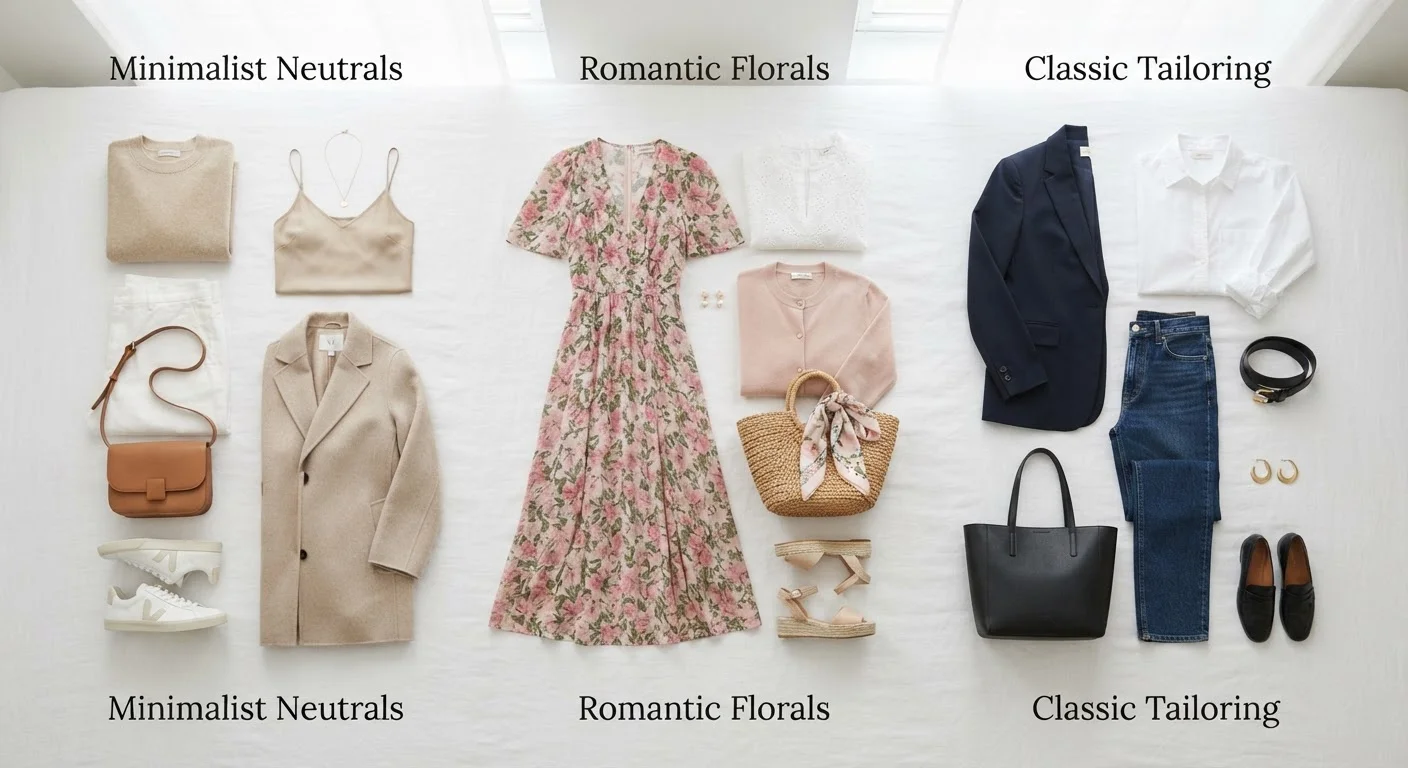
- Minimalist: Clean lines, restrained palette, elevated basics, and a preference for simplicity over ornamentation.
- Romantic: Soft fabrics, florals, flowing silhouettes, and an emphasis on femininity or softness.
- Classic: Timeless, polished, structured — think tailoring, heritage patterns, and enduring pieces over trend-led items.
- Edgy: Sharp contrasts, unconventional cuts, hardware details, and a visual language that subverts expectations.
- Bohemian: Layered textures, earthy tones, artisan details, and a relaxed, free-spirited aesthetic.
- Preppy: Collegiate references, structured sportswear details, bold color-blocking, and a put-together-but-casual vibe.
These aren't exhaustive, and they're not mutually exclusive. They're starting points — a shared vocabulary for talking about taste.
Archetypes Aren't Personality Tests
Style archetypes describe aesthetic preferences, not character traits or identity. A person who dresses in a romantic aesthetic isn't necessarily soft-spoken or sentimental; a person who dresses in an edgy aesthetic isn't necessarily rebellious in their values. The framework is visual and sartorial, not psychological. Treat it as a tool for understanding your taste, not a verdict on who you are.
Why Archetypes Are Useful (and Where They Fall Short)
The value of a style archetype is clarity. When you know you lean toward minimalism, you have a quick filter for decision-making: Does this piece align with the clean, uncluttered aesthetic I'm building, or am I buying it because it's on sale and feels "close enough"? That kind of intentionality reduces impulse purchases and helps you build a wardrobe where everything genuinely works together.
Archetypes are also useful for communicating with tailors, stylists, or even friends helping you shop. They provide a shared shorthand that's faster and more accurate than describing individual items.
Where they fall short is when they become rigid. No one's aesthetic is perfectly singular, and real personal style is almost always a blend. Someone might dress in a primarily classic framework but layer in bohemian accessories or edgy footwear. Treating archetypes as strict categories rather than flexible lenses creates unnecessary constraint — and style should feel expansive, not limiting. See our balanced look at classic versus trendy dressing for a related perspective on navigating aesthetic trade-offs.
Give Yourself Permission to Blend
If you find yourself drawn to two archetypes that seem opposite — say, minimalist and bohemian — that tension is worth exploring rather than resolving. Some of the most distinctive personal styles emerge from unexpected combinations. Try identifying one or two "signature" elements from each and see how they interact in actual outfits before assuming they're incompatible.
How to Identify Your Dominant Archetype
The most reliable way to find your archetype is to audit what you already own and love — not what you aspire to wear, but what you actually reach for repeatedly. Pull out the pieces in your closet that feel most like "you" and look for patterns: color family, fabric weight, silhouette, level of detail.
A few practical exercises that help:
- The image bank method: Save 30–40 outfit images you genuinely love over two weeks without overthinking it. Review them together and identify recurring themes.
- The wear test: Track which items you actually wear versus what sits unworn. Items you skip repeatedly may belong to an aspirational archetype rather than your authentic one.
- The occasion filter: Notice how you dress when comfort and personal preference are your only guides — weekends at home, casual outings with friends. Stripped of dress codes and social pressure, your instincts often surface clearly.
Once patterns emerge, you'll likely see a dominant archetype — and probably a secondary one. That combination is often more descriptive of your real aesthetic than any single label. Understanding your palette instincts is also closely related: our plain-language guide to colour combinations can help you translate archetype into actionable wardrobe choices.
2–3
Archetypes most people identify with
Style educators and personal stylists broadly observe that most clients resonate with a primary and at least one secondary aesthetic archetype rather than a single pure category.
~70%
Wardrobe items the average person rarely wears
Research and wardrobe audit surveys consistently suggest the majority of owned clothing goes largely unworn, often because items were purchased without a coherent style framework guiding decisions.
Putting Your Archetype to Work
Once you have a clearer sense of your aesthetic framework, the practical applications follow naturally. Archetypes work best as a filter for shopping decisions, a guide for wardrobe edits, and a foundation for building outfits with intention rather than reaction.
If you're starting fresh or rebuilding a wardrobe that no longer reflects who you are, anchoring decisions in your archetype prevents the common trap of buying disconnected pieces that never quite work together. Building a wardrobe from scratch becomes significantly easier when you have a coherent aesthetic lens to guide each choice.
It's also worth noting that archetypes apply beyond clothing. The same minimalist who keeps their wardrobe spare may apply the same logic to their home environment — preferring closed storage over open shelving to maintain clean visual lines. Aesthetic preferences often show up consistently across different areas of life, which is part of what makes archetypes a genuinely useful self-knowledge tool rather than just a fashion gimmick.
The goal isn't to dress like a Pinterest board version of your archetype. It's to use the framework to understand yourself better — and then dress in a way that reflects that understanding with confidence.
“Personal style isn't about finding a label that fits — it's about developing enough self-awareness to make intentional choices. Archetypes give you a language for that awareness, but your actual style lives in how you interpret and combine them.”
— Tim Gunn, Fashion educator and co-host of Project Runway