

Key Takeaways
- Classic dressing prioritises longevity and cost-per-wear; trendy dressing prioritises self-expression and cultural relevance.
- Neither approach is inherently superior — the right balance depends on your lifestyle, budget, and identity.
- Most people naturally combine both; understanding the trade-offs helps you do so more intentionally.
- Shopping habits and wardrobe values tend to reinforce each other over time.
Lower cost-per-wear over time
Classic pieces remain wearable across multiple seasons, spreading their cost over far more uses than trend-driven items typically achieve.
Reduced decision fatigue when getting dressed
A cohesive set of versatile staples makes outfit construction faster and more consistent, particularly on high-pressure days.
Broadly appropriate across formal and professional contexts
Timeless silhouettes and neutral palettes rarely read as out of place in dress-code-sensitive environments, from job interviews to formal events.
Easier to mix, match, and layer
Classic pieces are intentionally designed for versatility, meaning a smaller wardrobe can generate a wider range of usable combinations.
Lower environmental footprint per item
Keeping garments in active use for longer reduces the frequency of disposal and replacement, which has documented environmental benefits.
Can feel creatively limiting over time
A strictly classic wardrobe may not reflect shifts in personality, mood, or identity — particularly during periods of personal change.
Higher upfront cost for quality staples
The long-term value argument for classic dressing depends on buying durable, well-constructed pieces, which typically carry a higher initial price.
Risk of appearing disconnected from current culture
In contexts where cultural awareness or creative currency matters — creative industries, youth-facing roles — a purely classic wardrobe can read as out of touch.
Trend-led pieces can become dated quickly
Items purchased for their seasonal relevance may lose their appeal within a year or two, compressing their cost-per-wear and generating closet clutter.
Trend engagement encourages frequent purchasing
The rhythm of fashion cycles creates ongoing spending pressure, which can strain budgets and lead to wardrobe accumulation rather than curation.
Trend-driven wardrobes require more active management
Regularly rotating pieces in and out demands more time, storage planning, and willingness to edit — which not all lifestyles easily accommodate.
Our Verdict
Classic dressing rewards patience, offers financial efficiency over time, and reduces decision fatigue. Trend-led dressing offers creative energy, cultural connection, and the pleasure of novelty — but demands more frequent investment and tolerance for change. Neither is the objectively correct choice; both have real costs and real benefits.
Classic-first dressing suits readers who value simplicity, longevity, and a consistent visual identity; trend-led wardrobes suit those who find genuine joy in newness and use clothing as active self-expression.
What We Mean by Classic and Trendy
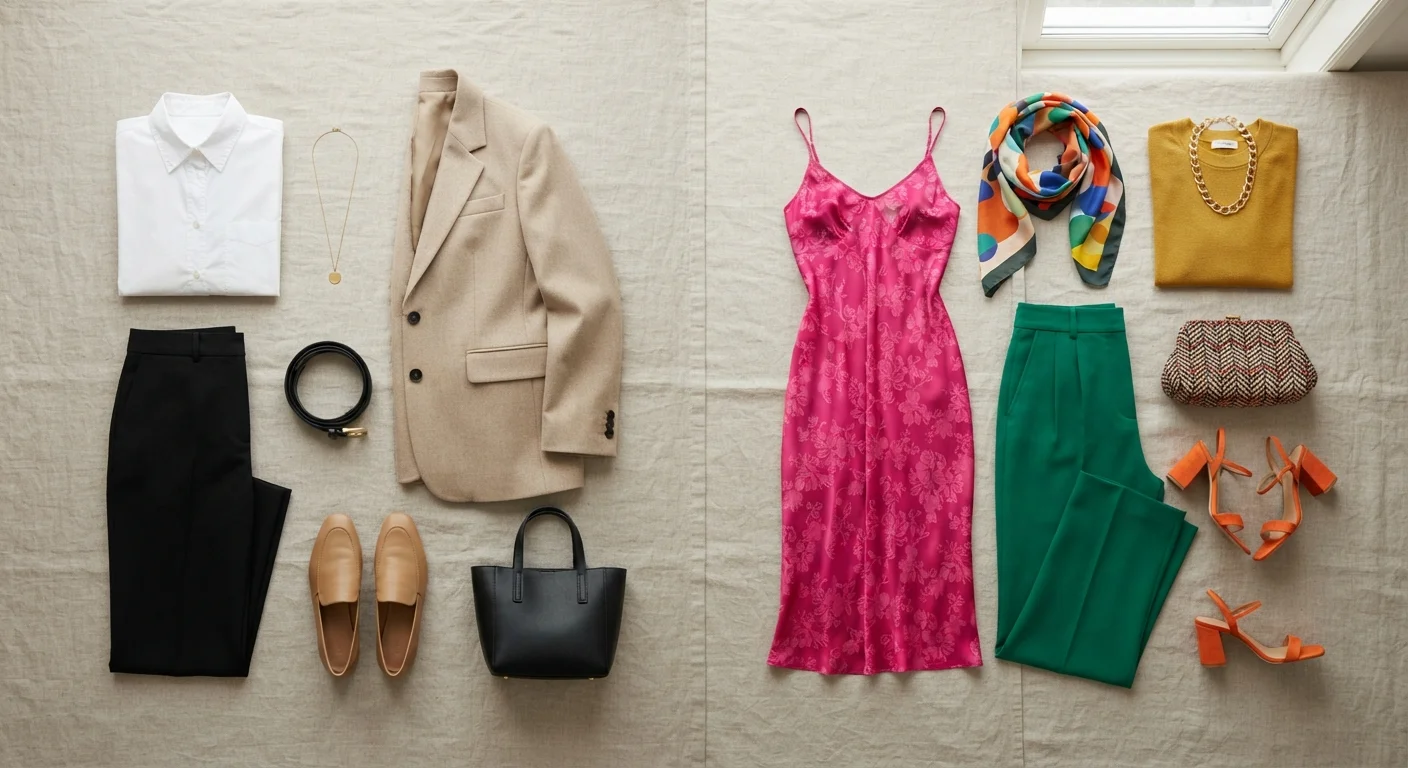
Before weighing the trade-offs, it helps to define the terms clearly. Classic dressing refers to building a wardrobe around styles with demonstrated longevity — pieces whose silhouettes, fabrics, and colours remain appropriate across multiple seasons and contexts. Think a well-cut navy blazer, straight-leg trousers in neutral tones, or a crisp white oxford shirt.
Trend-led dressing, by contrast, draws from what is currently visible on runways, in retail cycles, and across social media — items that feel fresh and culturally current right now, even if their peak relevance is measured in months rather than years.
It's worth noting that this is a spectrum, not a binary. As explored in the distinction between personal style and fashion, most people dress somewhere along the continuum rather than at either extreme. The goal here is to clarify what each end of that spectrum actually costs — and delivers.
The Case for Classic Dressing
A timeless wardrobe is often framed as the sensible, conservative choice — but that undersells it. Classic dressing has genuine, practical appeal that extends well beyond aesthetic conservatism.
Lower cost-per-wear over time
Classic pieces remain wearable across multiple seasons, spreading their cost over far more uses than trend-driven items typically achieve.
Reduced decision fatigue when getting dressed
A cohesive set of versatile staples makes outfit construction faster and more consistent, particularly on high-pressure days.
Broadly appropriate across formal and professional contexts
Timeless silhouettes and neutral palettes rarely read as out of place in dress-code-sensitive environments, from job interviews to formal events.
Easier to mix, match, and layer
Classic pieces are intentionally designed for versatility, meaning a smaller wardrobe can generate a wider range of usable combinations.
Lower environmental footprint per item
Keeping garments in active use for longer reduces the frequency of disposal and replacement, which has documented environmental benefits.
From a financial standpoint, classic pieces typically yield a lower cost-per-wear over time because they remain usable across seasons. The real cost of a wardrobe extends well beyond the price tag on the label, and durable, versatile staples tend to perform well on that measure. Classic wardrobes also reduce the cognitive load of getting dressed — a limited palette of well-considered pieces makes outfit construction faster and more consistent.
There is also a social dimension: classic clothing rarely reads as dated in professional or formal contexts, which matters for situations covered in dress codes from business casual to black tie.
The Case for Trend-Led Dressing
Trend engagement is sometimes dismissed as shallow or impulsive, but that framing misses what it actually offers. For many people, following fashion is a meaningful creative and social practice.
Can feel creatively limiting over time
A strictly classic wardrobe may not reflect shifts in personality, mood, or identity — particularly during periods of personal change.
Higher upfront cost for quality staples
The long-term value argument for classic dressing depends on buying durable, well-constructed pieces, which typically carry a higher initial price.
Risk of appearing disconnected from current culture
In contexts where cultural awareness or creative currency matters — creative industries, youth-facing roles — a purely classic wardrobe can read as out of touch.
Trend-led pieces can become dated quickly
Items purchased for their seasonal relevance may lose their appeal within a year or two, compressing their cost-per-wear and generating closet clutter.
Trend engagement encourages frequent purchasing
The rhythm of fashion cycles creates ongoing spending pressure, which can strain budgets and lead to wardrobe accumulation rather than curation.
Trend-driven wardrobes require more active management
Regularly rotating pieces in and out demands more time, storage planning, and willingness to edit — which not all lifestyles easily accommodate.
Wearing something current can signal cultural awareness and openness to change — qualities that are socially valued in many contexts, from creative industries to youth-facing communities. Trends also create a shared visual language: participating in them can be a form of connection rather than conformity.
Trend-led dressing also acts as a natural prompt for wardrobe evolution. If your life has shifted — a new city, a new role, a new decade — refreshing your clothing can support that transition. Wardrobe transitions tied to life stages often involve deliberately incorporating new influences rather than staying anchored to a prior identity.
Trends Are Not One-Size-Fits-All
Not every seasonal trend translates equally across different body types, skin tones, climates, or personal contexts. Engaging with trends selectively — choosing the ones that genuinely work for your proportions and life — tends to produce better outcomes than wholesale adoption. Consider how a trend interacts with your existing wardrobe before purchasing.
How to Find Your Workable Balance
Most style decisions don't require choosing one camp exclusively. A practical approach is to treat classic pieces as your wardrobe's foundation — items that anchor outfits across seasons — while allowing trend-led pieces to act as accent elements that reflect your current interests without dominating your closet.
Asking a few targeted questions can clarify where your balance should sit:
- How often does your context change? High variability in professional, social, and cultural settings generally favours versatility, which classics provide.
- Where do you find genuine satisfaction? If choosing a new piece brings real pleasure and self-expression, trend engagement has authentic value for you.
- What is your realistic budget for clothing? Trend-led wardrobes require more frequent purchasing to stay current; classic wardrobes front-load cost in higher-quality initial pieces.
Your shopping patterns also shape the wardrobe you end up with. Intentional versus impulsive buying produces meaningfully different closets over time — and trend-led dressing, in particular, is vulnerable to impulse-driven accumulation if not approached deliberately.
~$1,700
Average annual US clothing spend per person
According to the U.S. Bureau of Labor Statistics Consumer Expenditure Survey, American households allocate a significant share of discretionary spending to apparel each year.
~60%
Drop in garment use over 15 years
Research cited by the Ellen MacArthur Foundation suggests the average number of times a garment is worn before disposal has declined significantly over recent decades.
Understanding foundational principles like proportion in dressing can help any approach — classic or trend-forward — produce outfits that feel genuinely intentional rather than accidental.