

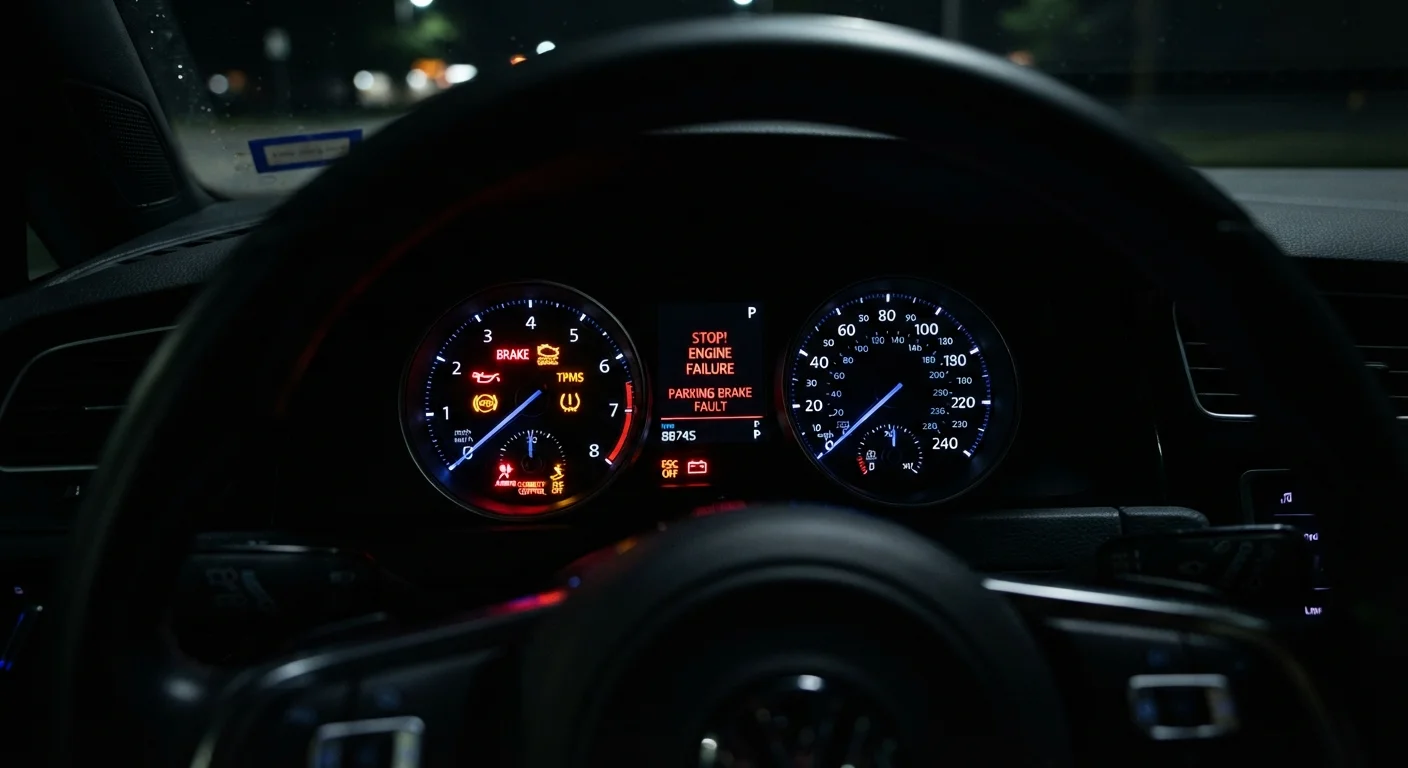
| Warning light colors | Red (urgent), Amber/Yellow (attention needed), Green/Blue (informational) |
| Standardization | Most symbols follow ISO 2575 international standards |
| Check Engine causes | Hundreds of possible fault codes — requires OBD-II scan to identify |
| TPMS trigger threshold | Typically 25% below recommended tire pressure (US Federal Motor Vehicle Safety Standard No. 138) |
| First reference | Always consult your vehicle's owner's manual for model-specific symbol meanings |
Why Your Dashboard Speaks in Symbols
Modern vehicles monitor dozens of systems simultaneously and report problems through a standardized set of dashboard warning lights. Understanding those symbols isn't just a nice-to-have skill — it's the difference between catching a minor issue early and getting stranded on the highway with an avoidable breakdown.
Warning lights generally fall into three urgency tiers: red (stop driving or act immediately), amber/yellow (attention needed soon, but not a crisis), and green or blue (informational — a system is active, not malfunctioning). When in doubt, consult your owner's manual first, since symbol interpretations can vary slightly between makes and models.
| Warning light colors | Red (urgent), Amber/Yellow (attention needed), Green/Blue (informational) |
| Standardization | Most symbols follow ISO 2575 international standards |
| Check Engine causes | Hundreds of possible fault codes — requires OBD-II scan to identify |
| TPMS trigger threshold | Typically 25% below recommended tire pressure (US Federal Motor Vehicle Safety Standard No. 138) |
| First reference | Always consult your vehicle's owner's manual for model-specific symbol meanings |
The Lights That Demand Immediate Action
Red warning lights are non-negotiable. If any of the following appear while you're driving, pull over safely as soon as possible and do not continue until the issue is diagnosed by a qualified mechanic.
- Oil Pressure Warning (oil can icon): Low oil pressure can destroy an engine within minutes. This is not the same as a low oil level light — it means the oil is not circulating correctly. Stop driving immediately.
- Engine Temperature Warning (thermometer in water): Your engine is overheating. Pull over, turn off the engine, and let it cool before checking coolant levels. Never open a hot radiator cap.
- Battery / Charging System (battery icon): The charging system has failed, meaning your car is running on battery reserve alone. You may have limited driving time before the vehicle loses power entirely. Our guide to battery health explains why this system fails and how to spot trouble early.
- Brake System Warning (exclamation in circle): If the parking brake is not engaged, this signals low brake fluid or a hydraulic fault. Reduced braking ability is a serious safety risk.
A Blinking Check Engine Light Is Different
A steady check engine light means a fault has been detected and should be investigated soon. A flashing check engine light, however, typically indicates an active engine misfire that can rapidly damage the catalytic converter — an expensive component. If your check engine light is flashing, reduce speed, avoid hard acceleration, and have the vehicle inspected as soon as possible.
Amber Lights: Schedule a Visit, Don't Ignore Them
Amber or yellow lights typically indicate a developing issue that won't strand you today but will escalate if ignored. These are the lights most drivers dismiss — often to their financial regret later.
- Check Engine (engine outline): One of the most misunderstood lights on the dashboard. It can signal anything from a loose gas cap to a misfiring cylinder. A mechanic can read the stored diagnostic trouble code with an OBD-II scanner to identify the exact fault. Don't drive indefinitely with this light on.
- Tire Pressure Monitoring System / TPMS (tire with exclamation): One or more tires is significantly underinflated. Driving on low-pressure tires affects handling, fuel economy, and tread wear. See our tire pressure and tread guide for how to check and correct pressure correctly.
- Transmission Temperature: The transmission fluid is running hot — common when towing or in stop-and-go traffic. Ease up on load and have the fluid level and condition inspected.
- Service Required / Maintenance Due: This is a mileage-based reminder, not a fault indicator. It's your cue to consult your service schedule and book a routine checkup.
OBD-II
On-Board Diagnostics II — a standardized system built into vehicles made after 1996 that monitors engine and emissions performance and stores fault codes readable by a scan tool.
TPMS
Tire Pressure Monitoring System — sensors inside each wheel that alert the driver when tire pressure drops significantly below the recommended level.
Diagnostic Trouble Code (DTC)
A coded error message stored by a vehicle's computer when a monitored system falls outside normal operating parameters. A mechanic reads these with a scanner to identify the specific fault.
Charging System
The combination of the alternator, battery, and voltage regulator that keeps a vehicle's electrical systems powered while the engine runs and recharges the battery.
Coolant
A fluid mixture (typically water and antifreeze) that circulates through the engine to absorb heat and prevent overheating. Low or degraded coolant can trigger the temperature warning light.
Building the Habit of Proactive Dashboard Awareness
Treating warning lights as background noise is one of the most common — and costly — habits among everyday drivers. A light that glows amber today and gets ignored can trigger a cascade of secondary failures that transform a $150 repair into a $1,500 one.
Make it a habit to do a quick dashboard scan each time you start your car. If a new light appears, note when it came on, what conditions preceded it (cold start, highway speed, heavy load), and whether it stays on continuously or flickers. This context helps a mechanic diagnose the issue faster. For a broader picture of how warning lights connect to your vehicle's overall health, explore the vehicle maintenance hub for guides on routine care. And if you're evaluating a used car and see evidence that warning lights were recently cleared, reading a vehicle history report can help you spot hidden problems before you buy.
This article is for general informational purposes only. Always consult a qualified mechanic for diagnosis and repair of vehicle issues — do not attempt repairs involving brakes, electrical systems, or engine components without appropriate training and equipment.