

Key Takeaways
- Most car batteries last three to five years, but heat, cold, and short trips accelerate decline.
- Warning signs — slow cranking, dimming lights, and dashboard alerts — often appear weeks before failure.
- A simple voltage test at any auto shop can reveal battery health before a breakdown happens.
- Keeping terminals clean and avoiding prolonged accessory use while the engine is off extends battery life.
- Vehicles left sitting for weeks are especially vulnerable to battery drain and should be checked before long trips.
Why Your Battery Fails Without Warning — Except It Usually Doesn't
Few things derail a road trip faster than a car that simply won't start. Yet battery failure — responsible for a significant share of roadside assistance calls each year — is rarely a sudden event. It's a gradual decline that most drivers miss because they're not sure what to look for.
A typical car battery is rated to last three to five years under normal conditions. But "normal" covers a lot of variables. Extreme heat causes battery fluid to evaporate and internal components to corrode faster. Bitter winter cold thickens engine oil and increases the electrical load demanded at startup, stretching a weakened battery to its limit. Frequent short trips — under 20 minutes — prevent the alternator from fully recharging the battery between drives, slowly draining its reserve capacity over time.
Understanding how your battery interacts with the rest of the charging system matters too. For a clear breakdown of what the battery, alternator, and starter motor each do, see our guide to your car's charging system.
~40%
Share of roadside breakdowns attributed to battery failure
Battery-related issues are consistently cited among the leading causes of roadside assistance calls across major US motor clubs.
3–5 years
Typical car battery lifespan under normal conditions
Extreme temperatures, short-trip driving patterns, and infrequent use can push a battery toward the lower end of this range.
Warning Signs Worth Knowing
Batteries rarely die completely without telegraphing distress first. The challenge is recognizing signals that are easy to dismiss as minor annoyances.
- Slow or labored cranking: If the engine turns over sluggishly before starting, the battery may no longer deliver sufficient current.
- Dimming headlights at idle: Lights that brighten when you rev the engine but dim at a stop suggest the battery isn't holding charge adequately.
- Electrical gremlins: Erratic power windows, flickering interior lights, or infotainment systems that reset unexpectedly can all point to a weak battery struggling under load.
- Battery warning light: This dashboard symbol often indicates a charging system issue — not just the battery itself, but worth investigating promptly. Our dashboard warning light guide explains what each symbol typically signals.
- Age over three years: Even a battery showing no outward symptoms can be significantly degraded by its fourth or fifth year. Age alone is a reason to have it tested.
If your vehicle has been sitting for an extended stretch, battery health deserves extra scrutiny. Our article on caring for a car during long periods of non-use covers exactly why idle time is hard on batteries and how to manage it.
Best Practices for Battery Health
Prevention is straightforward once you know what habits actually make a difference.
Have your battery tested annually once it passes the two-year mark.
Battery capacity degrades gradually and isn't visible to the naked eye. Professional load testing reveals remaining capacity before failure, giving you time to act rather than react.
Keep battery terminals clean and free of corrosion.
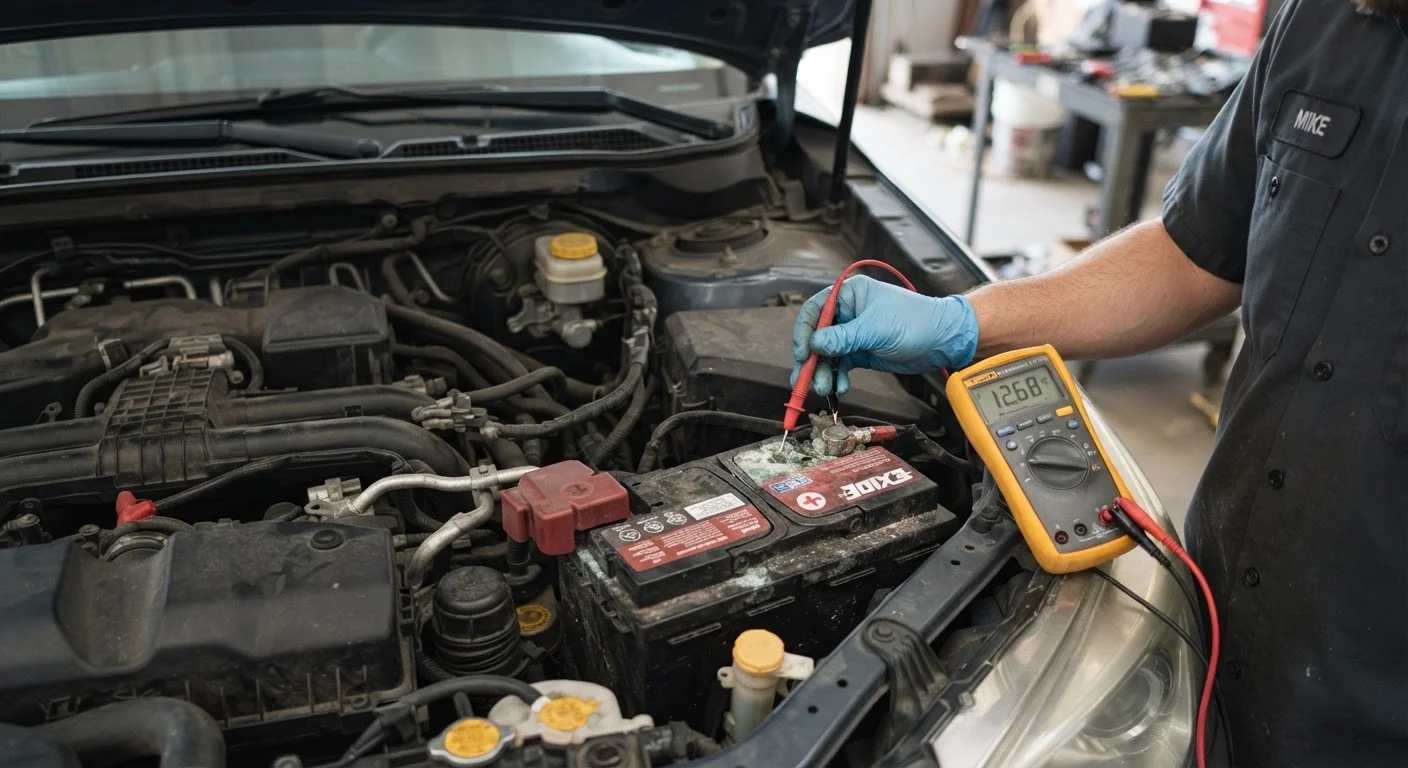
The white or bluish buildup that forms on battery terminals acts as electrical resistance, reducing charging efficiency and potentially preventing a reliable start. It's one of the easiest maintenance tasks to address.
Avoid running accessories — lights, radio, climate control — with the engine off for extended periods.
The alternator recharges the battery only when the engine is running. Sustained accessory use with the engine off draws down reserve capacity and, over time, shortens battery lifespan through repeated deep discharge cycles.
Take longer drives periodically if your typical use involves short, frequent trips.
Short trips don't give the alternator enough running time to fully recharge the battery. Chronic partial charging degrades battery chemistry over time and reduces total capacity.
Use a maintainer or trickle charger if the vehicle will sit unused for more than two weeks.
A car left idle slowly discharges through parasitic loads — the clock, alarm system, and onboard electronics all draw small amounts of power continuously. Without compensation, this can leave a battery fully depleted.
Before Your Next Road Trip
A battery check should sit near the top of any pre-trip checklist, right alongside tire pressure and fluid levels. Skipping vehicle checks before a long drive is one of the most common — and most avoidable — reasons road trips go sideways.
Ask a mechanic or auto shop to perform a battery load test, which measures how the battery performs under the electrical demands of starting. A simple voltage reading (around 12.6 volts when the car is off) tells you charge level but not overall capacity. A load test tells you whether the battery can actually do its job when it matters. Most shops perform this check quickly, often at no charge.
For broader pre-trip vehicle preparation and everything that belongs in your road trip planning routine, build battery health into the process as a non-negotiable step — not an afterthought.
This article provides general vehicle maintenance information for educational purposes. For diagnosis, repair, or safety-related decisions, consult a qualified mechanic or automotive professional.