

Key Takeaways
- Cats are obligate carnivores and cannot safely subsist on dog food, even temporarily.
- Dog food lacks taurine, arachidonic acid, and preformed vitamin A — all essential for cats.
- Dogs eating cat food regularly risk obesity and digestive upset due to its high protein and fat content.
- A single accidental swap is unlikely to cause serious harm, but routine cross-feeding carries real health risks.
- Always consult a veterinarian before making any significant change to your pet's diet.
Option A
Dog Food
Formulated for an omnivore's flexible nutritional needs.
Best for: Dogs of all life stages, bred for a diet that balances plant and animal proteins with lower protein-to-fat ratios than cat food.
Option B
Cat Food
Engineered for the strict demands of an obligate carnivore.
Best for: Cats requiring high animal protein, added taurine, arachidonic acid, and preformed vitamin A — nutrients they cannot synthesize adequately on their own.
If your cat accidentally eats dog food once
Dog Food (temporary, with monitoring)
A single small serving is unlikely to cause immediate harm, but cat food should be restored as soon as possible. Watch for vomiting or lethargy and consult your vet if symptoms appear.
If your dog regularly sneaks cat food
Cat Food should be kept out of reach
Cat food's elevated protein and fat can contribute to weight gain and pancreatitis risk in dogs over time. Separate feeding areas are the practical solution.
If you have both species and want a simpler feeding routine
Species-appropriate food for each pet
There is no nutritionally complete food that safely meets the needs of both dogs and cats simultaneously. Feeding each species its own formulation is non-negotiable for long-term health.
Why the Difference Matters More Than You Might Think
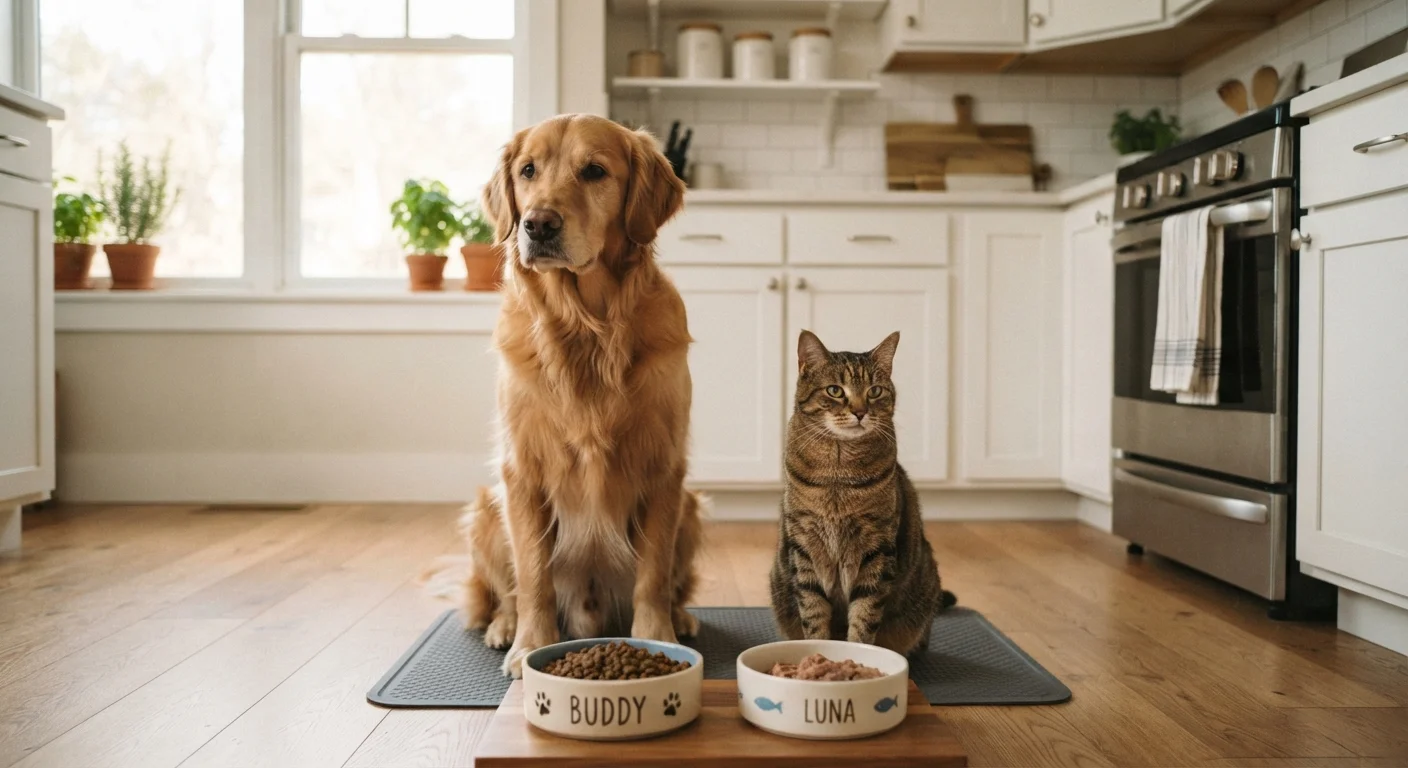
It's a scene many multi-pet households know well: the dog drifting toward the cat's bowl, or a cat sniffing at kibble left on the floor. While it can seem harmless — food is food, right? — the nutritional science tells a very different story. Dogs and cats have diverged significantly in their metabolic needs, and commercial pet foods are formulated specifically around those differences.
Understanding why swapping is problematic starts with recognizing what each species actually is. Dogs are omnivores: they evolved to digest a mixed diet of animal and plant material. Cats, by contrast, are obligate carnivores — meaning their bodies are biologically dependent on nutrients found almost exclusively in animal tissue. For a deeper look at how feline nutrition diverges from canine, see our article on why feline nutrition differs so much from canine.
These aren't minor variations on the same theme. They represent fundamentally different physiological requirements — and pet food manufacturers account for them in every formulation.
What Cats Need That Dog Food Doesn't Provide
Cat food contains several nutrients at levels that dog food simply doesn't supply — because dogs can synthesize them internally, while cats cannot.
| Criterion | Dog Food | Cat Food |
|---|---|---|
| Taurine content | Not required; low levels | Required; included in formulation |
| Protein level | Moderate (omnivore needs) | High (obligate carnivore needs) |
| Fat content | Lower | Higher |
| Arachidonic acid | Not required | Must be present |
| Vitamin A source | Beta-carotene (plant-derived) | Preformed retinol (animal-derived) |
| Caloric density | Lower per serving | Higher per serving |
| Safe for cats long-term? | No — causes deficiencies | Yes — species-appropriate |
| Safe for dogs long-term? | Yes — species-appropriate | No — risk of obesity, pancreatitis |
- Taurine: An amino acid essential for feline heart function and vision. Cats lack sufficient enzyme activity to produce it from dietary precursors. Dog food is not required to contain taurine at meaningful levels. Prolonged taurine deficiency in cats can lead to dilated cardiomyopathy (an enlarged, weakened heart) and retinal degeneration.
- Arachidonic acid: A fatty acid dogs can produce from linoleic acid. Cats cannot perform this conversion and must get it directly from animal fat. Dog foods frequently don't provide it in adequate amounts.
- Preformed vitamin A: Dogs convert beta-carotene from plant sources into vitamin A. Cats cannot make this conversion efficiently and need retinol — preformed vitamin A from animal sources — in their diet. Dog food may rely on plant-based precursors that are metabolically useless to cats.
- High protein levels: Cats use protein as a primary energy source at a much higher rate than dogs. Even the protein quantity in dog food is typically insufficient for cats over time.
A cat fed exclusively on dog food will eventually develop serious, potentially irreversible health problems. This is not a theoretical concern — it is well-documented in veterinary medicine.
What Dog Food Risks When Cat Food Is on the Menu
The risk runs in the other direction too, though for different reasons. Cat food is calorie-dense, high in protein and fat, and far richer than what a typical dog requires. For dogs that regularly consume cat food:
~60%
Estimated prevalence of pet obesity in the US
The Association for Pet Obesity Prevention has reported that a significant majority of dogs and cats in the US are classified as overweight or obese, with diet composition being a key factor.
3–4x
Protein requirement difference: cats vs. dogs
Research in comparative physiology indicates cats require protein at roughly three to four times the rate of dogs on a per-body-weight basis, reflecting their obligate carnivore metabolism.
- Weight gain and obesity are common outcomes. The higher caloric load adds up quickly, particularly in less active or middle-aged dogs.
- Gastrointestinal upset — including vomiting and diarrhea — can result from the rich fat content, which can overwhelm a dog's digestive system.
- Pancreatitis risk increases with high-fat diets. Dogs prone to this condition, such as some medium and large breeds, face a meaningful concern if cat food becomes a regular fixture.
A dog eating cat food occasionally is unlikely to suffer lasting harm. But if it becomes a habit, the cumulative effect can be significant. Keeping feeding areas separate — and storing pet food where only the intended animal can access it — is a practical and effective solution.
It's also worth recognizing that unusual ingredient combinations and unbalanced formulations can cause problems across the board. Our guide on where the real risks in pet feeding lie offers broader context on this topic.
Practical Steps for Multi-Pet Households
Managing feeding in a home with both dogs and cats requires some structure, but it doesn't need to be complicated.
- Feed in separate rooms or at separate times. Closing a door during mealtimes prevents cross-feeding entirely.
- Use elevated feeding stations for cats. Placing cat bowls on surfaces dogs can't reach is a simple and effective barrier.
- Don't leave food out between meals. Free feeding increases the opportunity for pets to eat each other's food. Scheduled mealtimes with prompt removal of leftovers help.
- Choose foods meeting AAFCO standards. Look for labeling that confirms the food meets Association of American Feed Control Officials (AAFCO) nutritional profiles — for the correct species and life stage.
If you need to switch your pet to a new food for any reason, a gradual transition is strongly advised to avoid digestive upset. Our article on transitioning your pet to a new food without digestive upset walks through the recommended approach. And if you're comparing food formats for your cat specifically, our wet food vs. dry food for cats breakdown covers the key trade-offs.
When to Call Your Vet
If your cat has been eating dog food for more than a few days, or your dog has consumed a large amount of cat food at once, a veterinary check-in is worthwhile. Taurine deficiency in cats can develop gradually and may not show obvious symptoms until damage has progressed. Early intervention is always the most effective approach.
This article is for general informational purposes only and is not a substitute for veterinary advice. If you have concerns about your pet's diet or health, consult a licensed veterinarian.