

Key Takeaways
- Wet food contains 70–85% moisture, significantly supporting cats' naturally low thirst drive.
- Dry food is more calorie-dense per gram, making portion control important for weight management.
- Neither format is universally superior — the best choice depends on your individual cat's health needs.
- Combining both formats can balance palatability, hydration, and convenience.
- Always consult your veterinarian before making major changes to your cat's diet.
Option A
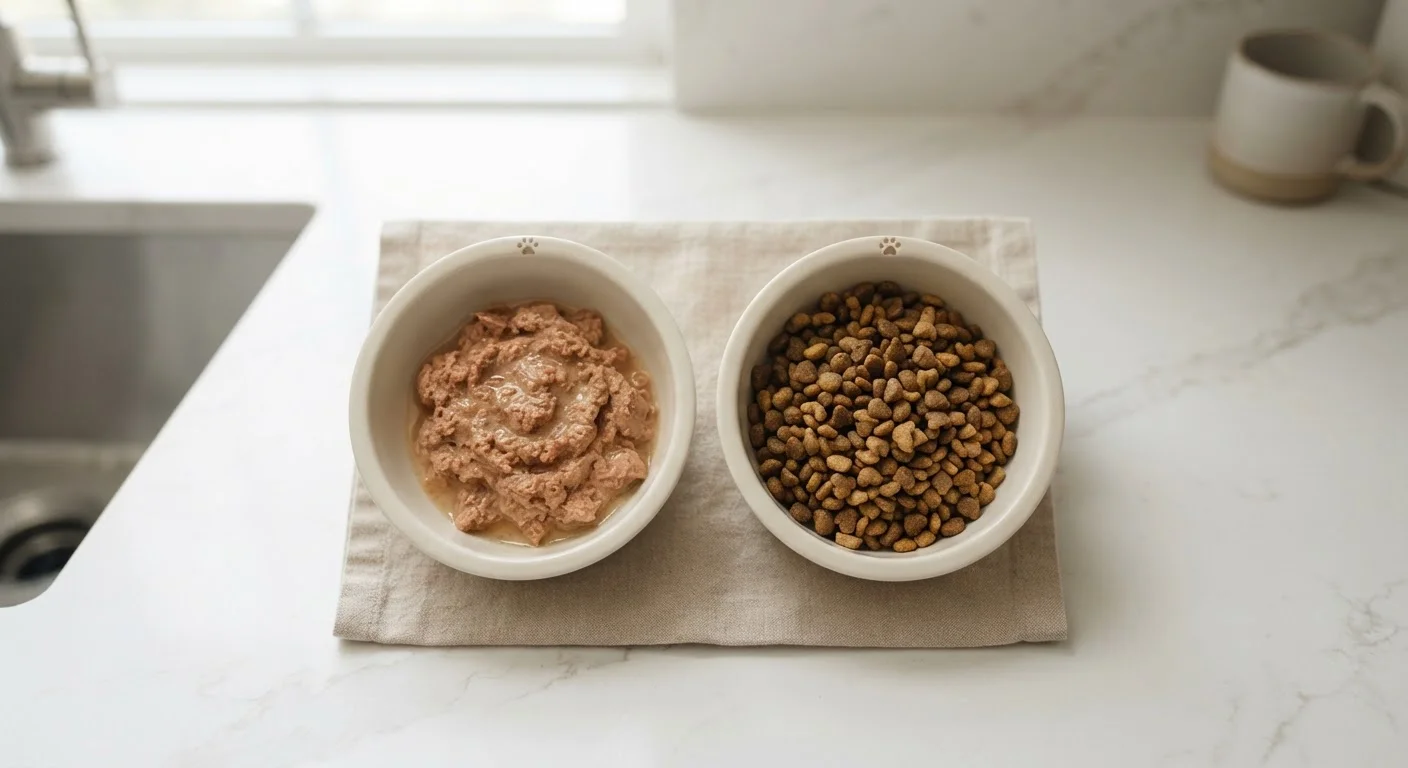
Wet Cat Food
The moisture-rich, highly palatable option.
Best for: Cats with low water intake, urinary issues, weight concerns, dental problems, or picky eating habits.
Option B
Dry Cat Food
The convenient, cost-effective everyday staple.
Best for: Cat owners seeking easy storage, free-feeding flexibility, and a generally lower cost per serving.
If your cat has a history of urinary tract issues or kidney disease
Wet Cat Food
The high moisture content in wet food supports urinary health and kidney function by increasing overall fluid intake without relying on a cat drinking more water voluntarily.
If convenience and budget are your primary concerns
Dry Cat Food
Dry kibble stores easily, doesn't spoil at room temperature, and typically costs less per calorie than comparable wet food options.
If your cat is overweight or prone to overeating
Wet Cat Food
Wet food's high water content delivers lower calorie density per serving, helping cats feel fuller without excessive caloric intake.
If you want to support dental hygiene through diet
Dry Cat Food
The mechanical action of chewing kibble can provide mild abrasive cleaning, though it is not a substitute for regular professional dental care.
If your cat is a picky eater or has reduced appetite
Wet Cat Food
Wet food's stronger aroma and varied textures tend to be more appealing to cats with finicky palates or those recovering from illness.
The Core Difference: Moisture Content
The most fundamental distinction between wet and dry cat food is water content. Wet food — sold in cans, pouches, or trays — typically contains 70–85% moisture. Dry kibble, by contrast, contains just 6–10% moisture. This gap has real physiological significance for cats.
Cats evolved as desert animals with a naturally low thirst drive. In the wild, they obtained most of their hydration from prey. Domestic cats on an exclusively dry diet are therefore at greater risk of chronic, low-level dehydration, which over time can place strain on the kidneys and urinary tract. Wet food compensates for this by delivering water alongside nutrients in a single meal.
For cats with confirmed kidney disease, feline lower urinary tract disease (FLUTD), or a history of urinary crystals, veterinarians commonly recommend wet food as part of a management strategy — though any dietary change for a cat with a diagnosed condition should be guided by a veterinarian.
| Criterion | Wet Cat Food | Dry Cat Food |
|---|---|---|
| Moisture content | 70–85% | 6–10% |
| Calorie density (as served) | Lower per gram | Higher per gram |
| Urinary/kidney support | Strong — increases fluid intake | Minimal — low water intake risk |
| Dental abrasion | Minimal | Mild mechanical cleaning |
| Palatability | Generally higher | Variable; accepted by most cats |
| Storage convenience | Refrigerate after opening | Room temperature; long shelf life |
| Typical cost per serving | Higher | Lower |
| Free-feeding suitability | Not suitable — spoils quickly | Suitable with portion awareness |
Nutrition, Calories, and Weight Management
Both wet and dry foods can be formulated to meet the AAFCO nutritional profiles required for complete and balanced cat diets. The format itself does not guarantee quality — ingredient composition and life-stage appropriateness matter far more. When evaluating any new cat food, check for an AAFCO statement confirming the food is appropriate for your cat's life stage.
On a dry matter basis (comparing nutrients after water is removed), wet and dry foods often have more similar nutrient profiles than their labels suggest. However, wet food is typically lower in calorie density per gram as served, which can benefit cats prone to weight gain. Dry food's higher caloric concentration means smaller volumes are needed — but free-feeding kibble is a common contributor to feline obesity.
70–85%
Moisture in wet cat food
Cats consuming wet food can meet a significant portion of their daily water needs through food alone, reducing reliance on drinking.
~59%
Prevalence of dental disease in cats
Research published in veterinary literature consistently finds dental disease to be among the most common conditions diagnosed in domestic cats, regardless of diet.
25–40%
Estimated overweight/obese domestic cats
Studies in veterinary epidemiology suggest a substantial proportion of pet cats in developed countries are above healthy body weight, often linked to high-calorie diets and low activity.
Cats that are indoor-only, less active, or neutered are especially prone to weight gain. Activity level varies significantly between indoor and outdoor cats, and feeding portions should reflect your individual cat's energy expenditure.
Dental Health, Palatability, and Practical Considerations
Dry food is often cited as better for dental health due to its crunchy texture. Chewing kibble does produce some mechanical abrasion on tooth surfaces, but the evidence for meaningful plaque reduction is limited. Dental disease in cats is prevalent regardless of diet type; the most effective preventive measure remains regular professional dental scaling by a veterinarian, combined with tooth brushing at home where possible.
Palatability is an area where wet food consistently performs well. Its higher protein content, fat levels, and strong aroma make it more appealing to many cats, including seniors with reduced olfactory sensitivity and cats recovering from illness. Dry food, while accepted by most healthy cats, can become monotonous and is sometimes rejected by cats accustomed to richer textures.
From a practical standpoint, dry food wins on convenience: it can be left out without spoiling, is easier to measure and store, and is generally less expensive per serving. Wet food must be refrigerated after opening and discarded if left uneaten beyond two to four hours at room temperature.
Transitioning Between Food Types
If you decide to change your cat's food format, introduce the new food gradually over seven to ten days by mixing increasing proportions of the new food with the old. Abrupt dietary changes can cause gastrointestinal upset in cats, including vomiting and diarrhea. Cats with health conditions may require a more carefully managed transition under veterinary supervision.
Many veterinarians and feline nutritionists suggest a mixed feeding approach — offering wet food as the primary meal for hydration benefits while using a controlled amount of dry food for convenience or enrichment. This isn't universally appropriate and depends on the individual cat's health, weight, and preferences. Discuss any feeding plan with your veterinarian.
For a broader look at how cats' nutritional needs differ fundamentally from other species, see our piece on why swapping dog and cat food is problematic. And if you're weighing commercial formats against raw diets, our overview of raw feeding versus commercial kibble covers the evidence on both sides.
This article provides general nutritional information for educational purposes only and is not a substitute for professional veterinary advice. Always consult a licensed veterinarian before making significant changes to your cat's diet, especially if your cat has an existing health condition.