

Key Takeaways
- Cats are obligate carnivores and cannot thrive on a plant-based or low-protein diet.
- Cats require nutrients — including taurine, arachidonic acid, and preformed vitamin A — that dogs can synthesize but cats cannot.
- Feeding a cat dog food, even occasionally, risks creating serious nutritional deficiencies over time.
- Hydration is a critical and often overlooked aspect of feline nutrition due to cats' low thirst drive.
- Life stage and health status significantly affect a cat's specific nutritional needs.
Obligate Carnivore
An obligate carnivore is an animal that must eat meat to survive. Unlike omnivores — such as dogs or humans — obligate carnivores cannot produce certain essential nutrients on their own and must obtain them exclusively from animal tissue. Cats are the most well-known example among domestic pets.
The term derives from the Latin 'obligare,' meaning to bind. Cats lack key metabolic enzymes (such as delta-6-desaturase for fatty acid conversion) that other species use to synthesize nutrients from plant sources.
The Biology Behind Feline Dietary Needs
Cats evolved as solitary hunters in arid environments, a history that shaped not just their behavior but their physiology at the cellular level. Their digestive systems are shorter and less complex than those of omnivores, optimized for processing animal protein and fat rather than carbohydrates. Unlike dogs — who share some metabolic flexibility with humans — cats have a fixed metabolic reliance on nutrients found only in animal tissue.
This distinction matters practically. A dog can convert beta-carotene from plant foods into vitamin A; a cat cannot. A dog produces enough taurine from other amino acids; a cat does not. These aren't minor variations — they're hard biological constraints that determine what a cat's diet must contain. Feeding a cat as though it were a small dog ignores fundamental biochemistry.
Cats and Carbohydrates: What the Research Suggests
Cats have limited ability to digest large amounts of carbohydrates efficiently. They lack salivary amylase (the enzyme that begins starch digestion in omnivores) and have low activity of intestinal disaccharidases. While cats can use some carbohydrates as an energy source, high-carbohydrate diets are not optimal and may contribute to blood sugar dysregulation in predisposed individuals. This does not mean all carbs are harmful, but it reinforces why animal protein and fat should form the dietary core.
Nutrients Cats Cannot Make — But Must Have
Several nutrients are non-negotiable in a cat's diet because they cannot be synthesized in adequate quantities from other compounds:
- Taurine: An amino acid critical for cardiac function, retinal health, and fetal development. Deficiency causes dilated cardiomyopathy (a serious heart condition) and central retinal degeneration, leading to blindness.
- Arachidonic acid: An omega-6 fatty acid that dogs can produce from linoleic acid. Cats lack sufficient enzyme activity to do the same and must consume it preformed in animal fat.
- Preformed vitamin A (retinol): Dogs convert beta-carotene from plants into vitamin A. Cats cannot and require retinol from animal sources such as liver.
- Niacin: Cats have a very limited ability to synthesize niacin from tryptophan and rely heavily on dietary sources.
Commercially prepared cat foods formulated to meet AAFCO (Association of American Feed Control Officials) nutritional profiles are required to include these nutrients at minimum levels. Understanding this helps explain why species-appropriate formulation isn't just a marketing claim — it reflects genuine physiological necessity. For a comparative view of how another species' needs shift across life stages, see how dog nutrition changes by life stage.
~26%
Minimum crude protein in cat food (AAFCO adult maintenance)
AAFCO sets a minimum of 26% crude protein on a dry matter basis for adult cat maintenance diets, reflecting cats' high protein requirements compared to dogs (18%).
70–80%
Moisture content in wet cat food
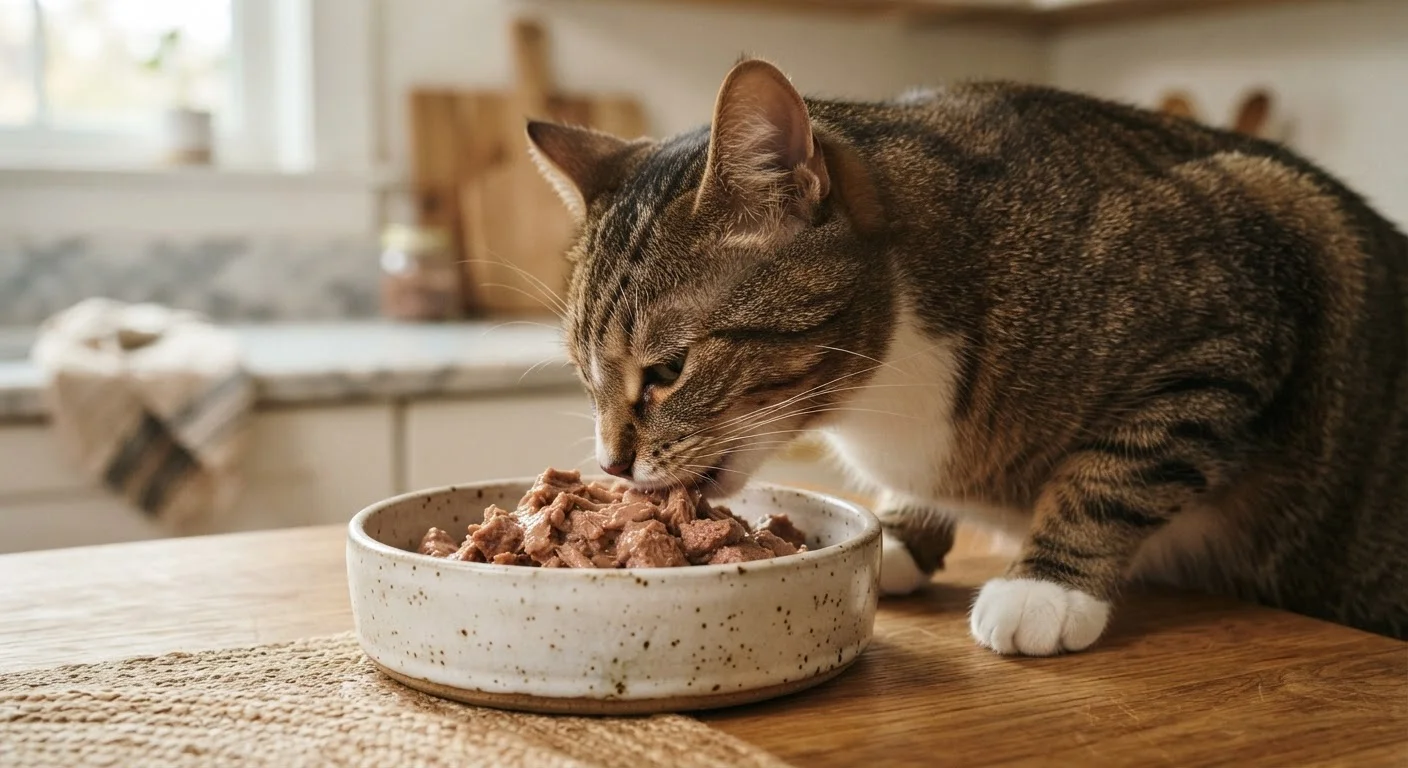
Wet cat food closely approximates the moisture content of whole prey, which is why it is often recommended as part of a hydration strategy for cats prone to urinary issues.
~58%
US cats estimated to be overweight or obese
According to the Association for Pet Obesity Prevention, a substantial majority of domestic cats are above a healthy body weight — a condition often linked to ad-libitum dry food feeding.
Hydration: The Silent Challenge in Cat Feeding
Cats have a naturally low thirst drive, an adaptation from ancestors who obtained most of their moisture from prey. This evolutionary trait means domestic cats eating dry food exclusively often exist in a state of mild, chronic dehydration — a condition associated with increased risk of urinary tract disease and kidney stress over time.
This is one reason the wet-versus-dry food debate carries real clinical weight. Wet food typically contains 70–80% moisture, closely mimicking the water content of whole prey. Dry kibble, by contrast, contains roughly 10%. The practical implication: cats on dry-only diets need consistent access to fresh water and may benefit from strategies like water fountains, which some cats prefer to still bowls.
For a deeper look at how food format affects hydration and overall health, explore the trade-offs between wet and dry cat food.
Encourage Hydration With Simple Changes
If your cat eats primarily dry food, consider incorporating wet food into at least one daily meal to boost moisture intake. Many cats also drink more readily from a circulating water fountain than a static bowl — a practical, low-effort way to support urinary and kidney health. Speak with your veterinarian if you're concerned about your cat's water intake.
Common Misconceptions That Can Harm Cats
Several widely held feeding assumptions are particularly problematic when applied to cats. Vegetarian or vegan diets, however well-intentioned, create deficiencies in taurine, arachidonic acid, and vitamin A that cannot be safely avoided without carefully formulated supplementation — an area where veterinary guidance is essential. Similarly, assuming a cat's food needs are identical to a dog's because both are common household pets ignores species-level biology entirely.
Free feeding — leaving dry food available at all times — is another practice worth scrutinizing. While cats are sometimes described as natural grazers, unrestricted access to calorie-dense kibble is a significant contributor to feline obesity, which in turn raises the risk of diabetes, joint disease, and liver conditions. Structured meal feeding gives owners better visibility into appetite changes, which can be an early indicator of illness.
Many other common feeding habits benefit from veterinary scrutiny — including some that seem intuitively sensible.
This article provides general nutritional information for educational purposes and is not a substitute for personalized veterinary advice. Always consult a licensed veterinarian regarding your cat's specific dietary needs, health conditions, and life stage.