

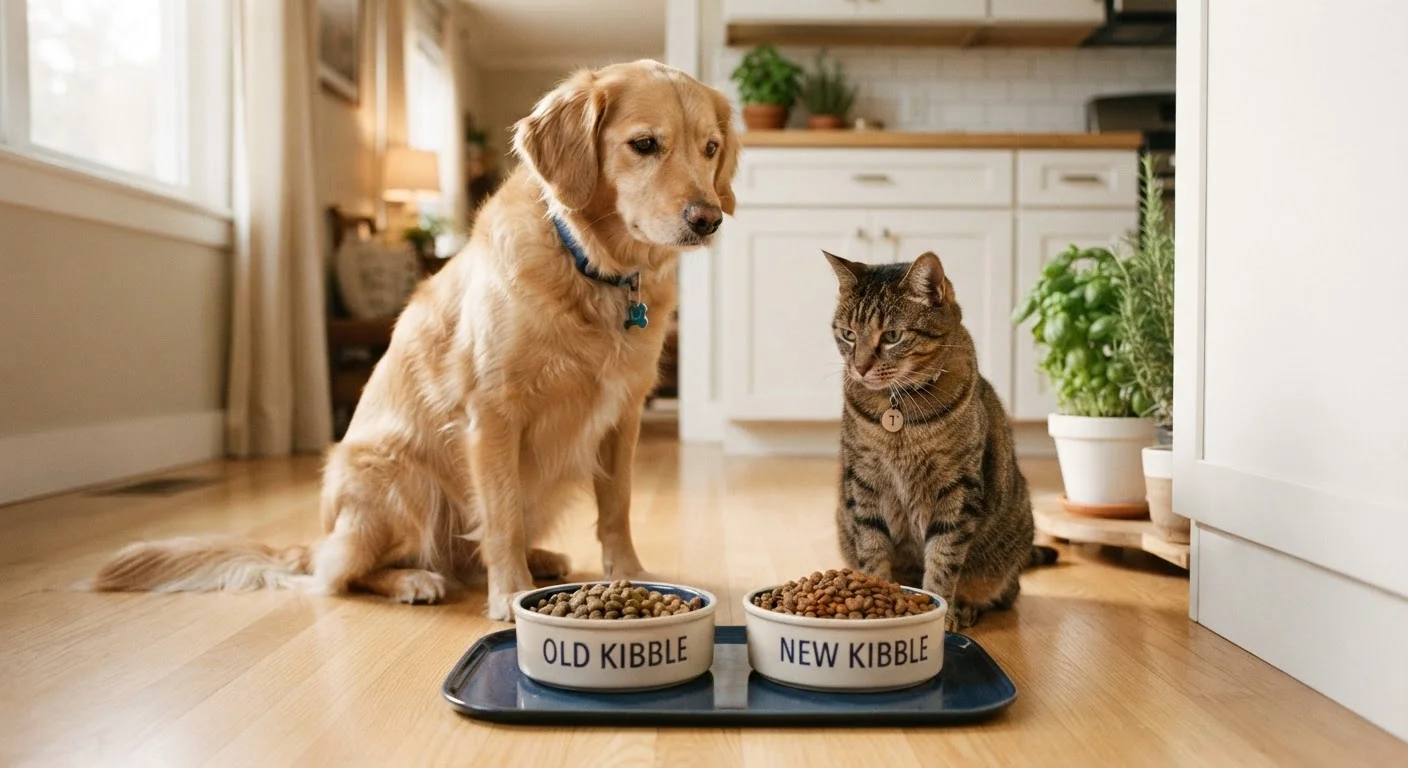
Key Takeaways
- Switching pet foods abruptly is a leading cause of vomiting, diarrhea, and gas in cats and dogs.
- A 7–10 day gradual transition is the standard veterinary recommendation for most healthy pets.
- Pets with sensitive stomachs, food allergies, or chronic GI conditions may need up to four weeks.
- Track stool consistency daily — it is your most reliable indicator that the transition is going well.
- Consult your veterinarian before transitioning if your pet has an existing health condition.
What you will need
Why Abrupt Food Changes Cause Problems
A pet's digestive system hosts a complex community of bacteria and enzymes that are calibrated to break down a specific diet. When food changes suddenly, the gut microbiome does not have time to adjust. The result — vomiting, diarrhea, flatulence, or loss of appetite — is the gut responding to unfamiliar proteins, fats, and fiber levels rather than to anything wrong with the new food itself.
Cats are generally more sensitive to dietary changes than dogs, and both species tend to be more reactive when switching between food types (for example, from dry to wet, or from one protein source to a very different one). Senior pets and those with any history of gastrointestinal sensitivity typically need the most conservative transition timelines.
Always Consult Your Vet First
If your pet has a diagnosed digestive condition, kidney disease, diabetes, or food allergy, do not begin a food transition without veterinary guidance. Dietary changes for medically complex pets often require a prescribed plan. This article provides general educational guidance and is not a substitute for professional veterinary advice.
Understanding what your pet's digestive system needs is foundational to confident feeding decisions — something we explore in depth across our pet health and care guidance.
What You Will Need
Gather these items before starting the transition:
Kitchen scale or measuring cup
Accurately measures portions of old and new food to maintain correct ratios during each transition stage.
Daily log or notes app
Tracks stool consistency, appetite, and any symptoms so you can identify patterns and share data with your vet.
Probiotic supplement (pet-formulated)
May support gut microbiome stability during the transition; discuss suitability and dosing with your veterinarian before use.
What you will need
Having everything in place before day one prevents improvised ratios and makes it easier to follow the schedule consistently.
The Step-by-Step Transition
The following schedule is based on widely used veterinary guidance for transitioning healthy adult pets. Adjust the pace according to your individual animal's response — slower is always safer than faster.
Evaluate the new food before you begin
Before opening the new bag or can, confirm the food is appropriate for your pet's life stage, species, and any known health considerations. Look for a nutritional adequacy statement from the Association of American Feed Control Officials (AAFCO) on the label. Our practical checklist for evaluating a new pet food walks through what to look for in detail.
Days 1–3: Introduce 25% new food
Mix roughly 25% of the new food with 75% of the current food for each meal. Keep total portion size the same as your pet's usual daily amount — you are changing the ratio, not increasing overall intake. Measure by weight for the most accuracy.
Days 4–6: Move to a 50/50 blend
Increase the new food to half of each meal. At this midpoint, stool consistency is your key quality check. Healthy stools should be firm and well-formed. Some slight softening is common and generally not a cause for concern over one or two days.
Days 7–9: Shift to 75% new food
Reduce the old food to roughly 25% of the blend. Most pets tolerate this stage well if the earlier phases went smoothly. Continue monitoring stool quality and appetite at each meal.
Day 10 onward: Complete the switch
By day 10, most healthy adult pets are ready to eat 100% of the new food. Continue observing stool and energy levels for at least a week after full transition to confirm your pet has settled in well. For pets with sensitive stomachs, extending the entire schedule to 14–28 days is often advisable.
Use Meal Feeding, Not Free Feeding
Transitioning is far easier when you feed measured meals at set times rather than leaving food out all day. Meal feeding lets you control exact ratios, monitor how much your pet eats, and spot appetite changes early. For more on feeding habits that may be working against your pet, see common feeding assumptions vets often have to correct.
Stop the Transition If These Signs Appear
Persistent vomiting, bloody stool, lethargy, or refusal to eat for more than 24 hours are not normal transition side effects. Contact your veterinarian promptly if any of these occur. Mild loose stool for one to two days can be expected, but anything beyond that warrants professional assessment.
After the Transition: What to Watch For
Once fully transitioned, most pets settle into the new diet within two weeks. Signs that the transition was successful include consistent firm stools, maintained appetite, steady energy levels, and a coat that stays in good condition over time.
If your pet continues to have soft stools, excessive gas, or intermittent vomiting beyond two weeks on the new food, the issue may be an ingredient sensitivity rather than a transition problem. In this case, a veterinarian can help evaluate whether an elimination diet trial or a different formula is warranted.
Dietary transitions also matter in shared-pet households. If you are managing feeding schedules for multiple animals, see our guidance on introducing a second pet without stressing either animal for practical household management tips.
This article is for general informational purposes only and does not constitute veterinary or medical advice. Always consult a qualified veterinarian for guidance specific to your pet's health and dietary needs.