

Key Takeaways
- Good organization is about reducing friction, not achieving perfection.
- Systems that require minimal effort are far more sustainable than elaborate ones.
- Clutter hotspots can be managed with a few targeted, simple changes.
- Maintenance is easier when your home is set up to work with your natural habits.
- You don't need to enjoy organizing to have a reasonably tidy home.
Start here
Why Most Organization Advice Doesn't Stick
Foundation
The Core Principle: Make It Easier to Put Things Away
Build your system
Low-Effort Systems That Actually Hold Up
Tackle trouble areas
Dealing with Clutter Hotspots
Make it last
Keeping It Going Without Willpower
Why Most Organization Advice Doesn't Stick
If you've tried color-coded bins, elaborate filing systems, or a full weekend overhaul only to find your home back to baseline within weeks, you're not failing at organization — you're using systems designed for people who already enjoy it.
Most popular organization advice assumes a level of motivation and follow-through that isn't realistic for everyday life. The real problem isn't messiness — it's friction. When putting something away requires more steps than leaving it on the counter, the counter wins every time.
Understanding why tidy spaces stop staying tidy is the first step. As explored in why organized homes don't stay that way, the issue is usually system design, not willpower.
Friction
In organization, friction refers to any extra step or effort required to put something away. High friction means items get left out; low friction means they get returned.
Zone
A zone is an area of your home dedicated to a specific activity or type of item — for example, a reading zone near a chair with books and a lamp nearby.
Clutter hotspot
A clutter hotspot is a surface or area that consistently collects items because it's in a high-traffic or convenient location, like an entryway or kitchen counter.
One-step return
A one-step return means an item can be put back in its designated spot with a single action — dropping it in a basket, hanging it on a hook — without opening lids or navigating to another room.
Flat surface rule
A personal guideline that limits which surfaces in a room are allowed to hold temporary items, keeping the rest clear.
The Core Principle: Make It Easier to Put Things Away
The single most effective shift in home organization is reducing the effort required to return things to their place. This means fewer steps, fewer lids, fewer decisions.
- Open containers over lidded ones: A basket without a lid gets used. A box that requires lifting and replacing a lid often doesn't.
- Visible storage for frequently used items: If you have to remember where something lives, it probably won't get put back there consistently.
- One-step rules: Every item should be returnable to its home in a single motion where possible — drop, hang, or slide.
This approach also applies to storage furniture. Too much storage furniture can actually increase disorganization by adding complexity and hiding the real issue: having more things than you have systems for.
Start with the area you use most
Rather than organizing room by room, focus first on the space that causes the most daily frustration. Fixing one high-use area — like the kitchen counter or entryway — delivers an immediate payoff and makes the rest easier to tackle.
Low-Effort Systems That Actually Hold Up
Effective systems for reluctant organizers share a few traits: they require almost no setup time, they work with existing habits rather than demanding new ones, and they're forgiving when you skip a day.
The Zone Approach
Group items by where you use them, not by category. Phone chargers, remotes, and headphones all belong near the couch — not in separate drawers sorted by type. Keeping things in their use zones eliminates the mental load of deciding where to store something.
The Flat Surface Rule
Designate one acceptable flat surface per room for temporary drop items. Everything else must be cleared. This gives clutter a sanctioned landing spot while preventing full-room spread.
Paper Handled at the Door
Mail and paper clutter are among the fastest-growing sources of household mess. A small inbox tray at the entry point — sorted immediately into 'action', 'file', or 'recycle' — prevents paper from migrating. For a deeper approach, see how to manage paper clutter at home.
Dealing with Clutter Hotspots
Nearly every home has the same two or three trouble zones: the entryway, the kitchen counter, and whatever surface is nearest the couch. These spots collect clutter because they're high-traffic and convenient.
Rather than fighting the tendency, accommodate it deliberately:
- Entryway: Add hooks at eye level and a small tray for keys and mail. Items that always land here should have a permanent spot here.
- Kitchen counter: Identify the three or four appliances or items that genuinely belong out. Everything else gets a cabinet home. Reducing counter items reduces visual clutter and makes cleaning faster.
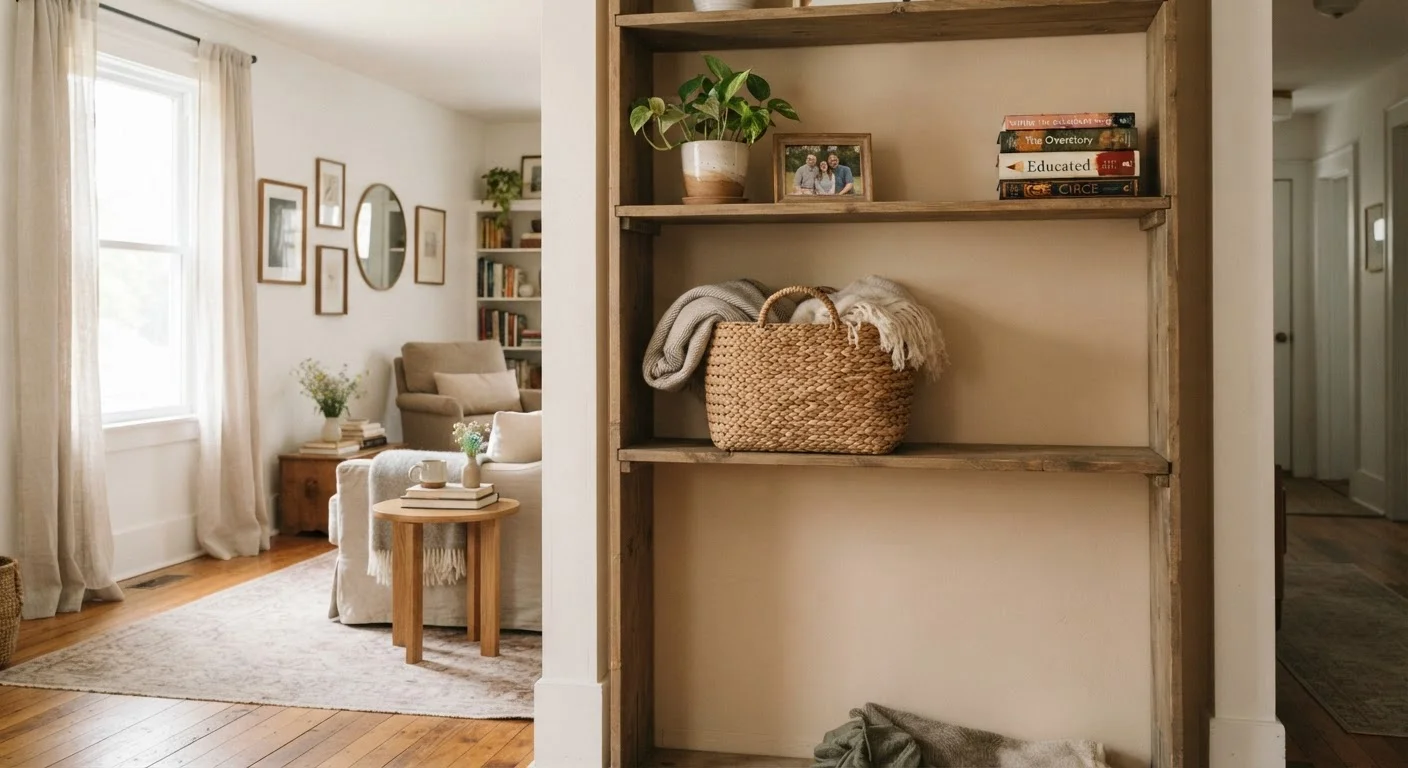
- Living area surfaces: A single lidless basket works as a catch-all for items that migrate through the room. Empty it once a week — not daily.
If multiple people share a space, different clutter thresholds can make hotspot management more complex. Strategies for shared households can help find common ground without ongoing conflict.
Avoid reorganizing without decluttering first
Setting up new systems around items you no longer use or need is one of the most common reasons organization efforts fail quickly. Before adding any new containers or storage solutions, do a basic sort and remove what you don't actively use. This keeps your system from becoming overcrowded within weeks.
Keeping It Going Without Willpower
Sustainable organization doesn't rely on motivation — it relies on habit and system design. Once the right setup is in place, maintenance should feel almost automatic.
A few approaches that reduce the ongoing effort:
- The two-minute reset: Before leaving a room or going to bed, spend two minutes returning visible items to their spots. This prevents small messes from compounding over days.
- Regular small declutters: A ten-minute pass through one area every few weeks prevents buildup. You don't need a full reorganization if nothing is allowed to accumulate for long.
- Lower your standard deliberately: Aim for 'functional and findable', not 'magazine-ready'. A home where you can locate what you need and move through comfortably is an organized home, regardless of how it looks in photos.
If you're curious about the terminology used in organization advice — terms like 'zoning', 'negative space', or 'capsule storage' — the plain-language reference for organization terms is a useful starting point.