

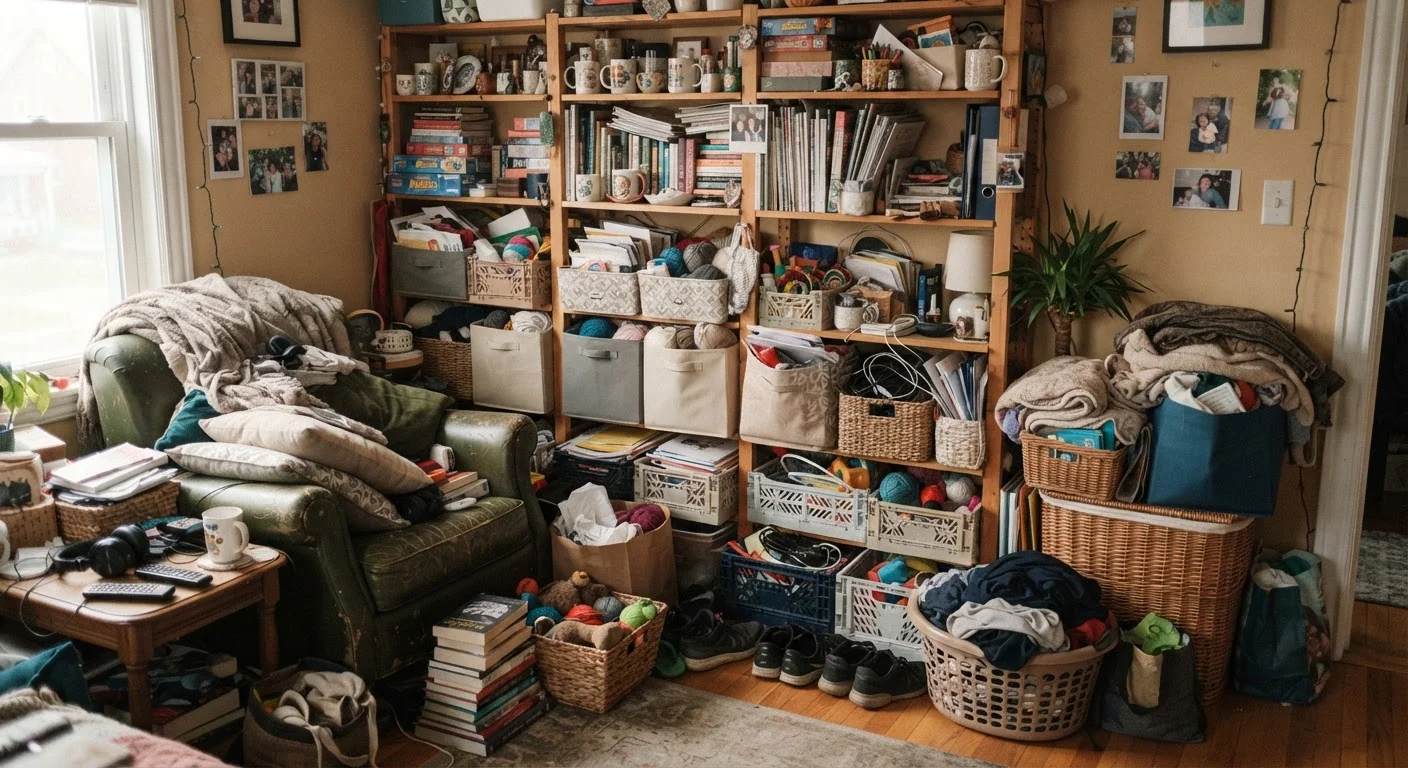
Key Takeaways
- Storage furniture can make disorganization worse by providing more space to accumulate clutter.
- Adding shelves or bins before decluttering usually delays the real problem rather than solving it.
- The most effective organization starts with reducing items, not expanding where they're stored.
- Too much furniture can shrink usable living space and create visual stress in a room.
- Sustainable tidiness relies on habits and limits, not on buying more containers.
Creates designated homes for regularly used items
When you know exactly where something lives, retrieval and return become automatic. This reduces the low-level decision fatigue that leads to items being set down randomly.
Reduces visible surface clutter
Closed cabinets and drawers move mess out of sight, which can make a room feel calmer and more functional even when the underlying volume of stuff hasn't changed.
Supports household routines and daily workflows
Purpose-built storage near where tasks happen — a small cabinet by the door, a drawer organizer in the kitchen — can genuinely speed up daily routines by keeping tools accessible.
Can improve safety by reducing floor clutter
Storing items off the floor in bathrooms, hallways, and kids' rooms reduces tripping hazards and makes cleaning easier, which has real practical value.
More storage means more space to accumulate clutter
Empty bins and shelves attract items by default. If there's no system governing what belongs there, new containers fill up as quickly as old ones did — without reducing the underlying volume.
It delays the actual decision to declutter
Buying a new cabinet feels productive, but it substitutes for the harder work of deciding what to keep. Items that should be donated or discarded simply get a neater hiding spot.
Furniture physically reduces usable room space
Every shelving unit, storage ottoman, or wardrobe tower takes up floor area. In smaller homes, this trade-off can make a room feel more cramped than the clutter it was meant to solve.
Visual complexity can increase stress
Even well-organized open shelving adds visual information to a space. Research in environmental psychology suggests that cluttered or visually busy environments can elevate perceived stress levels.
Ongoing cost without a guaranteed return
Storage furniture is a recurring expense when the underlying accumulation habit isn't addressed — each purge may simply be followed by another round of reorganizing purchases.
Makes inventory harder to track
When items are distributed across many bins and drawers, it becomes easier to lose track of what you own, leading to duplicate purchases and forgotten items past their useful life.
Our Verdict
Storage furniture serves a genuine purpose when used intentionally, but buying more of it is rarely the answer to chronic disorganization. When added without first reducing possessions, it tends to absorb clutter, shrink living space, and delay meaningful change. Used strategically — after a real edit of what you own — the right pieces can make a room both functional and calm.
Homeowners who have already decluttered and need a specific, defined place for items they've decided to keep.
Why More Storage Doesn't Equal More Order
The instinct to buy another shelf or basket when a room feels chaotic is understandable — and very common. But storage furniture addresses the symptom of clutter, not its cause. The cause is almost always too many items relative to how carefully they're managed.
When a new cabinet arrives, it temporarily creates order because everything gets placed deliberately. Within weeks, however, the same accumulation patterns reassert themselves, now spread across more containers. The room may look tidier briefly, but the cognitive load — keeping track of what's where, maintaining systems across more surfaces — often increases.
For a more honest look at what sustainable tidiness actually requires, see why organized homes don't stay that way. The short answer: habits and limits matter far more than furniture.
Creates designated homes for regularly used items
When you know exactly where something lives, retrieval and return become automatic. This reduces the low-level decision fatigue that leads to items being set down randomly.
Reduces visible surface clutter
Closed cabinets and drawers move mess out of sight, which can make a room feel calmer and more functional even when the underlying volume of stuff hasn't changed.
Supports household routines and daily workflows
Purpose-built storage near where tasks happen — a small cabinet by the door, a drawer organizer in the kitchen — can genuinely speed up daily routines by keeping tools accessible.
Can improve safety by reducing floor clutter
Storing items off the floor in bathrooms, hallways, and kids' rooms reduces tripping hazards and makes cleaning easier, which has real practical value.
The Real Costs: Space, Money, and Mental Load
Storage furniture carries costs that aren't always obvious at the point of purchase.
- Floor space: A 36-inch shelving unit in a small bedroom removes usable square footage permanently. In apartments and compact homes, this trade-off is especially significant.
- Inventory blindness: The more distributed your belongings, the harder it is to know what you own. Duplicates accumulate; items expire unused in forgotten bins.
- Maintenance burden: More furniture means more surfaces to clean around, more drawers to reorganize when systems drift, and more decisions about what goes where.
These aren't reasons to avoid storage furniture entirely — they're reasons to be deliberate about when and why you add it. See the related tradeoffs explored in closed storage vs. open shelving for guidance on choosing storage styles that suit how you actually live.
More storage means more space to accumulate clutter
Empty bins and shelves attract items by default. If there's no system governing what belongs there, new containers fill up as quickly as old ones did — without reducing the underlying volume.
It delays the actual decision to declutter
Buying a new cabinet feels productive, but it substitutes for the harder work of deciding what to keep. Items that should be donated or discarded simply get a neater hiding spot.
Furniture physically reduces usable room space
Every shelving unit, storage ottoman, or wardrobe tower takes up floor area. In smaller homes, this trade-off can make a room feel more cramped than the clutter it was meant to solve.
Visual complexity can increase stress
Even well-organized open shelving adds visual information to a space. Research in environmental psychology suggests that cluttered or visually busy environments can elevate perceived stress levels.
Ongoing cost without a guaranteed return
Storage furniture is a recurring expense when the underlying accumulation habit isn't addressed — each purge may simply be followed by another round of reorganizing purchases.
Makes inventory harder to track
When items are distributed across many bins and drawers, it becomes easier to lose track of what you own, leading to duplicate purchases and forgotten items past their useful life.
A Better Sequence: Reduce First, Then Organize
The most reliable way to use storage furniture well is to reverse the typical order of operations. Instead of buying containers first and then filling them, start by deciding what you're keeping — then find storage that fits those specific items precisely.
- Edit your possessions room by room, setting aside anything unused, duplicated, or kept out of vague obligation rather than genuine need.
- Assess what remains by category and volume. How many items actually need a home here? Are they daily-use, weekly-use, or occasional?
- Match storage to the inventory you've confirmed, choosing pieces sized for what you have — not for what you might accumulate.
Organize What You Keep, Not What You Have
A useful rule of thumb: declutter first, then shop for storage. Once you know the exact category and volume of items staying, you can choose containers that fit precisely — rather than acquiring furniture speculatively and filling it later. This sequence prevents the common trap of organizing clutter rather than eliminating it.
If keeping up with accumulation feels like an ongoing battle, one-in, one-out vs. seasonal purges outlines two practical strategies for keeping the volume of possessions from creeping back up over time.
For anyone who finds organizing genuinely unpleasant, home organization for people who hate organizing offers realistic, low-effort systems built around that reality.
25%
Of two-car garages too full to park in
A UCLA Center on Everyday Lives of Families study found roughly one in four US two-car garages couldn't fit a vehicle due to stored possessions.
~$1,000
Average US household annual storage spend
Industry estimates suggest US households collectively spend billions annually on storage and organization products, averaging roughly $1,000 per household over time.