

Key Takeaways
- Cosmetic tasks like painting, caulking, and minor patching are generally safe and legal for homeowners to do themselves.
- Electrical, gas, structural, and plumbing-into-mains work typically requires a licensed tradesperson and often a permit.
- Unpermitted or improperly completed work can affect your home insurance coverage and complicate future sales.
- When in doubt, get a professional assessment — even if you ultimately do part of the work yourself.
- Local codes vary; always verify permit requirements with your municipality before starting any significant project.
Our Verdict
DIY is genuinely worthwhile for cosmetic and straightforward maintenance tasks where the risks of a mistake are low and reversible. For anything touching electrical systems, gas lines, structural elements, or permitted plumbing, a licensed tradesperson is the safer and often legally required choice. The goal isn't to pick a side — it's to match the task to the skill and accountability level it actually demands.
| Best for | Recommended |
|---|---|
| Budget-conscious homeowners with basic skills | DIY |
| Electrical, gas, or structural work | Licensed Tradesperson |
| Work requiring permits or inspections | Licensed Tradesperson |
| Cosmetic updates and minor repairs | DIY |
The Core Question: Risk and Accountability
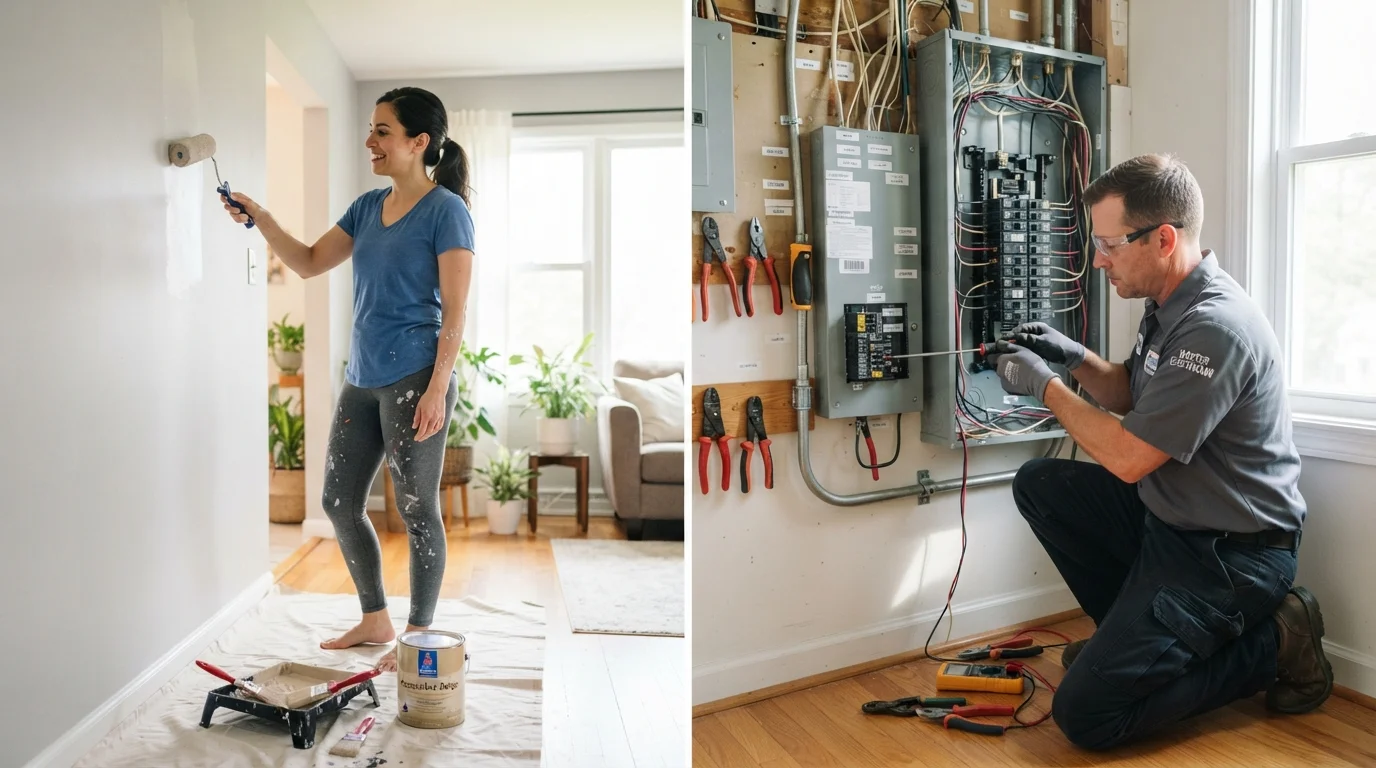
Every home repair decision comes down to two factors: how serious are the consequences of getting it wrong, and who is legally accountable for the work? For a badly painted wall, the consequence is cosmetic and you fix it yourself. For a faulty wiring connection, the consequence could be a house fire — and in most US jurisdictions, that work requires a licensed electrician and a municipal permit.
This isn't about confidence or skill level alone. It's about understanding that some home systems are regulated for public safety reasons. A licensed tradesperson carries insurance, is certified to meet local code, and is legally responsible if something goes wrong. A homeowner working without a permit carries all of that risk personally — including potential issues with home insurance claims and property resale.
For a broader view of how professional work fits into larger projects, see our complete renovation planning guide for sequencing advice.
Jobs That Are Generally Safe to DIY
The following tasks are commonly handled by homeowners without requiring permits or licensed contractors in most US states. They involve low safety risk and are reversible if done imperfectly.
- Interior painting and wallpaper removal — Low technical barrier, no permits needed, mistakes are fixable.
- Caulking around tubs, sinks, and windows — A straightforward maintenance task that protects against moisture damage.
- Minor drywall patching — Small holes and cracks are manageable for a careful beginner. Our drywall repair guide for beginners walks through every level of complexity.
- Replacing fixtures like faucets, light switches, or outlets — Swapping like-for-like fixtures is often within DIY range, though any rewiring beyond direct replacement typically requires a permit.
- Basic landscaping and garden work — Planting, mulching, edging, and lawn care are fully within homeowner scope.
- Floor tile installation — Achievable for a methodical DIYer; see our guide to laying floor tiles for a realistic walkthrough.
Start Small to Build Confidence
If you're new to DIY, begin with low-stakes tasks like patching small nail holes or replacing a faucet aerator. Each completed project builds your ability to realistically assess what you can handle next. Keep a simple record of what you've done — it can be useful when selling your home.
Jobs That Require a Licensed Tradesperson
The tasks below are regulated in most US jurisdictions because errors create serious safety hazards or violate building codes. Attempting them without the proper license, permit, or inspection can void your homeowner's insurance and create liability when you sell.
| Task Type | DIY | Licensed Tradesperson | |
|---|---|---|---|
| Permit typically required | No | Yes | |
| Insurance accountability | Homeowner bears all risk | Tradesperson is insured and liable | |
| Skill barrier | Low to moderate | Trade-certified | |
| Typical tasks | Painting, patching, tiling, caulking | Electrical, gas, structural, plumbing | |
| Impact on home resale | Minimal if done correctly | Permitted work adds documented value | |
| Cost | Lower upfront, risk of rework | Higher upfront, lower long-term risk |
- Electrical panel upgrades or new circuits — Requires a licensed electrician and a permit. Incorrect work is a leading cause of residential fires.
- Gas line installation or repair — Any work on gas supply lines must be performed by a licensed plumber or gas fitter. This is non-negotiable from a safety and code standpoint.
- Structural modifications — Removing or altering load-bearing walls requires an engineer's assessment and a building permit. Errors can compromise your home's structural integrity.
- Main plumbing connections — Connecting to or altering supply lines or drain stacks typically requires a licensed plumber and inspection.
- HVAC installation or refrigerant work — Handling refrigerants requires EPA Section 608 certification. Full system installs involve electrical and gas connections.
- Roofing over a certain scope — While minor patching may be DIY-able, full roof replacement involves structural, waterproofing, and warranty considerations best handled professionally.
Unpermitted Work Can Backfire Seriously
Work done without required permits may need to be torn out and redone at your expense if discovered during a home inspection or insurance claim. Some mortgage lenders and insurers specifically ask about unpermitted additions or alterations. The short-term savings rarely outweigh the long-term liability.
Unpermitted work can lead to unexpected costs during a sale or after a claim. Our article on hidden renovation costs covers how permit fees and professional labor fit into realistic project budgets.
How to Make the Call on Borderline Jobs
Some tasks sit in a gray zone — replacing a water heater, installing a ceiling fan on a new circuit, or framing out a non-load-bearing wall. For these, use a three-part check:
- Check local permit requirements. Your city or county building department website will list what requires a permit. When work requires a permit, it almost always requires a licensed tradesperson to pull it.
- Assess the failure mode. Ask what happens if this goes wrong in five years. A leaky caulk bead is annoying. A poorly supported beam or an undersized wire is dangerous. Match your caution to the stakes.
- Consider a hybrid approach. You can do demolition, preparation, or finishing work while hiring a licensed professional for the regulated core of a project. This is legal, common, and can reduce costs while maintaining code compliance.
The same logic applies in other contexts — knowing when to handle something yourself and when expertise is genuinely required is a broadly useful skill. It applies equally whether you're weighing DIY car maintenance against a mechanic visit or planning a home repair.
This article provides general educational information about home repair decisions and is not a substitute for advice from a licensed contractor or your local building authority. Always verify permit requirements and applicable codes with your municipality before beginning any project.