

| Total USDA Zones | 13 zones (1–13), each split into sub-zones a and b (USDA Plant Hardiness Zone Map) |
| Data Period Used | 30-year average of minimum winter temperatures (1991–2020 for current edition) (USDA Agricultural Research Service) |
| Temperature Increment Per Zone | 10°F per full zone; 5°F per sub-zone (USDA Plant Hardiness Zone Map) |
| What Zones Measure | Average annual extreme minimum temperature only — not heat, rainfall, or frost dates (USDA Agricultural Research Service) |
| Coldest Zone in the US | Zone 1a: below −60°F (parts of Alaska) (USDA Plant Hardiness Zone Map) |
| Warmest Zone in the Contiguous US | Zone 13b: above 65°F (parts of southern Florida and Hawaii) (USDA Plant Hardiness Zone Map) |
What Is a Plant Hardiness Zone?
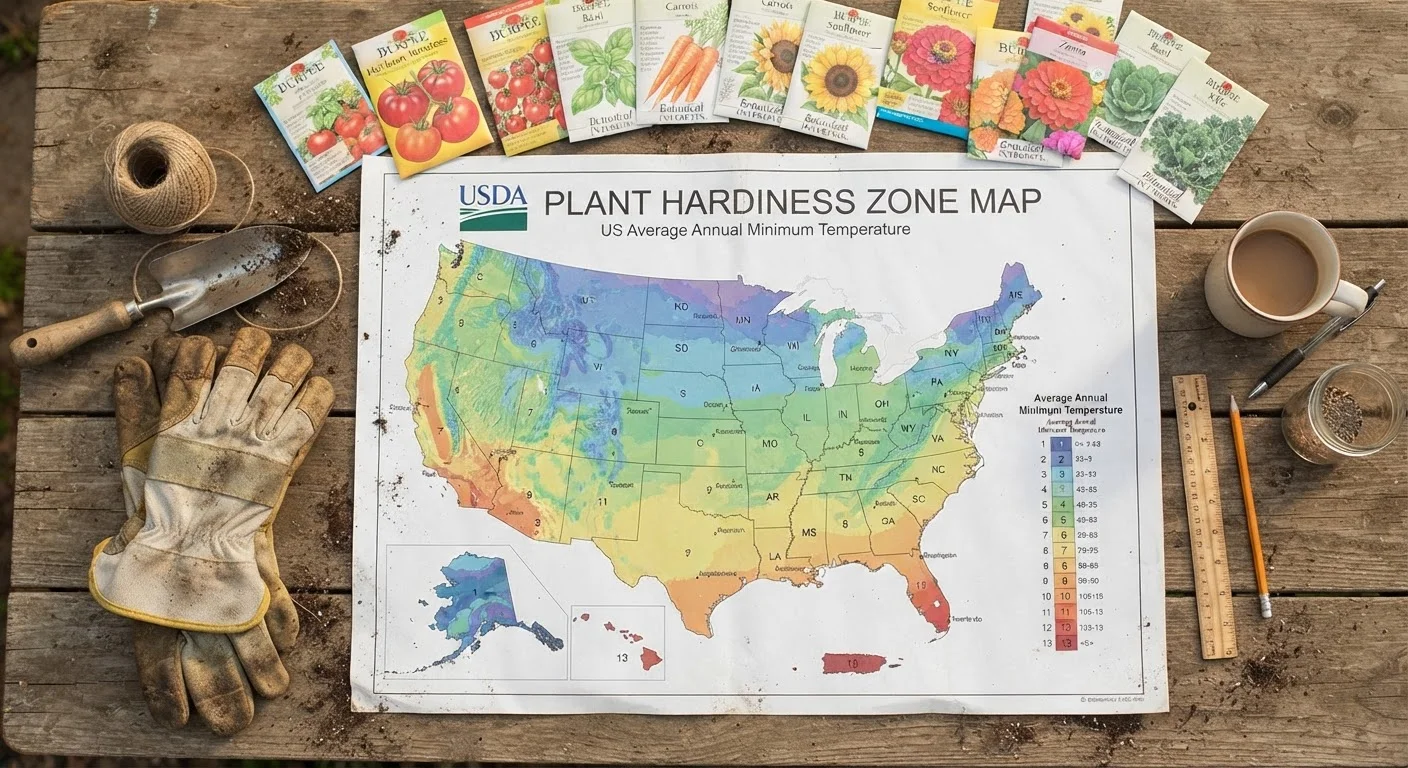
A plant hardiness zone is a geographically defined area that tells you the coldest temperatures a location typically experiences in an average winter. The dominant reference in the United States is the USDA Plant Hardiness Zone Map, which divides the country into 13 numbered zones — from Zone 1 (the coldest, with minimum temperatures below −60°F) to Zone 13 (the warmest, sustaining temperatures above 60°F). Each zone is further split into sub-zones labeled 'a' and 'b,' representing 5°F increments.
When a plant tag or seed catalog lists a hardiness range such as "Zones 5–9," it means the plant can reasonably be expected to survive winter in those zones without special protection. Planting outside that range doesn't guarantee failure — but it does mean you're working against the plant's natural cold tolerance.
| Total USDA Zones | 13 zones (1–13), each split into sub-zones a and b (USDA Plant Hardiness Zone Map) |
| Data Period Used | 30-year average of minimum winter temperatures (1991–2020 for current edition) (USDA Agricultural Research Service) |
| Temperature Increment Per Zone | 10°F per full zone; 5°F per sub-zone (USDA Plant Hardiness Zone Map) |
| What Zones Measure | Average annual extreme minimum temperature only — not heat, rainfall, or frost dates (USDA Agricultural Research Service) |
| Coldest Zone in the US | Zone 1a: below −60°F (parts of Alaska) (USDA Plant Hardiness Zone Map) |
| Warmest Zone in the Contiguous US | Zone 13b: above 65°F (parts of southern Florida and Hawaii) (USDA Plant Hardiness Zone Map) |
Before selecting any perennial, shrub, or tree, knowing your zone is the single most practical first step. For a broader seasonal approach, see the garden planning checklist that walks you through preparation before each growing season.
How Zones Are Determined
The USDA calculates each zone using 30-year averages of the lowest recorded winter temperatures at weather stations across the country. The most recent edition of the map incorporates data from 1991 through 2020. Because the data relies on temperature minima rather than averages, hardiness zones are strictly a cold-hardiness tool — they say nothing about summer heat, rainfall, humidity, frost dates, or soil conditions.
This distinction matters. Two gardens can share the same zone yet differ dramatically in growing conditions. A garden in coastal Southern California and one in the mid-South may both fall in Zone 9, but their summer heat loads, drought patterns, and humidity levels are entirely different. For gardens in arid climates, pairing zone knowledge with water-wise design strategies — as covered in the drought-tolerant gardening guide — gives a fuller picture.
Plant Hardiness Zone
A geographically defined area indicating the average annual minimum winter temperature, used to predict whether a plant can survive the winter in that location.
Minimum Temperature
The lowest temperature recorded at a location over a defined period, typically 30 years. It is the primary data point used to assign hardiness zones.
Microclimate
A small, localized area where conditions — temperature, humidity, wind exposure — differ from the surrounding region. Buildings, slopes, and bodies of water commonly create microclimates.
Perennial
A plant that lives for more than two years, dying back in winter and regrowing from its root system in spring. Hardiness zone ratings are most relevant to perennials.
Sub-zone
A 5°F subdivision within each hardiness zone, labeled 'a' (colder) or 'b' (warmer), allowing for more precise plant selection guidance.
Using Zone Information Practically
Finding your zone takes less than a minute. The USDA's interactive online map allows you to enter your ZIP code and receive your specific zone designation, down to the sub-zone level. Once you know it, you can filter plant choices confidently and avoid spending money on perennials that won't return the following spring.
Keep these practical points in mind:
- Microclimates matter. A south-facing wall, a low-lying frost pocket, or proximity to a large body of water can shift local conditions by a full zone in either direction. Observe your site over at least one full year before investing in borderline plants.
- Annuals ignore zone ratings. Zone designations apply to perennials, shrubs, and trees — plants expected to survive winter. Annual flowers and vegetables complete their life cycle in one season, so their seed packets list frost dates and days to maturity instead.
- Soil and pH interact with cold hardiness. A plant at the edge of its cold tolerance fares better in well-drained, appropriately pH-balanced soil. Learn more about soil chemistry in our soil pH explainer.
- Zone creep is real but not guaranteed. Some gardeners have observed that warming trends allow marginally hardy plants to survive milder winters, but individual years still bring anomalous cold snaps that can wipe out plants grown beyond their rated zone.
Zones Are a Starting Point, Not a Guarantee
Hardiness zones indicate cold survival potential under typical conditions — they do not account for drainage, wind exposure, snow cover insulation, or the specific cultivar you plant. A Zone 6 rating on a plant tag means a plant can generally survive Zone 6 winters, but an unusually harsh winter or poor planting site can still cause losses. Use zone information alongside local observation and your own site assessment for the most reliable planting decisions.