

Key Takeaways
- Routine maintenance prevents costly repairs and keeps your car safer to drive.
- Checking five key fluids regularly takes less than ten minutes and requires no tools.
- Tyre pressure should be checked at least once a month and before long trips.
- Brake warning signs — squealing, grinding, or a soft pedal — should never be ignored.
- Your owner's manual is the most reliable source for your vehicle's service intervals.
Start here
Why Maintenance Matters From Day One
Next
The Fluids You Need to Know
Then
Tyres: Pressure, Tread, and Rotation
Keep going
Brakes: What to Listen and Feel For
Wrap up
Following a Service Schedule
Why Maintenance Matters From Day One
Owning a car is one of the most significant responsibilities that comes with a driver's license. The mechanical systems keeping your vehicle safe don't manage themselves — and the longer small issues go unaddressed, the more expensive they tend to become.
New drivers often focus on the rules of the road and overlook the basics of vehicle upkeep. But a poorly maintained car is a safety risk, not just a financial one. Worn brakes, under-inflated tyres, and low engine oil all affect how your car handles in an emergency.
The good news: most routine maintenance is straightforward, predictable, and easy to build into a monthly habit. This guide walks you through the essentials so you know what to check, what to watch for, and when to call in a professional. For a broader look at what vehicle ownership costs over time, see our guide on ongoing car maintenance expenses.
Dipstick
A long metal rod inserted into the engine oil reservoir that lets you check the oil level and condition without any tools beyond a clean rag.
Brake rotor
The large metal disc that your brake pads clamp against to slow the vehicle. Worn pads can score or warp the rotor, making replacement necessary.
Tread depth
The measurement of how much rubber remains in the grooves of a tyre. Sufficient tread depth is essential for maintaining grip, especially on wet surfaces.
Service interval
The recommended mileage or time period between scheduled maintenance tasks, set by the vehicle manufacturer and listed in the owner's manual.
PSI
Pounds per square inch — the unit used to measure tyre pressure in the United States. Each vehicle has a specific recommended PSI for its tyres.
Coolant reservoir
A translucent plastic tank connected to the radiator that holds the engine's coolant. It has min and max markers so you can check the level without opening the radiator cap.
The Fluids You Need to Know
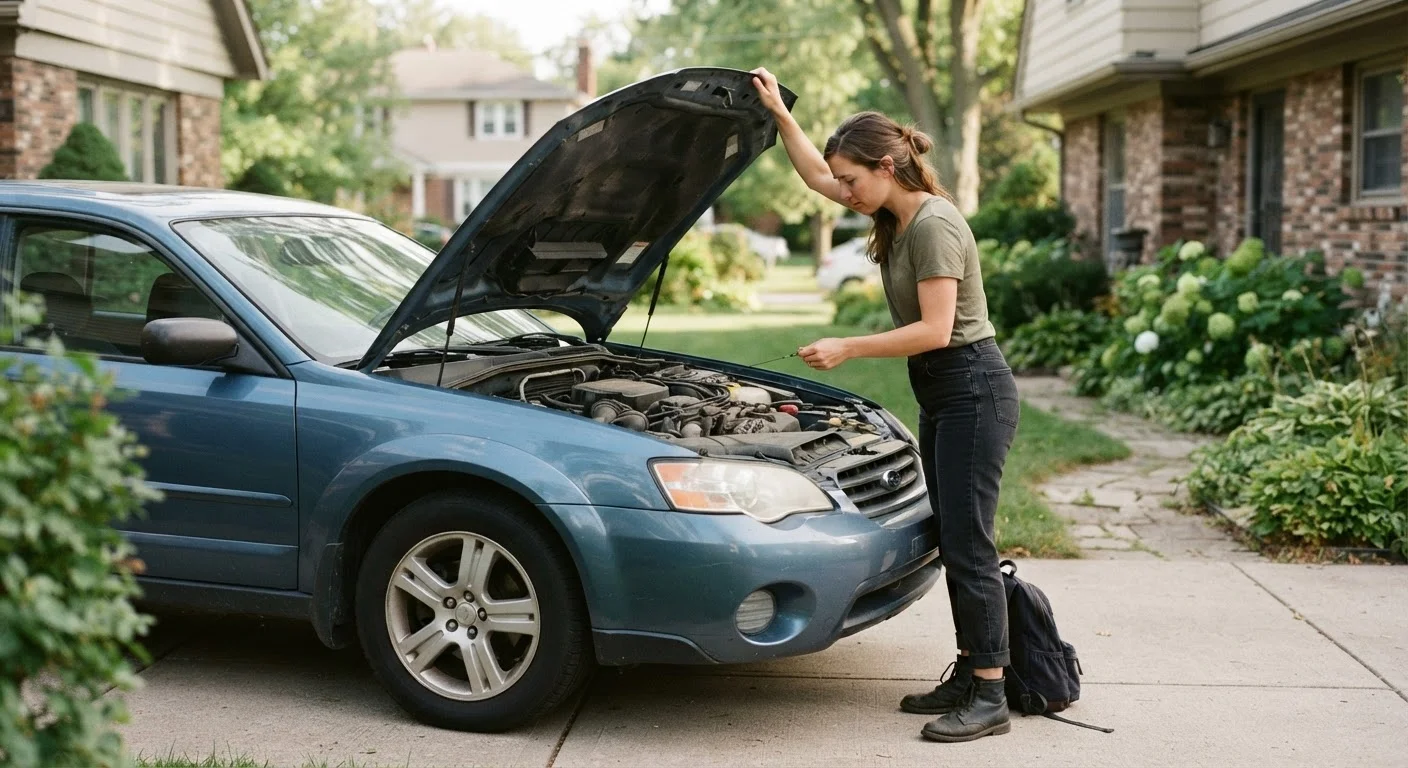
Your car relies on several fluids to function safely. Letting any of them run critically low can cause damage that ranges from inconvenient to catastrophic. The five fluids worth checking regularly are:
- Engine oil: Lubricates moving engine parts and prevents overheating from friction. Check the dipstick when the engine is cold; oil should fall between the minimum and maximum markers and look amber-brown, not black and gritty.
- Coolant (antifreeze): Regulates engine temperature. Check the reservoir when the engine is completely cold — never open the cap on a hot engine, as pressurised coolant can cause serious burns.
- Brake fluid: Transfers force through your brake lines. It sits in a small reservoir near the firewall. Low brake fluid can indicate worn pads or a leak — both need professional attention.
- Power steering fluid: If your car has hydraulic power steering, this fluid assists your steering effort. Difficulty turning the wheel or a whining noise can signal a low or failing system.
- Windshield washer fluid: Not safety-critical in the mechanical sense, but essential for visibility. Top it up regularly, especially in winter.
For a detailed walkthrough of how to check each fluid safely, our fluid checks guide covers every step.
Build a monthly walk-around habit
Once a month, spend five minutes walking around your car before a drive. Check tyre appearance, look for fluid spots under the vehicle, and glance at your dashboard for any warning lights. Catching problems early almost always costs less than fixing them after the fact.
Tyres: Pressure, Tread, and Rotation
Tyres are the only part of your car touching the road, which makes their condition directly tied to your safety. There are three things to stay on top of:
- Tyre pressure: Under-inflated tyres wear unevenly, reduce fuel efficiency, and increase blowout risk. Check pressure when the tyres are cold (before you've driven more than a mile). The correct PSI is on the driver's door jamb sticker — not the number printed on the tyre itself. See our article on tyre pressure basics for more detail.
- Tread depth: Worn tread reduces grip, especially on wet roads. A quick check: insert a quarter into a tread groove with Washington's head pointing down. If you can see the top of his head, the tread is low and replacement should be considered soon.
- Tyre rotation: Front and rear tyres wear at different rates depending on your drivetrain. Rotating them every 5,000–7,500 miles (or per your owner's manual) extends their usable life and keeps wear even.
Brakes: What to Listen and Feel For
Brakes don't fail without warning — they almost always signal a problem first. Knowing what to listen and feel for can mean the difference between a routine pad replacement and a much costlier repair.
Common warning signs include:
- Squealing or squeaking: Most brake pads include a wear indicator — a small metal tab that contacts the rotor when pads are getting thin, producing a high-pitched squeal. This is an early warning to get them checked.
- Grinding: A grinding sound usually means the pads are fully worn and metal is contacting metal. This can damage the rotors and is a more urgent repair.
- Soft or spongy pedal: If the brake pedal sinks closer to the floor than usual before engaging, this can indicate air in the brake lines or a fluid leak — both require immediate professional attention.
- Pulling to one side: If your car drifts left or right when braking, it may indicate uneven pad wear or a stuck caliper.
Don't ignore brake warning signs
Brake problems can escalate quickly. If you hear grinding, feel a soft pedal, or notice your car pulling when you brake, stop driving and have the vehicle inspected by a qualified mechanic as soon as possible. Delaying brake repairs is one of the most dangerous decisions a driver can make.
Never attempt to diagnose or repair brake components yourself unless you are trained to do so. Brakes are a safety-critical system — always consult a qualified mechanic.
Following a Service Schedule
Every vehicle comes with a manufacturer-recommended service schedule, usually found in the owner's manual. This schedule outlines when specific components should be inspected, replaced, or serviced — based on mileage, time, or both.
Common items on a standard service schedule include oil and filter changes, air filter replacement, spark plug inspection, cabin filter changes, and multi-point safety inspections. Some items are needed every 5,000 miles; others, like transmission fluid or timing belts, may only arise every 60,000–100,000 miles.
A few practical pointers:
- Keep a simple log of every service — date, mileage, and what was done. A notes app works fine.
- Don't rely solely on the sticker your oil-change shop puts on your windshield — cross-check with your manual.
- If you bought a used car, get a full service history from the previous owner and start fresh with an inspection from a trusted mechanic.
For a plain-English breakdown of how service intervals actually work, our guide to understanding your car's service schedule is a useful next step. And if you're still in the process of choosing a vehicle, the Car Buying hub can help you make a well-informed decision before you sign anything.