

Key Takeaways
- Checking six key fluids regularly helps prevent breakdowns and expensive repairs.
- Most fluid checks require only a clean rag and a few minutes on a level surface.
- Engine oil, coolant, and brake fluid are the three most critical fluids to monitor.
- Always check fluids when the engine is cold unless the owner's manual says otherwise.
- Low or discolored fluid often signals an underlying problem worth investigating further.
What you will need
Why Fluid Checks Matter More Than Most Drivers Realize
Your vehicle depends on six or more distinct fluids to keep its systems running safely — and most of them degrade or get consumed over time without any dashboard warning light. Low engine oil can lead to catastrophic engine damage within minutes of driving. Neglected brake fluid absorbs moisture and loses stopping effectiveness gradually. Even something as routine as washer fluid affects visibility and safety.
The good news: checking all your key fluids takes under 20 minutes, requires no special tools beyond a rag and your owner's manual, and can catch small problems before they become expensive ones. This is general vehicle maintenance guidance — for any unusual findings (dark oil, milky coolant, consistently low brake fluid), consult a qualified mechanic rather than diagnosing the cause yourself.
For a broader routine that includes fluids alongside other seasonal concerns, the seasonal car maintenance checklist is a useful companion resource.
What you will need
What You'll Need Before You Start
The process is straightforward for most passenger vehicles. Before you open the hood, gather your supplies and park correctly — both matter for accurate readings.
Owner's Manual
Identifies the location and correct specification of each fluid for your specific vehicle.
Clean Lint-Free Rag
Used to wipe the dipstick clean between readings and to spot fluid color accurately.
Flashlight or Work Light
Helps you see fluid levels and reservoir markings clearly in a crowded engine bay.
Nitrile Gloves
Protects your hands from brake fluid and coolant, both of which can irritate skin.
Park on a level surface and let the engine cool
Pull onto flat, stable ground and turn off the engine. For most fluid checks, you need the car to have been sitting for at least 5–10 minutes so fluids settle and surfaces are safe to touch. Coolant in particular stays under pressure when hot — opening the reservoir cap on a warm engine can cause hot fluid to spray out.
Check the engine oil
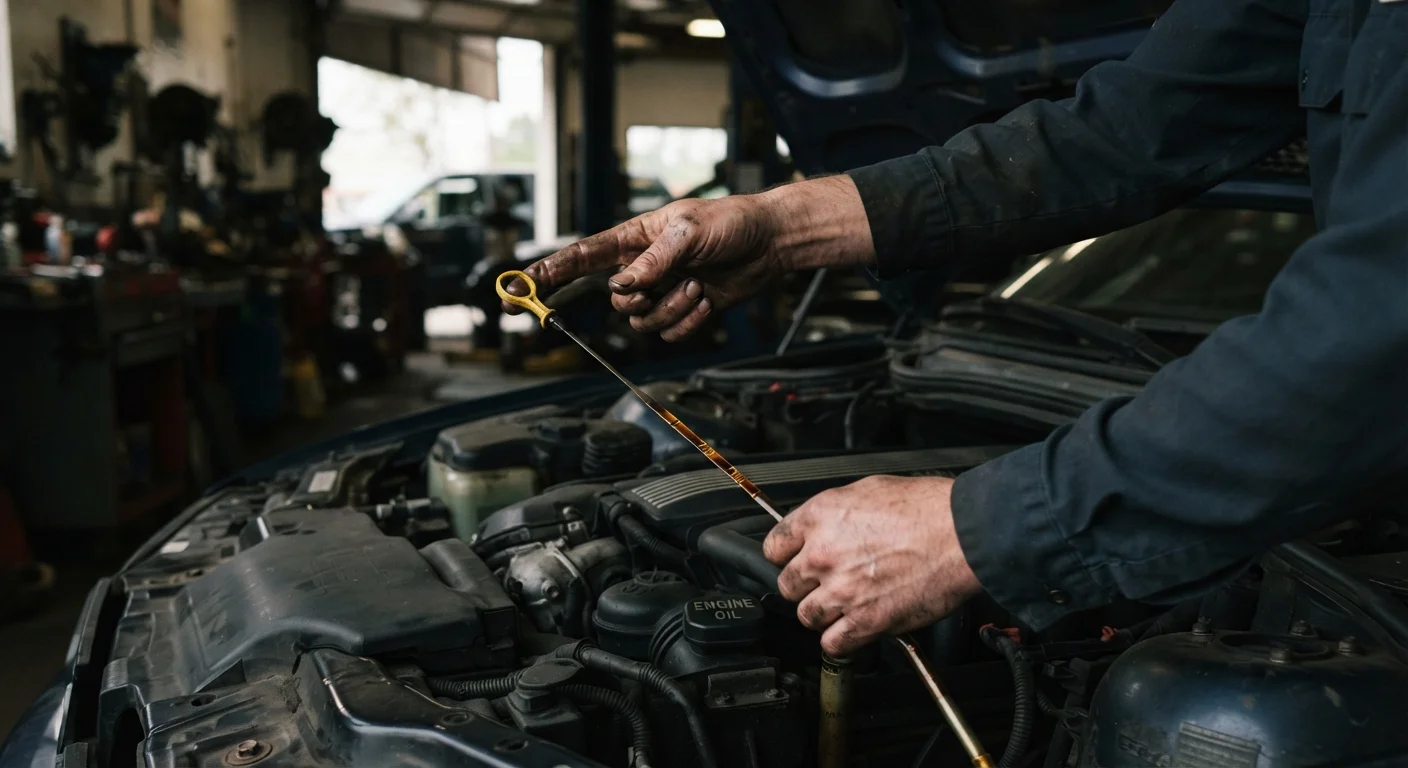
Locate the oil dipstick — it usually has a brightly colored ring handle and is marked with an oil-can symbol. Pull it out, wipe it clean, reinsert it fully, then pull it out again. The oil should sit between the two marks (MIN and MAX). Healthy oil is amber to light brown. Black, gritty, or milky-looking oil is a warning sign worth discussing with a mechanic.
Inspect the coolant level
The coolant (antifreeze) reservoir is typically a translucent plastic tank with MIN/MAX markings on the side. You can read the level without opening it. The fluid should be between those marks and appear green, orange, or pink depending on the type your vehicle uses. If it's consistently low, that points to a possible leak — see our cooling system overview for more context.
Check the brake fluid
The brake fluid reservoir sits on top of the brake master cylinder, usually near the back of the engine bay on the driver's side. It's a small, translucent reservoir with MIN/MAX lines. Brake fluid is naturally pale yellow; dark brown fluid indicates it has absorbed moisture over time and should be replaced. A low level can mean worn brake pads or a leak — both warrant professional attention. For a deeper look at brake fluid facts, see common brake maintenance myths.
Examine the power steering and transmission fluids
Power steering fluid (if your vehicle has hydraulic steering) has its own reservoir, often near the front of the engine. Check the level against the dipstick or markings on the cap. Automatic transmission fluid is checked similarly with a dedicated dipstick while the engine is warm and running in many vehicles — consult your owner's manual, as the process varies significantly by make and model. Both fluids should be checked if handling or gear shifts feel different than usual.
Top off windshield washer fluid
Washer fluid is the one reservoir you can fill at any time without mechanical concern. Look for the cap marked with a windshield-wiper symbol. Use a product formulated for automotive use — plain water can freeze in cold weather and may leave mineral deposits on your glass. While it's a minor fluid, running out on a highway in poor visibility is genuinely hazardous.
How Often Should You Check These Fluids?
Engine oil is worth checking monthly or before any long road trip — it's the most consequential fluid and one of the easiest to inspect. Coolant, brake fluid, and power steering fluid can be checked every few months or any time you notice a symptom (overheating, soft brake pedal, stiff steering). Transmission fluid intervals vary widely by vehicle and driving conditions; your owner's manual is the authoritative source here.
Build a Quick Monthly Habit
Set a recurring reminder to check engine oil and eyeball the coolant reservoir on the same day each month — pairing it with something you already do (like refuelling) makes it easier to maintain. Consistent monitoring over time also helps you spot trends, like oil that needs topping up more frequently than usual, which could signal a slow leak or engine wear.
As a general habit, glancing under the car after it's been parked overnight is a useful five-second check. A puddle or stain on the driveway — especially one that's green, red, or oily — is often the first sign of a fluid leak worth investigating promptly.