

Key Takeaways
- Grinding sounds from brakes are a serious warning sign that requires immediate professional attention.
- Brake fluid absorbs moisture over time and should be checked and changed on a regular schedule.
- New brake pads do not require a 'break-in' period in the traditional sense, but bedding-in matters.
- Brake pad thickness alone doesn't tell the whole story — rotor condition is equally important.
- Waiting until brakes feel soft or spongy to act is waiting too long for safe driving.
Why Brake Myths Are Dangerous
Brakes are your car's single most critical safety system — yet misconceptions about their maintenance are surprisingly widespread. Acting on faulty information isn't just a mechanical mistake; it can delay necessary repairs and put lives at risk on the road.
The myths below are among the most commonly repeated, and correcting them could save you from a costly repair bill or a preventable accident. For a broader look at how small maintenance oversights escalate, see why skipping small repairs often leads to much bigger bills.
Myth
If my brakes aren't making noise, they're fine.
Fact
Brake pads can wear dangerously thin well before they produce audible warnings, depending on the vehicle and pad type.
Many drivers treat silence as a green light, but brake wear indicators — the small metal tabs designed to squeal when pads are low — can fail, corrode, or simply not trigger in some driving conditions. Visual inspection of pad thickness and rotor condition by a mechanic is a more reliable check than listening for sounds. Most manufacturers recommend a brake inspection at least once a year or every 12,000 miles, whichever comes first.
Myth
Grinding sounds just mean my pads are new and still breaking in.
Fact
Grinding almost always means metal-on-metal contact — a sign the pads are gone and rotors may already be damaged.
There is no normal 'break-in grinding' for brake pads. A grinding noise when braking is typically the sound of a worn pad's metal backing plate scraping directly against the brake rotor. At this stage, stopping distances increase, rotor damage is likely occurring, and the risk of brake failure rises significantly. This is not a situation to monitor — it requires prompt professional attention. See brake wear myths that could be putting you at risk for more detail on interpreting brake sounds.
Myth
Brake fluid lasts the life of the car and never needs changing.
Fact
Brake fluid is hygroscopic — it absorbs moisture from the air over time, which lowers its boiling point and reduces braking performance.
As brake fluid absorbs water, its boiling point drops. Under hard or repeated braking, degraded fluid can vaporize inside the brake lines — a condition called brake fade — dramatically reducing stopping power. Most vehicle manufacturers recommend flushing and replacing brake fluid every two to three years, though your owner's manual is the authoritative guide for your specific vehicle. Checking brake fluid condition and level is a straightforward habit that supports long-term safety.
Myth
You only need to replace brake pads, not rotors.
Fact
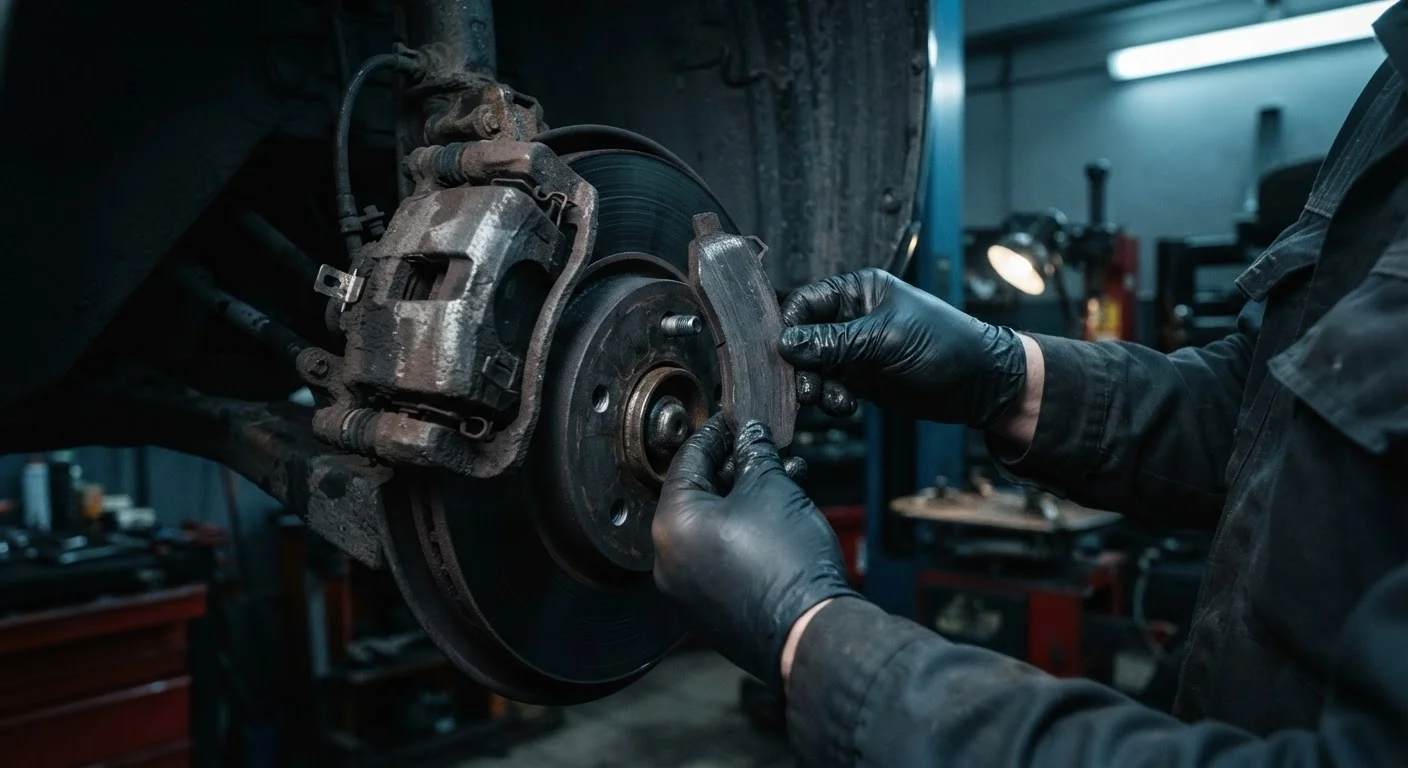
Rotors wear, warp, and develop grooves over time; installing new pads on damaged rotors reduces braking effectiveness and accelerates pad wear.
Brake rotors have a minimum thickness specification stamped into them. Once a rotor wears below this threshold — or develops deep grooves, scoring, or heat-induced warping — it cannot provide the flat, even contact surface that new pads require. A qualified mechanic will measure rotor thickness and check for runout (wobble) as part of any complete brake service. Pairing new pads with worn rotors is a common way to shorten pad life unnecessarily and compromise stopping performance.
Myth
A soft or spongy brake pedal is just a quirk of the car.
Fact
A spongy pedal is a sign of air in the brake lines or a failing master cylinder — both are serious safety issues.
Hydraulic brake systems depend on incompressible fluid to transmit pedal force to the calipers. Air in the lines is compressible, which creates a soft, springy pedal feel and reduced braking force. This can result from a brake fluid leak, improper bleeding after a repair, or a deteriorating component. A failing master cylinder produces similar symptoms. Either scenario requires immediate professional diagnosis — driving with a spongy pedal significantly increases stopping distance.
What to Do With This Information
Understanding what's myth and what's fact puts you in a stronger position to maintain your brakes correctly and communicate clearly with a mechanic. When in doubt about any brake symptom — unusual sounds, a soft pedal, vibration, or longer stopping distances — have a qualified technician inspect the system promptly. Brakes are not a component where guesswork is appropriate.
Never Delay on Brake Warning Signs
Any symptom that changes how your brakes feel or sound — grinding, squealing, vibration, a soft pedal, or a pulling sensation when braking — should be evaluated by a qualified mechanic without delay. Brakes are a safety-critical system, and no article can substitute for a hands-on professional inspection. If you're uncertain, err on the side of caution and get it checked.
Brake health doesn't exist in isolation. Tyre condition directly affects how well your brakes can slow the vehicle. Tyre pressure and tread depth are equally worth understanding. And if you want to stay current on all the fluids that keep your car running safely, fluid checks every driver should know is a practical starting point.
~22%
Of vehicle crashes linked to brake-related issues
According to NHTSA crash causation research, brake system problems are among the most commonly cited vehicle-related factors in crashes.
2–3 years
Typical brake fluid change interval
Many vehicle manufacturers recommend brake fluid replacement every two to three years, though intervals vary — always check your owner's manual.
This article provides general automotive information and education only. Always consult a qualified mechanic for diagnosis, repair decisions, or safety-critical work on your vehicle.