

Key Takeaways
- A car engine generates enormous heat; the cooling system prevents damage by keeping temperatures in a safe operating range.
- Coolant (antifreeze mixed with water) is the fluid at the heart of the system — its level and condition matter.
- Key components include the radiator, water pump, thermostat, and coolant reservoir — each with a distinct role.
- A temperature gauge climbing toward the red or steam from under the hood are serious warnings to act on immediately.
- Many basic cooling system checks are straightforward for any driver, but certain repairs require a qualified mechanic.
Start here
What the Cooling System Actually Does
Next
The Key Components and Their Roles
Then
Warning Signs You Shouldn't Ignore
Apply it
Simple Checks Every Driver Can Do
Know your limits
When to Call a Mechanic
What the Cooling System Actually Does
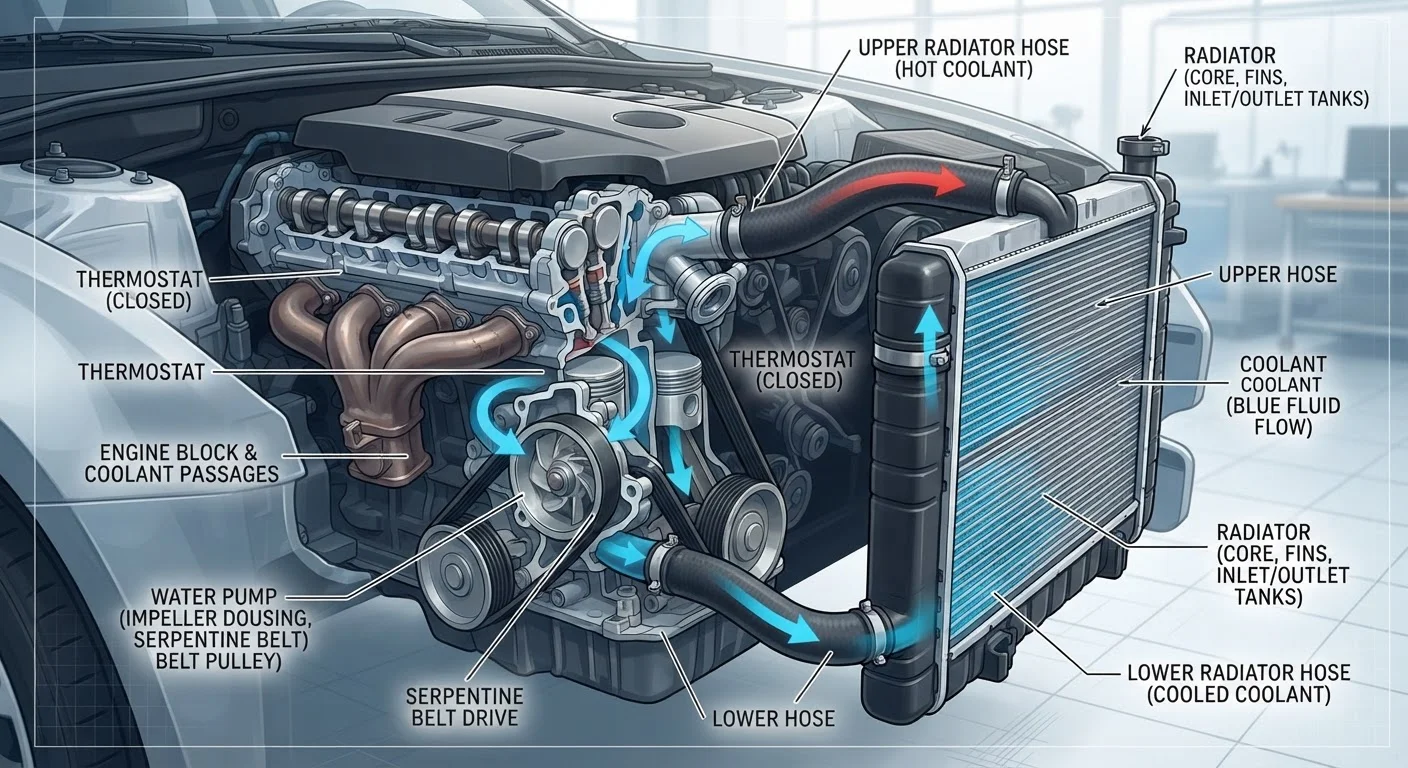
A running engine is essentially a controlled series of explosions, and all that combustion generates tremendous heat — enough to destroy engine components within minutes if left unchecked. The cooling system's job is to absorb that heat and carry it away, keeping the engine operating within a narrow temperature window where it runs efficiently and safely.
The system circulates a liquid — commonly called coolant or antifreeze — through passages inside the engine block and cylinder head. As it flows, the coolant picks up heat, transports it to the radiator at the front of the vehicle, and releases that heat into the air outside. Then the cycle begins again.
For a broader look at how fluid health ties into overall vehicle upkeep, see our guide to fluid checks every driver should know.
Coolant (Antifreeze)
A specially formulated liquid — usually a mix of ethylene glycol and water — that absorbs engine heat and resists both freezing in winter and boiling in summer.
Thermostat
A temperature-sensitive valve in the cooling circuit that regulates coolant flow, helping the engine reach and maintain its ideal operating temperature.
Radiator
The front-mounted component through which hot coolant flows; outside air passing over its fins draws the heat away before the cooled fluid returns to the engine.
Water Pump
A pump driven by the engine that keeps coolant circulating continuously through the engine block, radiator, and heater core.
Head Gasket
A seal between the engine block and cylinder head that keeps coolant and oil in their separate passages; a failed head gasket is a serious and costly repair.
Coolant Reservoir
A small translucent plastic tank connected to the radiator where you can safely check coolant levels without removing the pressurised radiator cap.
The Key Components and Their Roles
Understanding what each part does makes it much easier to recognise when something is wrong.
- Radiator: A network of thin tubes and fins through which hot coolant passes. Air flowing over the fins (from driving or from the radiator fan) pulls the heat away.
- Water pump: Driven by the engine, the water pump is what keeps coolant moving through the system. A failing pump means coolant stagnates and temperatures rise quickly.
- Thermostat: A small valve that stays closed when the engine is cold (so it warms up faster) and opens once operating temperature is reached, allowing coolant to flow to the radiator.
- Coolant reservoir: A translucent plastic tank where you can visually check the coolant level without touching the radiator cap.
- Radiator cap: More than just a lid — it maintains the system's pressure, which raises the boiling point of the coolant and improves efficiency.
- Hoses and belts: Rubber hoses carry coolant between components; a drive belt or serpentine belt often powers the water pump. Cracked or soft hoses and worn belts are common failure points.
Check Your Owner's Manual for Coolant Type
Not all coolants are interchangeable — modern vehicles may require a specific formulation, and mixing types can reduce effectiveness or cause corrosion. Your owner's manual will specify the correct coolant type and mixing ratio (typically a 50/50 blend of coolant and distilled water). Using the right product matters as much as keeping the level correct.
Warning Signs You Shouldn't Ignore
The cooling system usually gives you early signals before a full breakdown occurs. Knowing what to look for can save you from a roadside emergency.
- Temperature gauge rising toward the red: This is the clearest dashboard warning. If it climbs noticeably higher than normal, pull over safely and turn off the engine before it reaches the red zone.
- Steam or visible vapour from under the hood: This almost always means coolant is escaping and vaporising on hot engine surfaces. Do not open the radiator cap — the system is pressurised and can cause serious burns.
- Sweet smell from the engine bay: Coolant has a distinctive sweet odour. If you notice it while driving or after parking, look for wet spots or puddles under the car.
- Heater blowing cold air: The cabin heater uses engine heat via the cooling circuit. If it suddenly stops producing warm air, low coolant or a failing thermostat could be the reason.
- Visible coolant puddles: A bright green, orange, or pink puddle under the front of the car is a likely sign of a coolant leak.
Never Open a Hot Radiator Cap
The cooling system operates under significant pressure, and opening the radiator cap while the engine is hot can cause scalding coolant to spray out instantly. Always wait until the engine has cooled completely — at least 30 minutes after shutting off — before removing the cap or checking coolant near the radiator.
Simple Checks Every Driver Can Do
You don't need mechanical expertise to keep an eye on your cooling system. A few habits go a long way.
- Check the coolant level monthly: When the engine is cold, locate the coolant reservoir (usually a translucent bottle near the radiator) and confirm the level sits between the MIN and MAX marks. Never open the radiator cap on a hot engine.
- Inspect hoses for wear: Squeeze accessible coolant hoses — they should feel firm but slightly pliable. Hoses that feel very hard, very soft, or show cracks or swelling deserve a mechanic's attention.
- Watch the temperature gauge: Glance at it occasionally during any drive, especially in slow traffic or hot weather. Normal operating temperature varies by vehicle, but the needle should settle in roughly the same position every trip.
- Check coolant colour: Fresh coolant is typically bright and translucent. If the fluid in the reservoir looks brown, rusty, or oily, it's overdue for a change.
Our walkthrough on checking fluid levels covers the exact steps in more detail, including what to look for when you open the hood.
Cooling system care also ties directly into seasonal readiness — see the seasonal maintenance checklist for what to inspect before extreme weather arrives.
When to Call a Mechanic
Some cooling system tasks are firmly in the professional's territory. A qualified mechanic should handle anything involving:
- Pressure testing for leaks — the system runs under pressure, and improper handling can cause burns or component damage.
- Water pump replacement — this often requires partial engine disassembly and timing considerations depending on the vehicle.
- Coolant flushes — while conceptually simple, proper disposal of old coolant is an environmental and safety requirement.
- Head gasket assessment — if you suspect a blown head gasket (white smoke from the exhaust, oil and coolant mixing), stop driving and get the car inspected immediately. This is a serious and potentially expensive failure.
Delaying on cooling system issues is a classic example of how small problems escalate. Our article on why skipping small repairs leads to bigger bills explains the financial logic of acting early. And for a complete seasonal perspective, the seasonal car care routine most drivers skip is worth bookmarking before your next road trip.
This article is for general informational purposes only and does not constitute professional mechanical advice. Always consult a qualified mechanic for diagnosis, repair, or if you are uncertain about the condition of your vehicle.