

Key Takeaways
- Brake pad lifespan varies widely depending on driving habits and conditions — mileage rules of thumb can mislead.
- A grinding noise usually signals metal-on-metal contact, which requires immediate professional attention.
- Squealing doesn't always mean your brakes are failing, but it should never be ignored.
- Skipping early brake maintenance almost always results in higher repair costs down the road.
- Visual inspections through wheel spokes can reveal obvious wear, but a mechanic's assessment is far more reliable.
Why Brake Myths Are Actually Dangerous
Brakes are the single most critical safety system on your vehicle, yet some of the most common beliefs drivers hold about brake wear are flat-out wrong. Acting on bad information — like waiting until you hear a noise or assuming new cars don't need brake checks — can turn a routine service into an emergency. This article tackles the myths head-on so you can make smarter, safer decisions.
For a broader look at how deferred small repairs compound into major expenses, see why skipping small repairs often leads to much bigger bills. And if you're weighing DIY brake inspections, our guide on DIY vs. mechanic visits can help you decide what's reasonable to tackle yourself.
Myth
Brake pads last exactly 50,000 miles, so I don't need to check them before that.
Fact
Brake pad lifespan ranges roughly from 25,000 to 70,000 miles depending on driving habits, vehicle weight, and pad material.
The 50,000-mile figure is a rough industry average, not a guarantee. A driver who frequently brakes hard in stop-and-go city traffic may see pads wear out in under 30,000 miles. Conversely, a gentle highway driver might exceed 60,000 miles on the same set. Pad thickness should be checked at every tire rotation — typically every 5,000 to 7,500 miles — rather than tracked by odometer alone.
Myth
If my brakes aren't making noise, they're fine.
Fact
Brakes can be dangerously thin without producing any audible warning, especially if the wear indicator has corroded or broken.
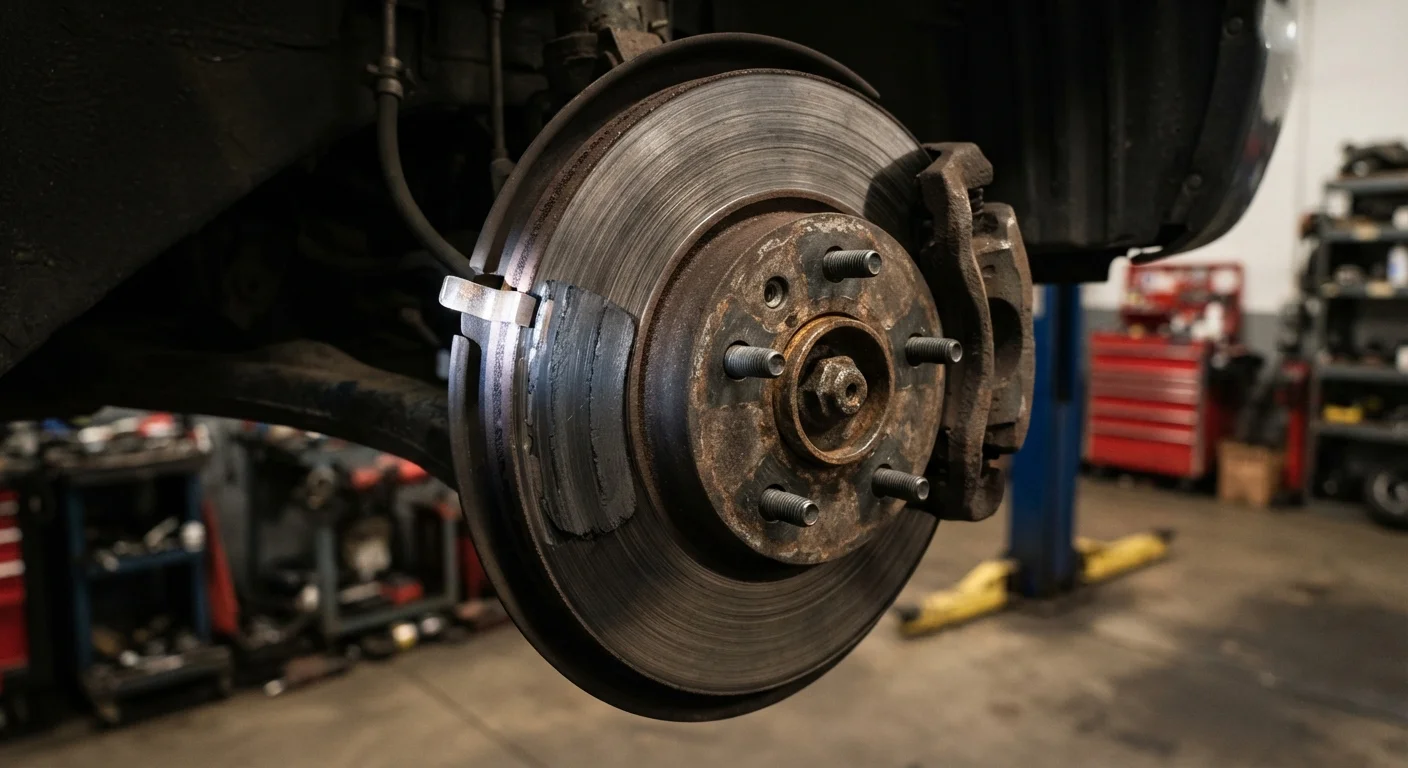
Most modern brake pads include a metal wear indicator that squeals when pads thin to about 2–3mm. However, that indicator can corrode, snap off, or simply fail to make contact at certain temperatures. Relying entirely on sound for brake health is a gamble. Regular visual inspection — looking through the wheel spokes at pad thickness against the rotor — provides a much more reliable check, though a professional measurement is the gold standard.
Myth
Grinding means my brakes need replacing soon — I can wait a little longer.
Fact
Grinding almost always means metal is contacting metal right now. Continued driving can damage rotors rapidly and dramatically reduces stopping power.
When pads are fully depleted, the metal backing plate grinds directly against the rotor. Every mile driven in this condition scores and damages the rotor surface, turning what would have been a pad-only replacement into a far more expensive rotor replacement as well. Grinding brakes are a same-day service situation, not a "schedule it for next week" one. If you hear grinding, have the vehicle inspected immediately by a qualified mechanic.
Myth
Squealing brakes always mean worn pads and an imminent replacement.
Fact
Squealing has multiple causes — some harmless — including morning moisture, dust accumulation, or a brief glazing of the pad surface.
A brief squeal on the first stop of a cold or damp morning is common and typically harmless — light surface rust or condensation burns off quickly. However, persistent squealing throughout normal driving is the wear indicator doing its job, signaling pads are nearing minimum thickness. The distinction matters: don't panic at the first morning squeak, but do act promptly on squealing that continues throughout the day. When in doubt, get a professional inspection.
Myth
Rear brakes last as long as front brakes, so I can replace them at the same time.
Fact
Front brakes typically wear two to three times faster than rear brakes on most passenger vehicles because they handle the majority of stopping force.
During braking, weight shifts forward, loading the front axle. On most front-wheel-drive and many all-wheel-drive vehicles, front pads absorb significantly more work than rears. Replacing all four corners on the same schedule often means replacing rear pads that still have substantial life left. A per-axle inspection approach — checking each set on its own merits — is more accurate and cost-effective than a blanket schedule.
Myth
New cars don't need brake inspections for the first few years.
Fact
Even new vehicles should have brakes inspected annually or at every oil change interval, as driving style can wear pads quickly regardless of vehicle age.
A new vehicle comes with fresh pads, but an aggressive driver in a heavy SUV can wear through them in 18 months or less. Brake inspections are about usage patterns, not just vehicle age. Many manufacturers recommend brake system checks at each service interval. Building that habit early means problems get caught when they're still inexpensive and straightforward to fix.
What Brake Wear Actually Looks Like in Practice
Beyond the myths, it helps to know what legitimate warning signs feel like in the real world. Brake fade — that spongy, unresponsive pedal feel during repeated hard stops — is a sign that heat has temporarily compromised stopping power. Pulling to one side under braking often means uneven pad wear or a stuck caliper. Vibration through the pedal typically points to warped rotors, not just worn pads.
25–70k
Miles brake pads can last
Industry estimates place typical brake pad life in this wide range, driven primarily by driving style, load, and terrain rather than mileage alone.
2–3mm
Pad thickness triggering wear indicator
Most OEM wear indicators are designed to contact the rotor and squeal when pad material reaches approximately 2–3mm remaining.
2–3x
Front vs. rear brake wear rate
Automotive engineers generally note that front brake pads on passenger vehicles wear at roughly two to three times the rate of rear pads due to forward weight transfer during braking.
Driving style matters enormously. City drivers who brake frequently from higher speeds can wear through pads in half the time of a highway commuter covering the same mileage. Towing heavy loads accelerates wear dramatically. If your driving profile fits either of those categories, check your vehicle maintenance schedule more aggressively than the owner's manual baseline suggests.
Tyre condition also interacts with braking performance — under-inflated or worn tyres extend stopping distances regardless of how good your brake pads are. Tyre pressure, tread, and the safety math behind both explains exactly how those variables combine.
Brake Work Is Safety-Critical — Know Your Limits
While visual inspections through the wheel spokes are reasonable for an informed driver, actual brake servicing — pad replacement, caliper work, rotor resurfacing — involves safety-critical components. Unless you have the proper tools, a safe working environment, and verified mechanical knowledge, this is work best left to a licensed professional. An incorrect brake repair can fail silently and without warning.
This article is for general informational purposes only. For any concerns about your vehicle's braking system, consult a qualified, licensed mechanic. Do not attempt brake repairs that exceed your skill level or tools — brake system integrity is safety-critical.