

Key Takeaways
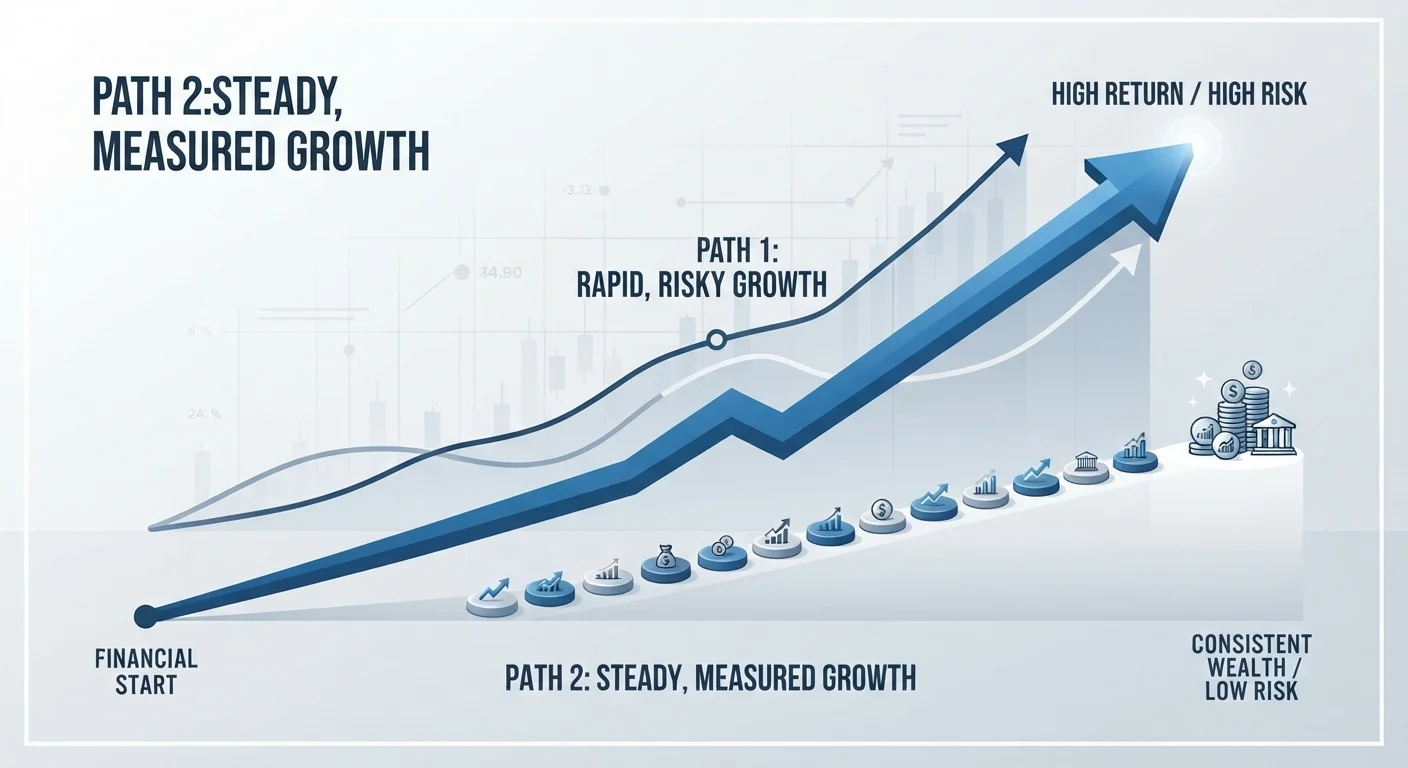
- Lump-sum investing historically outperforms drip-feeding roughly two-thirds of the time in rising markets.
- Drip-feeding (dollar-cost averaging) reduces the risk of investing at a market peak and eases emotional pressure.
- The best approach often depends on how the money arrives — all at once or gradually through income.
- Neither method eliminates investment risk; markets can decline regardless of how you deploy capital.
- Consistency and time in the market matter more than which deployment method you choose.
Our Verdict
Lump-sum investing has an edge in markets that trend upward over time, because capital begins compounding sooner. However, drip-feeding is a genuinely useful alternative when a large windfall feels psychologically difficult to commit at once, or when money arrives in instalments. For most everyday investors contributing from regular income, drip-feeding is not a compromise — it is simply how real-world investing works. Consult a licensed financial adviser before making decisions suited to your individual situation.
| Best for | Recommended |
|---|---|
| Investors with a lump sum ready to deploy in a long-term diversified portfolio | Lump-Sum Investing |
| Those receiving income gradually or feeling anxious about timing a large single investment | Drip-Feeding (DCA) |
| Investors prone to emotional decision-making or market-timing impulses | Drip-Feeding (DCA) |
| Disciplined investors with a long horizon and comfort with short-term volatility | Lump-Sum Investing |
Defining the Two Approaches
When you have money to invest, you face a fundamental choice: put it all in now, or spread it out over time. These two strategies go by several names, but the concepts are straightforward.
Lump-sum investing means deploying the full available amount immediately — on a single date, into your chosen assets. Drip-feeding, formally called dollar-cost averaging (DCA), means dividing that same total into equal instalments invested at regular intervals, regardless of what the market is doing at each point.
For a deeper look at how DCA works in practice, see our guide to dollar-cost averaging. To understand why starting at all matters as much as method, the investing myths beginners face article addresses several barriers that prevent people from getting started.
What the Evidence Says About Lump-Sum vs. Drip-Feeding
Historical research — most notably a widely cited analysis by Vanguard — has examined rolling periods in US, UK, and Australian equity markets and found that lump-sum investing outperformed a 12-month DCA schedule approximately two-thirds of the time. The explanation is straightforward: markets rise more often than they fall over long horizons, so capital that enters earlier spends more time compounding.
~68%
Of periods lump-sum investing outperformed DCA
Vanguard research examined 12-month rolling periods across US, UK, and Australian equity markets and found lump-sum investing ahead roughly two-thirds of the time.
~32%
Of periods DCA produced the better outcome
These periods largely correspond to market environments that declined shortly after the lump-sum date, where staged entry lowered average cost per unit.
That said, the one-third of periods where drip-feeding won are meaningful. They correspond to markets that declined sharply shortly after the lump-sum date. A DCA investor in those scenarios bought subsequent instalments at lower prices, reducing the average cost per unit — and ending up with more units than the lump-sum investor who bought everything at the peak.
Understanding how compounding drives long-term outcomes is foundational here. Our article on how compound interest works explains the mechanics clearly.
The Case for Lump-Sum Investing
The strongest argument for investing a lump sum immediately is time in the market. Every day capital sits in cash rather than invested assets is a day it is not participating in potential growth. In markets with a long-term upward trajectory — as broad equity indexes have historically shown — waiting carries its own cost.
Lump-sum investing also eliminates the ongoing decision of when to deploy the next tranche, reducing the risk of procrastination or second-guessing that can leave investors permanently on the sidelines. The approach is also simpler to execute and, in some account types, may involve fewer transaction costs.
Commit to the Plan, Not the Timing
If you choose lump-sum investing, decide in advance that you will not attempt to move the money back to cash if markets dip shortly after. The evidence in favour of lump-sum investing assumes the capital stays invested. Pulling out after a loss locks in the downside and eliminates the recovery. A clear plan — and a diversified portfolio appropriate to your risk tolerance — makes it easier to stay the course.
The main risk is obvious: investing everything immediately exposes the full amount to any near-term downturn. An investor who deployed a lump sum the week before a significant market correction would face an immediate paper loss on the entire position.
For those concerned about structuring a resilient portfolio alongside this decision, diversification principles and fund selection considerations are worth reviewing.
The Case for Drip-Feeding
Drip-feeding addresses two real problems: timing uncertainty and investor psychology. No one can reliably predict whether the market is at a high or a low at any given moment, and DCA sidesteps the need to make that judgment. By investing at fixed intervals, you automatically buy more units when prices are lower and fewer when prices are higher — smoothing the average entry price over time.
Equally important is the behavioural benefit. A large lump sum can feel daunting, particularly for newer investors. Committing capital in smaller, regular amounts is often easier to sustain emotionally, and it builds the habit of consistent investing — which may matter more than the deployment method itself.
Drip-feeding is also the natural structure for most working adults, who invest from regular income rather than a windfall. For these investors, the question of lump-sum versus DCA is largely theoretical — they are already drip-feeding by default. See our budgeting basics hub for guidance on setting aside regular amounts from income.
Drip-Feeding Does Not Eliminate Risk
A common misconception is that investing gradually protects you from losses. It does not. If markets fall steadily over the entire DCA period, every instalment you invest loses value. DCA reduces the risk of buying entirely at a peak, but it cannot prevent losses in a prolonged downturn. All investing carries risk, and you should only invest money you do not need in the short term.
Comparing the Two Approaches Side by Side
The table below summarises the key practical differences between lump-sum investing and drip-feeding across the criteria that matter most to new investors.
| Lump-Sum Investing | Drip-Feeding (DCA) | |
|---|---|---|
| Historical performance edge | Outperforms ~2/3 of the time | Outperforms ~1/3 of the time |
| Exposure to near-term downturns | Full amount exposed immediately | Exposure builds gradually over time |
| Emotional difficulty | Higher — requires committing all at once | Lower — smaller, regular commitments |
| Suitability for windfalls | Well-suited | Useful if timing anxiety is high |
| Suitability for regular income investors | Less applicable | Natural fit — reflects how income arrives |
| Transaction costs | Single transaction, lower cost | Multiple transactions, potentially higher cost |
| Complexity | Simple — one decision | Requires ongoing schedule and discipline |
It is worth noting that fees can affect both approaches — repeated transactions in a drip-feed schedule may incur more costs depending on account type. Our article on how investment fees erode returns walks through this in detail. And for context on common missteps, early investing errors to avoid is a practical companion read.
This article is for general informational and educational purposes only and does not constitute personalised financial or investment advice. Past market performance does not guarantee future results. Consult a licensed financial adviser before making investment decisions based on your individual circumstances.