

| Typical roof lifespan (asphalt shingles) | 15–30 years (National Roofing Contractors Association general guidance) |
| Central AC typical lifespan | 15–20 years (U.S. Department of Energy general estimates) |
| Tank water heater lifespan | 8–12 years (International Association of Certified Home Inspectors) |
| Gas furnace lifespan | 15–30 years (U.S. Department of Energy general estimates) |
| Copper supply pipe lifespan | 50–70 years (International Association of Certified Home Inspectors) |
| Electrical panel lifespan | 25–40 years (General industry estimate; varies by load and brand) |
Why System Lifespans Matter
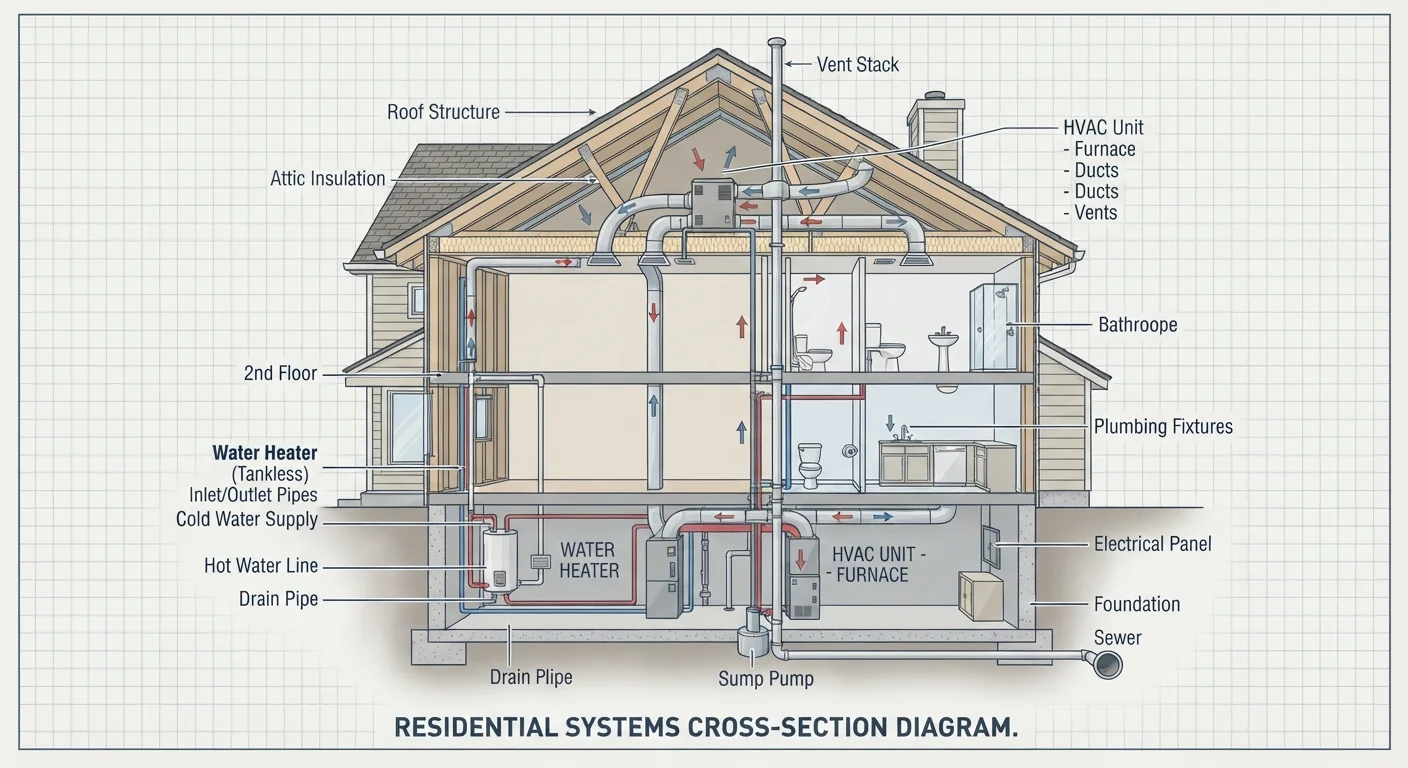
Every major home system — your roof, furnace, water heater, plumbing — has a predictable service window. Knowing those windows lets you budget proactively rather than scramble when something fails on a cold January night. The figures below are general industry estimates; actual longevity depends on installation quality, local climate, usage patterns, and maintenance history.
Think of this as a planning calendar rather than a guarantee. Just as deferred vehicle maintenance compounds into costly repairs, ignoring aging home systems almost always results in higher replacement costs and potential property damage.
| Typical roof lifespan (asphalt shingles) | 15–30 years (National Roofing Contractors Association general guidance) |
| Central AC typical lifespan | 15–20 years (U.S. Department of Energy general estimates) |
| Tank water heater lifespan | 8–12 years (International Association of Certified Home Inspectors) |
| Gas furnace lifespan | 15–30 years (U.S. Department of Energy general estimates) |
| Copper supply pipe lifespan | 50–70 years (International Association of Certified Home Inspectors) |
| Electrical panel lifespan | 25–40 years (General industry estimate; varies by load and brand) |
Lifespans by System: A Reference Guide
Use the ranges below as a starting framework when evaluating your home's major components. Systems near the upper end of their range should be inspected annually and budgeted for replacement within two to three years.
Roofing
- Asphalt shingles (3-tab): 15–20 years
- Architectural shingles: 25–30 years
- Metal roofing: 40–70 years
- Slate or tile: 50–100 years
Signs of early failure include curling or missing shingles, granules in gutters, and daylight visible in the attic. Proper attic ventilation significantly affects shingle longevity — see what homeowners get wrong about insulation for related context.
HVAC Systems
- Central air conditioner: 15–20 years
- Gas furnace: 15–30 years
- Heat pump: 10–15 years
- Boiler: 20–35 years
Annual professional servicing — cleaning coils, replacing filters, checking refrigerant — is the single most impactful way to reach the upper end of these ranges.
Water Heaters
- Tank water heater (gas or electric): 8–12 years
- Tankless water heater: 20+ years
Flushing sediment annually and replacing the anode rod every 3–5 years can add several years to a tank unit's life.
Plumbing
- Supply pipes (copper): 50–70 years
- Supply pipes (galvanized steel): 20–50 years
- PVC drain lines: 25–40 years
Electrical
- Wiring (copper): 50–70 years
- Electrical panel: 25–40 years
Important: Electrical panel upgrades and rewiring must be performed by a licensed electrician. Permits and inspections are typically required — verify local code requirements before any work begins.
Appliances
- Refrigerator: 10–15 years
- Dishwasher: 9–12 years
- Washing machine: 10–14 years
- Dryer: 10–13 years
35%
Home emergencies linked to deferred system maintenance
Industry surveys consistently find a significant share of costly emergency repairs trace back to systems operating past their expected service life without inspection.
20+ years
Tankless water heater lifespan advantage
Tankless units typically last more than twice as long as standard tank models when properly maintained, according to general industry estimates.
Building a Replacement Timeline
Start by documenting the install date of each major system — check appliance manuals, home inspection reports, or permit records. If a date is unknown, a licensed home inspector can estimate age from model numbers and physical condition.
Once you have a baseline, flag any system within five years of its estimated end-of-life. Set aside a dedicated home reserve fund — many financial planners suggest 1–2% of your home's value annually as a general-purpose maintenance and repair budget, though this varies widely by home age and condition. Consult a financial professional for guidance suited to your specific situation.
Small, proactive upgrades often extend system life and improve comfort at the same time. For ideas that fall outside full replacement, explore low-cost, high-impact home upgrades that can meaningfully improve daily livability while you plan larger investments.
Anode rod
A sacrificial metal rod inside a tank water heater that attracts corrosive elements in water, protecting the tank lining. Replacing it every 3–5 years can significantly extend the heater's life.
Heat pump
An HVAC system that moves heat rather than generating it, providing both heating and cooling from a single unit. It is generally more energy-efficient than separate furnace and AC systems.
Galvanized steel pipe
Steel pipe coated in zinc to resist corrosion, commonly used in homes built before the 1960s. Over time the zinc coating deteriorates, leading to rust, reduced water flow, and eventual leaks.
End-of-life (EOL)
The point at which a system or component is expected to fail or become too costly to repair reliably. Operating past EOL increases both failure risk and repair costs.
Finally, remember that smart home technology increasingly integrates with core systems. Before replacing aging HVAC or plumbing, it's worth reviewing why smart home setups fail to ensure any new components are chosen with long-term compatibility in mind.