

Key Takeaways
- Swapping cabinet hardware is one of the fastest ways to modernize a kitchen or bathroom.
- Fresh caulking removes visual grime and prevents moisture damage simultaneously.
- Layered lighting — not just brighter bulbs — dramatically changes how a room feels.
- Replacing interior door hardware unifies a home's style for minimal cost.
- Decluttering fixed surfaces, like countertops, has outsized impact on perceived space.
Why Small Changes Have Outsized Impact
Most of what makes a home feel dated, tired, or unpolished isn't structural — it's surface-level and hardware-level detail that accumulates quietly over years of use. Yellowed caulk, mismatched door knobs, a single flat-lit room: none of these are expensive to fix, but together they shape the entire impression a home makes. The upgrades below require basic tools, modest material costs, and a few hours per project — no permits, no contractors, no major disruption.
If you're planning anything larger down the track, these fixes also make a useful starting point before committing to bigger spend. Understanding what renovation projects actually cost helps clarify which improvements genuinely need professional trades and which you can handle yourself.
Sequence Matters: Fix Before You Upgrade
Cosmetic upgrades have the most impact when underlying maintenance issues are already addressed. Caulking over mold, for example, traps moisture rather than eliminating it. Before investing in visible improvements, review any outstanding maintenance needs — the case for fixing before upgrading explains why sequencing repairs before aesthetics protects your investment.
Replace cabinet and drawer hardware
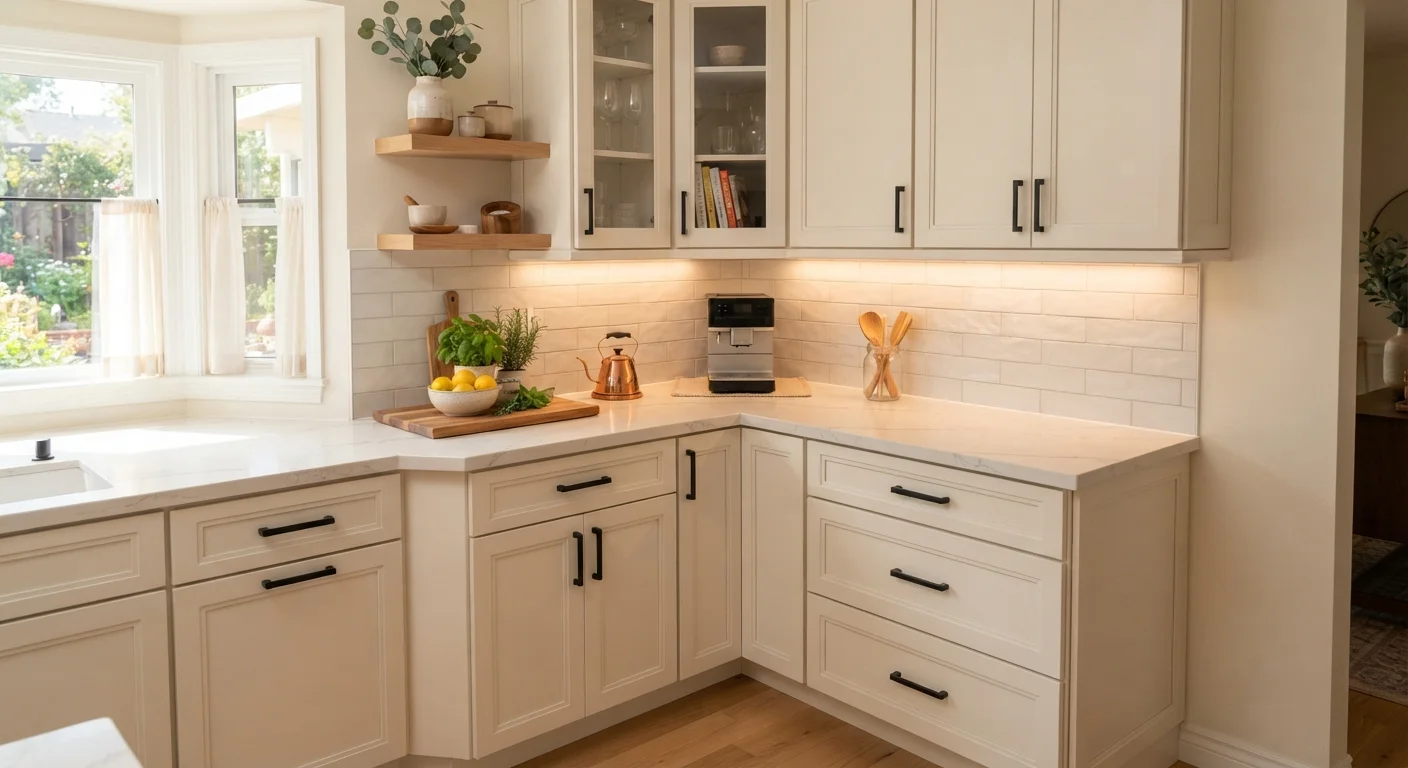
Cabinet pulls and knobs are among the most handled surfaces in any home, and worn or mismatched hardware dates a room more than most homeowners notice until it's replaced. Swapping them out requires nothing more than a screwdriver, basic measuring, and an afternoon.
When choosing new hardware, measure the existing hole spacing (center-to-center for pulls) before purchasing, so you don't need to drill new holes. Finishes like brushed nickel, matte black, and unlacquered brass each read differently under various light temperatures — test a single piece before committing to an entire kitchen's worth.
Worn hardware dates a room more than most homeowners notice until it's gone.
Re-caulk tubs, sinks, and countertop edges
Old caulking yellows, cracks, and collects mildew — making otherwise clean surfaces look neglected. Re-caulking is a half-day task that immediately refreshes bathrooms and kitchens while actively preventing water from seeping behind walls and under floors.
Remove old caulk fully using a plastic scraper and a caulk-removal solution before applying the new bead. Allow the surface to dry completely — at least 24 hours after use — before applying fresh silicone or siliconized latex caulk. Apply masking tape on both sides of the joint for a clean, straight line, and smooth the bead with a dampened finger or caulk tool within a few minutes of application.
Re-caulking is a half-day task that refreshes surfaces while actively preventing water damage.
Layer your lighting instead of just brightening
A single overhead fixture — especially one fitted with cool-white bulbs — flattens a room and tends to feel institutional rather than welcoming. The fix isn't necessarily more light; it's light at different heights and from multiple sources.
Adding a table lamp, under-cabinet lighting, or a floor lamp to an existing overhead scheme creates depth and warmth. Switching bulbs to a warm color temperature (around 2700K–3000K) in living and bedroom areas is an inexpensive change with an immediate effect on how a space feels. Dimmer switches, where wiring allows and local code permits, give further control — check with a licensed electrician if you're unsure whether your existing switches are compatible with dimmers.
The fix isn't necessarily more light — it's light at different heights and from multiple sources.
Swap interior door hardware and hinges
Interior door knobs and hinges are often overlooked, yet mismatched finishes across a hallway or an entry are among the details that give a home an unfinished or neglected feel. Replacing knobs with lever handles also improves accessibility for households with elderly or young members.
Standard US interior door bore holes are typically 2-3/8" or 2-3/4" backset — check both measurements before purchasing replacements. Painting visible hinge edges to match the door or trim, rather than replacing them, is a budget-conscious alternative that still improves cohesion significantly.
Mismatched finishes across a hallway give a home an unfinished feel that's easy to correct.
Clear and organize permanent countertop surfaces
Visual clutter on countertops compresses perceived space more than almost any other single factor. A countertop that holds only actively used items reads as larger, cleaner, and more intentional — regardless of the room's actual square footage.
Conduct a two-week trial: move everything off a kitchen or bathroom counter and only return items you reach for daily. What doesn't come back can be stored in a cabinet or donated. For shared households where clutter thresholds differ, agreeing on designated zones for each person's everyday items can prevent the habit from reverting — see strategies for shared space organization for practical approaches.
A countertop holding only daily-use items reads as larger and more intentional regardless of actual space.
Touch up paint in high-traffic scuff zones
Walls around light switches, door frames, stair railings, and entryways accumulate scuffs and fingerprints that make an entire room look dull. A targeted touch-up — rather than a full repaint — addresses these spots in an hour or two using leftover paint or a color-matched quart.
For best results, apply touch-up paint with the same applicator type used originally (roller vs. brush), feather the edges outward, and work in good natural light to match sheen. Flat and matte finishes are the most forgiving to touch up; semi-gloss and gloss surfaces may show lap lines more readily and sometimes warrant repainting an entire wall section for consistency.
Targeted scuff-zone touch-ups take two hours and can make a hallway look freshly renovated.
Seal and refresh grout lines
Discolored grout makes tile floors and backsplashes look permanently dirty no matter how often they're cleaned. Grout can be cleaned with a stiff brush and an oxygen-based cleaner, recolored with grout paint or colorant pen for minor discoloration, or fully regrouted for cracked or crumbling joints.
Once clean, applying a grout sealer prevents future staining and moisture absorption — a step that's especially important in bathrooms and kitchen backsplashes. Sealers typically need reapplication every one to two years depending on traffic and product type. This task is directly complementary to the caulking work above and is most efficient when both are done in a single session.
Discolored grout makes tile look permanently dirty — sealing it prevents the problem from returning.
Putting It All Together
None of these projects require gutting a room, hiring a contractor, or taking on significant debt. Each one is self-contained, reversible where it matters, and immediately visible. Working through them systematically — hardware first, then surfaces, then lighting — builds momentum and keeps the scope manageable.
For homeowners thinking further ahead, these low-cost upgrades are a natural complement to longer-term planning. Knowing when your home's major systems are due for replacement helps you prioritize cosmetic work against functional spend. And if you're considering anything more structural, a full renovation planning guide walks through scope, sequencing, and budget in detail.
Test Finishes in Context Before Committing
Hardware and paint finishes look different under showroom lighting than they do in your home. Whenever possible, bring a sample or single piece home and live with it for a day before purchasing in quantity. This is especially important in kitchens, where multiple metal finishes — faucets, appliances, light fixtures — need to read cohesively together.