

Key Takeaways
- Proportion is the size relationship between clothing pieces — it shapes how balanced an outfit looks.
- Volume contrast is a core tool: pairing a voluminous piece with a fitted one creates visual harmony.
- Where garments hit the body — hem length, waist placement — significantly affects perceived proportion.
- Proportion principles apply to every body type and style identity, not just fashion-forward dressers.
- You can apply proportion thinking to your existing wardrobe without buying anything new.
Proportion in Dressing
Proportion in dressing refers to the visual relationship between the sizes, volumes, and lengths of clothing pieces you wear together. When an outfit feels balanced and intentional, proportion is usually working correctly behind the scenes. When something feels "off" but you can't name why, a mismatch in proportion is often the culprit.
In design terms, proportion draws from classical principles like the golden ratio — the idea that certain size relationships are inherently more pleasing to the eye than others. Applied to clothing, this translates to the ratio of top to bottom, the placement of a waistline, and how much visual weight each garment carries.
Why Proportion Is the Element Most People Skip
Most style advice focuses on colour, fit, or trend — but proportion quietly determines whether all of those elements land. It's the structural logic beneath the surface of any outfit that works.
If you've ever looked in the mirror and felt something was wrong without being able to name it, proportion is worth investigating. An oversized blazer over wide trousers, a cropped top with a high-waisted midi skirt, or a tunic-length top over slim pants — each of these combinations raises the same underlying question: how does the visual weight of each piece relate to the others?
The good news is that proportion isn't a talent. It's a learnable framework, and once you understand its basic principles, you'll start seeing it (and correcting it) immediately in your own wardrobe. For a broader look at why outfits disappoint, see our guide to common fit and proportion problems.
“Proportion is the grammar of dress. You can have beautiful words — great fabric, great colour — but without grammar, they don't form a sentence.”
— Tim Gunn, Fashion educator and author
The Core Principle: Volume Contrast
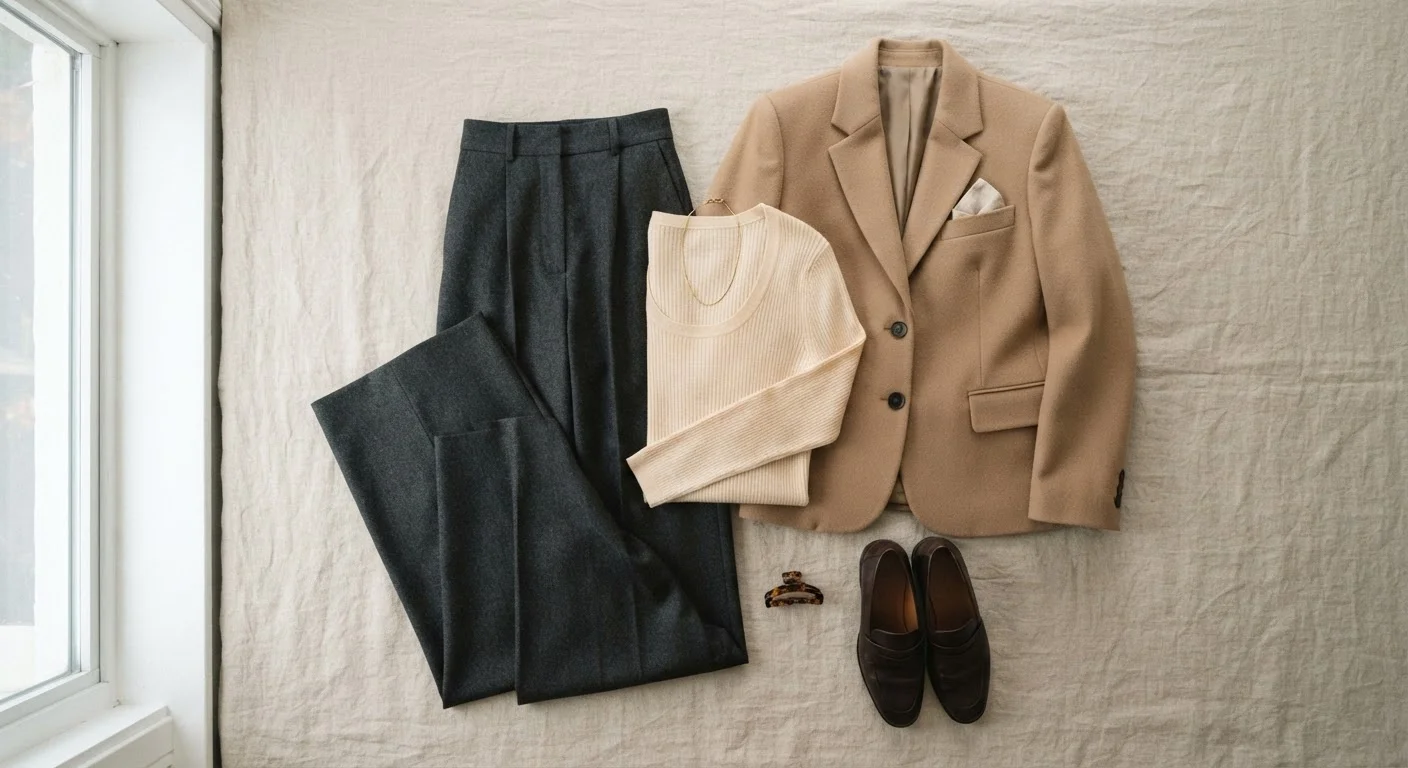
The single most actionable proportion rule is this: pair volume with structure. When one garment carries significant visual weight — wide-leg trousers, a billowing blouse, a full skirt — the other should be more contained. This contrast prevents an outfit from looking shapeless or overwhelming.
This doesn't mean fitted clothing is inherently superior. A relaxed-fit shirt paired with straight-leg jeans can look proportionally sound when the volumes are similar and intentionally matched. What creates problems is unintentional mismatch — an oversized sweatshirt over extremely wide-leg cargo pants reads as accidental rather than deliberate.
Three proportion pairings that reliably work:
- Fitted top + wide-leg or full-volume bottom — the classic counterbalance
- Oversized top + slim or tapered bottom — the slouchy-meets-structured silhouette
- Matching volumes with intentional layering — same-volume pieces work when a third element (a belt, a structured jacket) provides definition
Start With a Single Swap
If an outfit feels off, change just one element — the top, the bottom, or the footwear — before reassessing. Changing multiple pieces at once makes it harder to identify which proportion relationship was the problem. Small, deliberate swaps build your instincts faster than overhauling the whole look.
Hem Length and Visual Interruption
Where a garment ends on your body matters as much as its overall volume. Hems create visual lines — they interrupt the eye's movement and divide the body into sections. A mid-calf skirt hits at a widening point on most legs, which can shorten the visual line. A hem just below or above the knee tends to create a cleaner proportion.
This principle extends to layering. A shirt worn untucked that falls just past the hip can make legs look shorter. Tucking it fully — or opting for a half-tuck — shifts the visible break point and changes the perceived proportion of top to bottom dramatically.
Hem length also interacts with footwear. A cropped trouser with a low-profile sneaker creates a different proportion than the same trouser with a chunky platform. Neither is wrong, but understanding the relationship helps you make choices deliberately rather than by accident.
~70%
Outfit satisfaction linked to silhouette balance
Research in consumer psychology suggests the majority of self-reported outfit dissatisfaction relates to silhouette and fit rather than colour or garment quality.
1:1.618
The golden ratio in visual design
Classical proportion theory, referenced widely in design education, identifies this ratio as a recurring principle behind compositions perceived as inherently balanced and pleasing.
Applying Proportion to Your Existing Wardrobe
You don't need to buy anything to start working with proportion. Most wardrobes contain the ingredients — they just haven't been paired with proportion in mind.
A practical starting point: pull out three bottoms you wear regularly and photograph yourself in each paired with the same top. Then switch to three different tops with the same bottom. The visual pattern quickly reveals which combinations feel balanced and which don't — and why.
Proportion thinking also intersects with body-shape guidance, though it's worth approaching those frameworks critically. Dressing for your body shape contains useful ideas alongside some outdated assumptions — the goal is confidence and comfort, not conforming to a prescribed silhouette.
If you're building a wardrobe more intentionally, starting from scratch is an opportunity to select pieces specifically for their proportion versatility — items that balance both volume-heavy and slim pieces in your rotation.