

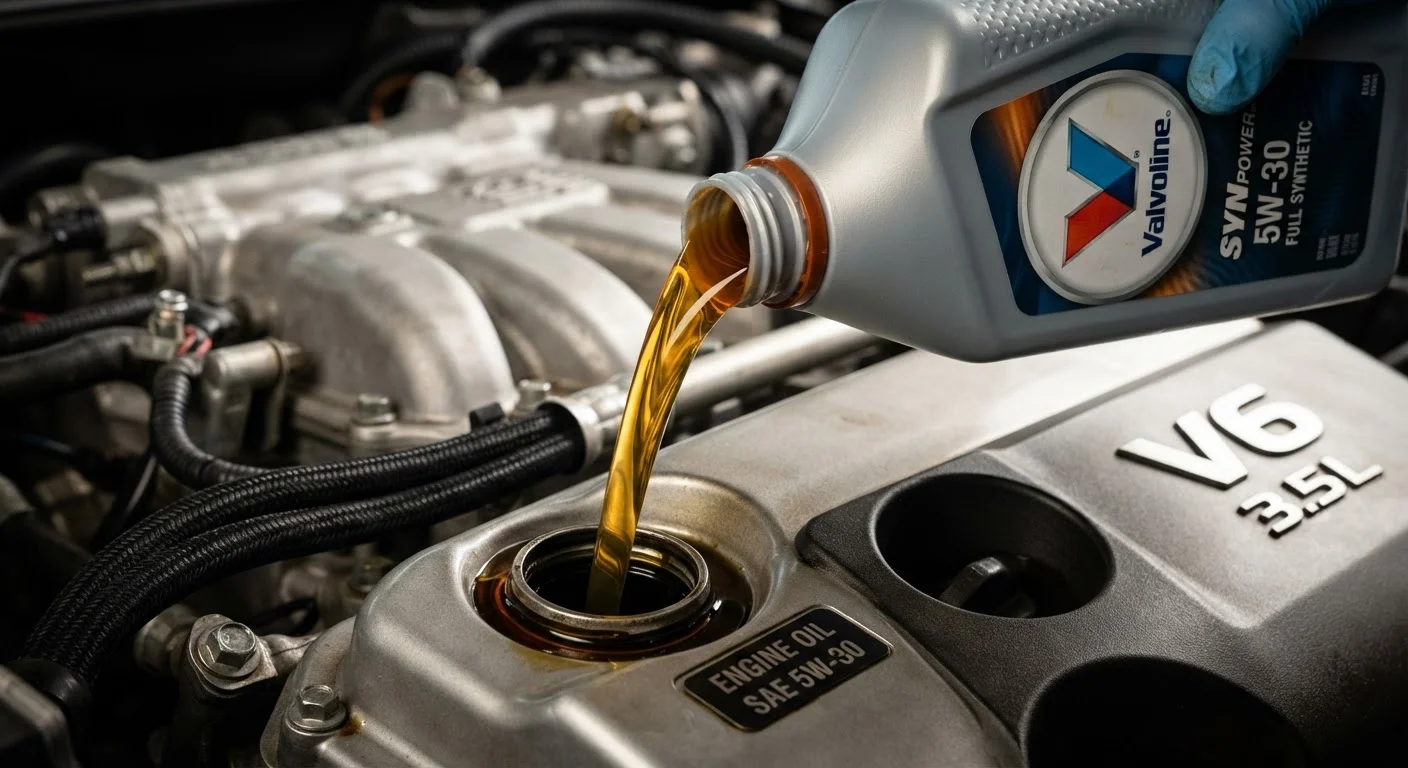
Key Takeaways
- Synthetic oil is chemically engineered for greater purity and more consistent molecular structure than conventional oil.
- Conventional oil is refined from crude petroleum and works reliably in many older or low-mileage engines.
- Synthetic oil generally lasts longer between changes — often 7,500 to 15,000 miles versus 3,000 to 5,000 for conventional.
- Synthetic oil performs better in temperature extremes, both very cold starts and sustained high heat.
- Always follow your vehicle manufacturer's oil specification — type, grade, and change interval — above all else.
- Switching from conventional to synthetic is generally safe, but consult your owner's manual first.
Option A
Synthetic Motor Oil
The engineered, high-performance option for modern engines.
Best for: Drivers with newer vehicles, extreme climates, or longer intervals between oil changes.
Option B
Conventional Motor Oil
The time-tested, budget-friendly baseline for standard driving.
Best for: Owners of older vehicles with simple engines who drive under normal, moderate conditions.
If you drive a newer vehicle or one with a turbocharged engine
Synthetic Motor Oil
Modern engines — especially turbocharged ones — run hotter and with tighter tolerances. Synthetic's stability under heat and precise molecular structure helps protect these engines more effectively.
If you own a high-mileage older vehicle and want simplicity
Conventional Motor Oil
Many older engines were designed around conventional oil and run fine on it. Some mechanics note that switching to synthetic in a high-mileage engine with worn seals may occasionally cause minor leaking.
If you live in a region with extreme cold winters
Synthetic Motor Oil
Synthetic oil flows more readily at low temperatures, reducing wear during cold starts — one of the highest-stress moments for any engine.
If you prioritize lower upfront maintenance cost
Conventional Motor Oil
Conventional oil costs less per quart, which can matter if you're on a tight budget — though factor in more frequent change intervals when comparing total costs.
What Sets These Two Oils Apart
At their core, both synthetic and conventional motor oils do the same job: lubricate moving engine parts, reduce friction, carry away heat, and suspend contaminants until the next oil change. The difference lies in how each oil is made and what that means for how it performs.
Conventional motor oil starts as crude petroleum, which is refined to remove impurities. Despite this refining process, it still contains a mix of molecule sizes and types — which means its behavior can vary somewhat under temperature stress or extended use.
Synthetic motor oil is either built from scratch using chemical synthesis or refined to a far greater degree than conventional oil. The result is a more uniform molecular structure with fewer impurities. That consistency is what gives synthetic oil its performance edge — it holds up more predictably across a wider range of temperatures and operating conditions.
For a deeper understanding of oil grades and viscosity ratings, see our guide to engine oil grades and change intervals.
| Criterion | Synthetic Oil | Conventional Oil |
|---|---|---|
| Origin | Chemically engineered or highly refined | Refined from crude petroleum |
| Molecular consistency | Uniform, highly purified | Variable, some impurities remain |
| Cold-weather performance | Flows quickly at low temperatures | Slower to flow in extreme cold |
| Heat resistance | Higher resistance to breakdown | Degrades faster under sustained heat |
| Typical change interval | 7,500–15,000 miles (varies by product) | 3,000–5,000 miles |
| Cost per quart | Generally higher | Generally lower |
| Best suited for | Newer, turbocharged, or performance engines | Older engines, moderate driving conditions |
Performance, Longevity, and Real-World Conditions
The performance gap between synthetic and conventional oil shows up most clearly in two situations: extreme temperatures and extended driving intervals.
During a cold start on a sub-freezing morning, oil needs to flow quickly to protect metal components before the engine fully warms up. Synthetic oil's more uniform molecular structure allows it to flow faster at low temperatures, reducing the wear that occurs during those first critical seconds. In high heat — particularly in turbocharged engines or stop-and-go traffic — synthetic oil is also more resistant to breaking down, a process called oxidation.
Change interval is where the cost math gets more nuanced. Conventional oil typically requires a change every 3,000 to 5,000 miles, while many synthetic oils are rated for 7,500 to 15,000 miles depending on the product and your vehicle. That longer interval means fewer trips to the shop, which can partially offset synthetic's higher per-quart price.
~2x
Longer change interval vs. conventional oil
Many synthetic oils are rated for at least twice the mileage of conventional oil before requiring a change, depending on the product and driving conditions.
3,000–5,000 mi
Typical conventional oil change interval
The American Automobile Association (AAA) notes that the traditional 3,000-mile interval is often shorter than necessary for many modern vehicles using conventional oil.
It's worth noting that driving style matters too. Short trips, towing, extreme heat, and dusty environments all degrade oil faster, regardless of type. Your owner's manual — not the sticker on your windshield — is the authoritative guide on change intervals for your specific vehicle.
For a closer look at how oil codes like 5W-30 translate to real-world decisions, our engine oil grades explainer breaks it down clearly.
Which Oil Should You Actually Use?
The honest answer is: use whatever your vehicle manufacturer specifies. That information lives in your owner's manual, and it accounts for your engine's design, tolerances, and warranty requirements. Many newer vehicles — particularly those from the last decade — are engineered specifically for synthetic oil and may require it to maintain warranty coverage.
Check Your Warranty Before Switching
Some vehicle warranties specify the type and grade of oil that must be used to keep coverage valid. If your car is still under manufacturer or extended warranty, switching oil types without verifying requirements could create complications. Always check your owner's manual or contact your dealership before making a change.
If your manual gives you a choice, or if you're driving an older vehicle where the manual predates the widespread availability of synthetics, consider the following practical factors:
- Climate: Very cold or very hot climates favor synthetic's stability across temperature extremes.
- Engine age and condition: Some older engines with worn seals may behave differently after a switch to synthetic. When in doubt, speak with a trusted, qualified mechanic.
- Driving habits: Frequent short trips, towing, or performance driving puts more stress on oil — synthetic holds up better under that strain.
- Budget: Conventional oil costs less upfront, but the shorter change intervals mean the savings aren't always as significant as they appear.
One thing to avoid: mixing oil types without understanding what you're doing. While it won't cause immediate engine damage in most cases, it dilutes the performance benefits of whichever oil you started with. If you're transitioning, do so at a proper change interval.
Also related — if you find yourself comparing "engineered" versus "natural" solutions in other parts of your life, our organic vs. synthetic fertilisers comparison takes a similar approach to that trade-off in the garden.