

Key Takeaways
- Your driving record is one of the strongest influences on what you pay for car insurance.
- Where you live — down to your ZIP code — significantly affects your rate.
- Vehicle type, age, and safety features all factor into the insurer's cost calculation.
- Credit-based insurance scores are used in most states but are banned in a few.
- Some widely believed factors, like car color, have no effect on premiums.
- Coverage choices and deductible levels are within your direct control and shape your premium immediately.
Car Insurance Premium
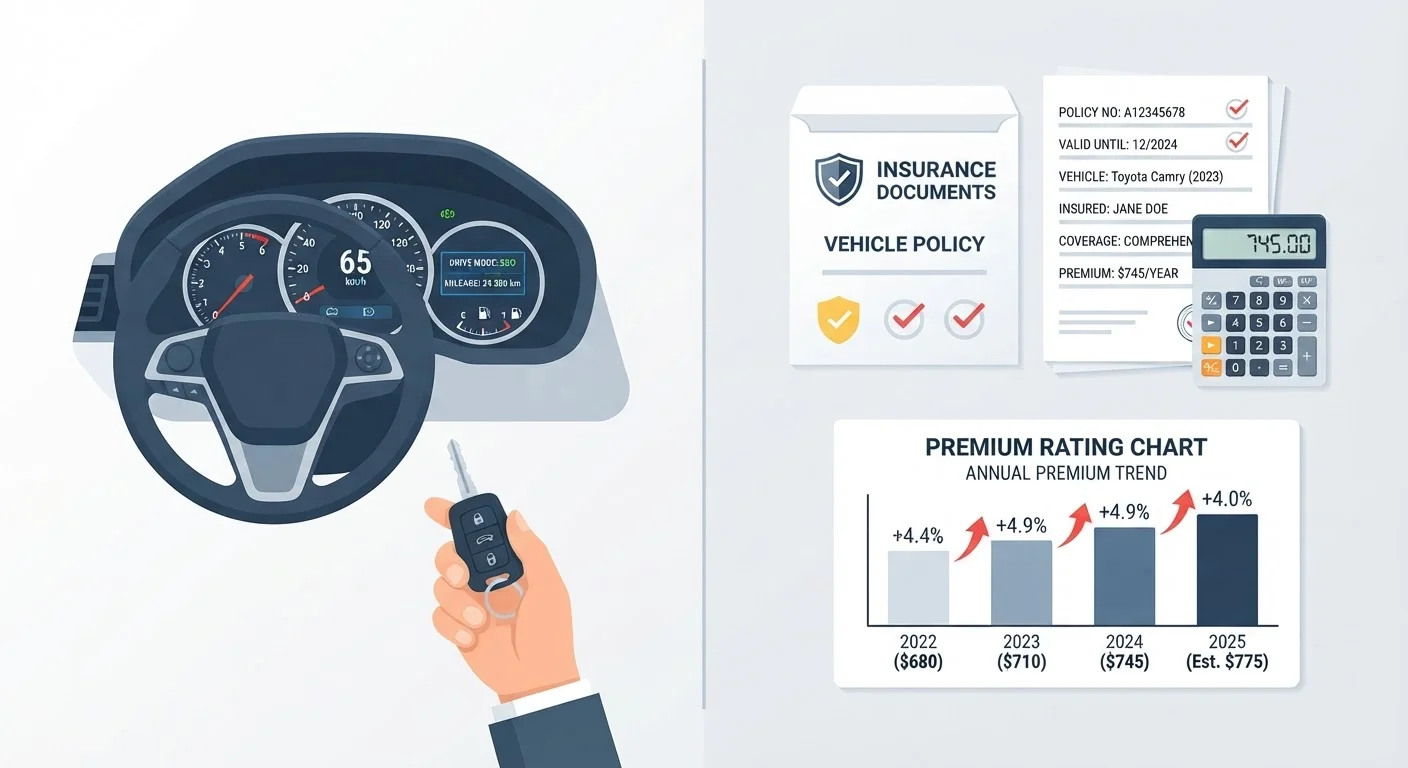
A car insurance premium is the amount you pay — monthly, semi-annually, or annually — to keep your auto insurance policy active. Insurers calculate this figure by assessing how likely you are to file a claim and how costly that claim might be. The result is a personalized price built from dozens of individual rating factors.
Insurers use actuarial models and state-approved rating algorithms to determine premiums. The specific factors and their weight vary by insurer and by state regulation.
The Factors Insurers Weigh Most Heavily
When an insurer sets your premium, they're essentially answering one question: how much risk do you represent? The answer comes from a blend of personal and vehicle-related data points, each carrying different weight depending on the insurer and your state's regulations.
Driving record. Your history behind the wheel is one of the most powerful rating factors. At-fault accidents, moving violations, DUI convictions, and license suspensions all signal elevated risk. A clean record, by contrast, typically qualifies you for preferred rates. Most surcharges from incidents age off after three to five years.
Location. Insurers rate you at your garaging address — the ZIP code where the vehicle is kept overnight. Areas with higher rates of vehicle theft, more congested traffic, more uninsured drivers, or more severe weather events tend to produce higher base rates. Two neighbors in different ZIP codes can pay meaningfully different premiums for identical coverage.
Age and driving experience. Statistically, teen drivers and drivers in their early twenties file more claims than middle-aged drivers. Premiums typically peak for young drivers and gradually decline through middle age before rising again for some senior age groups, though this varies by insurer and state rules.
~25%
Average premium increase after one at-fault accident
Industry data from multiple actuarial sources consistently shows that a single at-fault accident typically raises a driver's annual premium by roughly 20–30% at the next renewal.
4 states
States banning credit-based insurance scoring
California, Hawaii, Massachusetts, and Michigan prohibit or significantly restrict the use of credit scores in auto insurance rating, according to state insurance regulation records.
Vehicle-Related Factors: What Your Car Says About Your Risk
The car itself contributes heavily to pricing. Insurers look at several vehicle-specific data points:
- Make, model, and trim: A vehicle's repair costs, theft rate, and safety record all influence the premium. A car with expensive parts, high horsepower, or a poor crash-test history tends to cost more to insure.
- Age and value: Newer, higher-value vehicles cost more to repair or replace, raising collision and comprehensive premiums. Older vehicles with low market value are sometimes insured with liability-only coverage to reduce cost.
- Safety and anti-theft features: Advanced safety systems, automatic emergency braking, and factory-installed anti-theft devices can reduce certain portions of your premium, depending on the insurer.
Understanding what coverage types apply to your vehicle is just as important as understanding what you're paying. See our guide to auto insurance coverage types for a breakdown of what each policy element actually protects.
Check Your Vehicle's Safety Ratings Before You Buy
Before purchasing a new or used vehicle, look up its ratings from the Insurance Institute for Highway Safety (IIHS) and the National Highway Traffic Safety Administration (NHTSA). Vehicles with strong safety scores and lower theft rates often qualify for lower comprehensive and collision premiums. This is a factor you can research before you commit to a purchase.
Coverage Choices, Deductibles, and the Factors You Control
Not every premium driver is beyond your control. Several factors are direct decisions you make when you buy or renew a policy.
Coverage levels and add-ons. Carrying only state-minimum liability coverage costs less than a full-coverage policy with collision, comprehensive, and add-ons like roadside assistance or rental reimbursement. Higher liability limits also increase cost, but they provide meaningfully more financial protection.
Deductible selection. Your deductible — the amount you pay out of pocket before insurance kicks in on a claim — directly trades off against your premium. Raising your deductible lowers your premium; lowering it raises the premium. Choosing the right balance matters more than many drivers realize. Our article on choosing the right deductible walks through how to think about this trade-off clearly.
Telematics programs. Some insurers offer usage-based insurance that monitors real driving behavior — speed, braking, time of day — to adjust your rate. Safe drivers can see meaningful discounts. How telematics-based policies work is worth understanding before you opt in.
What Doesn't Affect Your Premium (Despite Common Belief)
A number of widespread assumptions about premium pricing are simply wrong. Clearing these up helps you focus on what actually moves the needle.
Myths vs. Reality in Insurance Pricing
Several popular beliefs about what drives premiums — car color, income level, the make of a friend's identical car — are either outright wrong or so heavily state-regulated that they rarely apply. The most reliable way to understand what's driving your specific premium is to ask your insurer which rating factors they use and how your policy is structured. You can also check with your state's department of insurance, which publishes the rating rules each insurer files.
Car color is the most durable myth — red cars do not cost more to insure. Color doesn't appear in any insurer's rating algorithm. Your income is not a direct rating factor, though credit-based insurance scores (which correlate with financial behavior) are used in most states. Your occupation is used by some insurers as a proxy for driving patterns, but many states restrict or prohibit this. And your gender is banned as a rating factor in several states, with ongoing legislative activity in others.
Knowing which myths to ignore lets you spend your time on the factors that genuinely matter — and on reading your policy carefully. Our guide to reading your declarations page shows you exactly what to look for before each renewal.
This article is for general informational purposes only and does not constitute personalized insurance advice. Coverage terms, rating factors, and regulations vary by insurer and by state. Consult a licensed insurance agent or adviser for guidance specific to your situation.