

Why Medication Planning Matters Before Any Trip
Whether you take a daily prescription or pack a small over-the-counter kit for emergencies, medications deserve a dedicated spot on your pre-departure checklist. Rules around what you can carry — and how — vary significantly between domestic and international travel, and between countries. Getting this wrong can mean delays at customs, confiscated supplies, or finding yourself without essential medicine mid-trip.
This guide covers the core things to know: documentation, quantity limits, storage, and what to check before crossing any border. It is general information only — always consult your doctor and relevant official sources before travelling.
For a broader pre-departure checklist, see Road Trip Ready: Everything to Organize Before You Leave the Driveway.
Documentation: What to Carry and Why
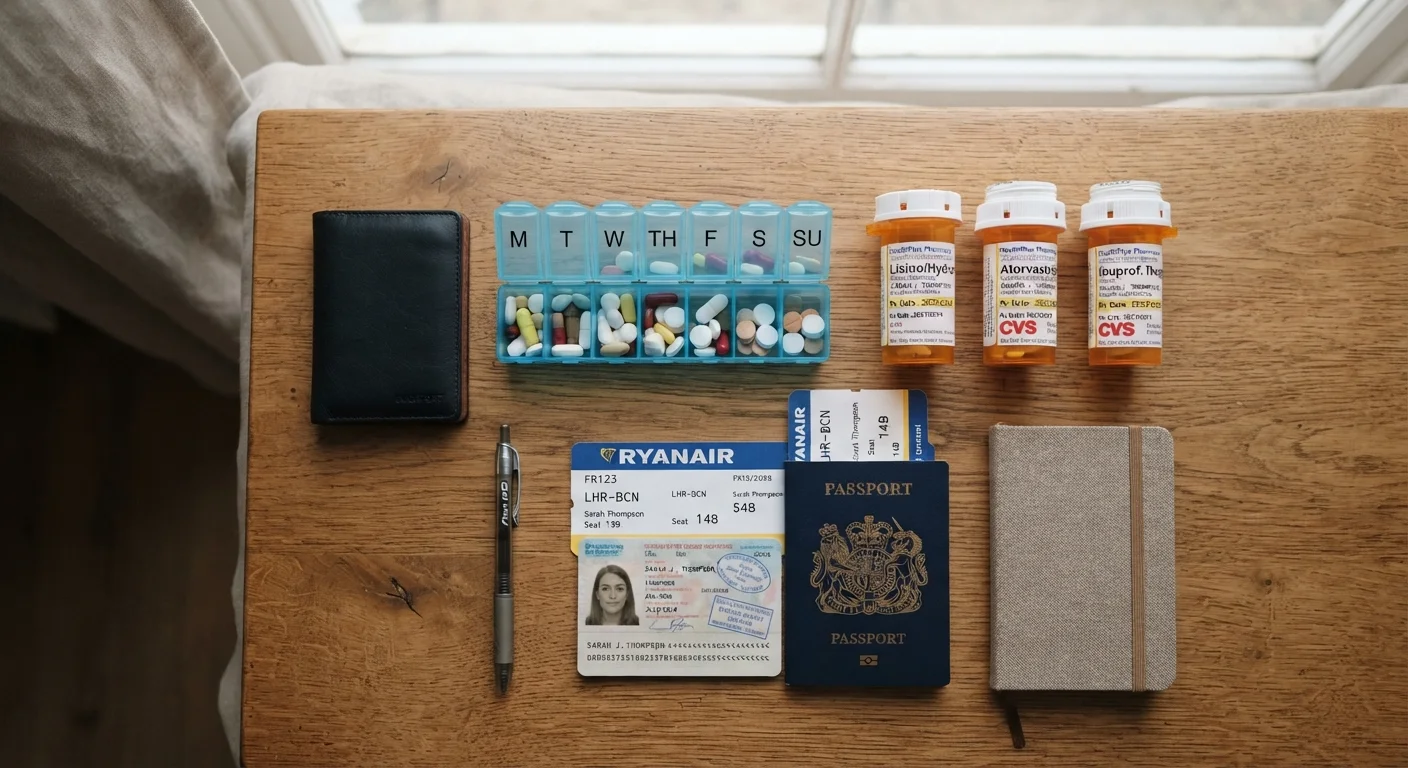
Documentation is your first line of defense when travelling with medications — especially prescription drugs. At a minimum, carry the original pharmacy-labeled container for each medication. That label should show your name, the prescribing doctor's name, the drug name (both brand and generic), and the dispensing pharmacy's contact details.
For international trips, a letter from your prescribing physician is strongly advisable. It should state your diagnosis in general terms, the medication name, dosage, and that the drug is medically necessary. Many countries require this for controlled substances and even some common medications that are restricted or classified differently abroad.
Controlled substance
A drug regulated by law because of its potential for misuse or dependency. Examples include certain opioids, stimulants, and benzodiazepines. International rules around carrying these vary widely.
Generic name
The non-brand, chemical name of a medication — for example, 'ibuprofen' is the generic name for Advil. Carrying this on your label helps customs officers identify the drug regardless of brand.
Import permit
Official advance authorization from a destination country allowing a traveller to bring a specific controlled or restricted medication across its border. Required by some countries even for small personal-use quantities.
Physician's letter
A signed document from a prescribing doctor stating the patient's need for a medication, its name and dosage, and confirming it is medically necessary. Often required or strongly recommended for international travel with prescription drugs.
Make digital copies of all documentation and store them in a secure cloud location so you can access them even if your bag is lost. See our guide on essential documents for international trips for a full pre-departure document checklist.
Border Considerations and Country-Specific Rules
Not every medication that is legal in the US is permitted in every destination. Some antihistamines, sleep aids, and common pain relievers are controlled or outright banned in certain countries. Controlled substances — including some anxiety medications, ADHD treatments, and strong opioid painkillers — often require advance permits from the destination country's health or customs authority.
Before any international trip, check the official embassy or consulate website of your destination country, and cross-reference with the US Department of State's country information pages. Rules can and do change, so verify close to your departure date rather than relying on older sources. Our article on reading a destination's entry requirements explains how to find accurate, up-to-date information from authoritative sources.
Rules Vary — Always Verify Officially
The regulations covering medication import change frequently and differ country by country. What is permitted today may be restricted tomorrow. Always check the official embassy or consulate website of your destination and the US Department of State's travel portal as close to your departure date as possible. Do not rely solely on travel forums or third-party summaries.
For domestic US travel, TSA permits medications in carry-on bags and generally does not limit quantity, though prescription labels are recommended. Liquids such as insulin are exempt from the standard 3.4 oz liquid rule but should be declared at the checkpoint.
Packing, Storage, and Supply Quantity
Keep medications in your carry-on, not checked luggage — baggage can be delayed, lost, or exposed to extreme temperatures in cargo holds. Temperature-sensitive medications (such as insulin or certain biologics) require insulated pouches or medical-grade coolers; confirm storage requirements with your pharmacist.
Bring enough supply to cover your entire trip plus a buffer of several extra days for unexpected delays. Ask your doctor to prescribe a slightly larger quantity in advance. Some insurance plans limit early refills, so plan ahead and explain your travel dates to your pharmacy. For packing tips that keep essentials accessible, see what experienced travellers actually bring in their carry-on.
80+
Countries with restrictions on common medications
A broad range of nations restrict or ban medications that are freely available in the US, including certain antihistamines and codeine-containing products, according to general international pharmacy and travel-health guidance.
3–6 months
Advance notice sometimes needed for import permits
Some destination countries require travelers to apply for controlled-substance import permits several months before departure, underscoring the importance of early planning.
Travelers managing complex health conditions should also explore accessible travel planning for destination-specific guidance on health infrastructure and support services.
This article provides general travel information only and does not constitute medical or legal advice. Always consult a qualified healthcare provider before travelling with prescription medications, and verify current regulations with official government and customs authorities before your departure.