

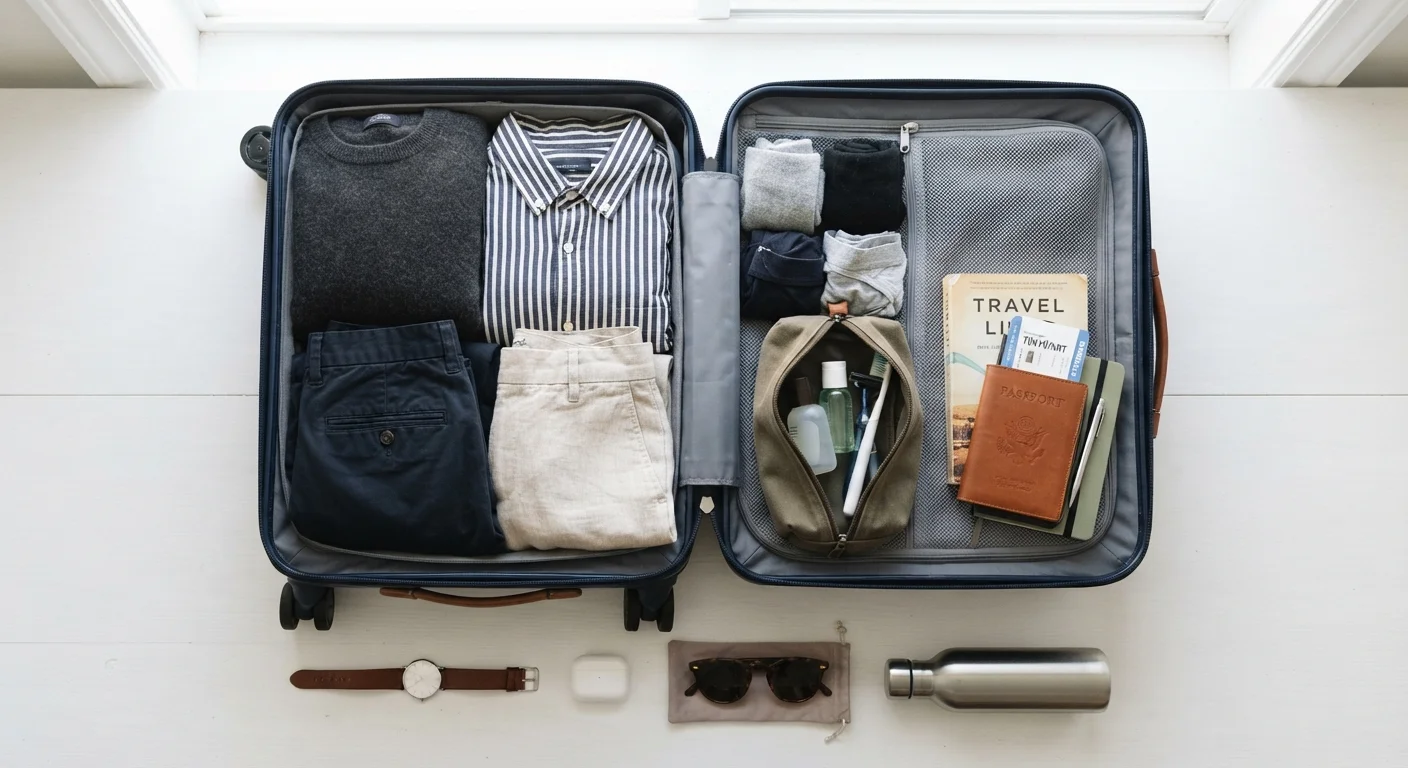
Key Takeaways
- Experienced travellers treat every item as a deliberate choice, not a just-in-case habit.
- Mastering the carry-on means fewer fees, faster airport transitions, and less to lose.
- Versatile clothing, compact toiletries, and digital documents do most of the heavy lifting.
- Knowing what to leave behind is just as important as knowing what to bring.
- Airline size and weight limits vary — always verify before you pack.
Why Carry-On Only Changes the Trip
Ask any seasoned traveller about switching to carry-on only and you'll likely hear the same thing: they can't imagine going back. Skipping checked baggage means walking straight past the carousel, catching earlier connections, and sidestepping the anxiety of a bag that arrives at a different airport than you do. It also sidesteps fees that add up fast — checked-baggage charges are one of the most common costs travellers underestimate.
But carry-on travel only works if the bag is genuinely functional. A stuffed, disorganised carry-on that takes ten minutes to excavate at security is no one's idea of efficient. The goal isn't to cram more in — it's to bring less and make every item count.
What Experienced Travellers Actually Pack
Frequent flyers tend to converge on a similar packing philosophy regardless of destination: neutral, layerable clothing, multi-use items, and ruthless editing.
Build your wardrobe around a single colour palette
Neutral colours — navy, grey, black, white, olive — mix and match freely, multiplying outfit combinations without multiplying items. This dramatically cuts the number of clothing pieces needed. A cohesive palette also means you're never stuck with pieces that don't pair.
Choose shoes that serve multiple purposes
Footwear is the heaviest, bulkiest carry-on category. Bringing shoes that transition between walking, dining, and light outdoor activity removes the need for multiple pairs. Wear the bulkiest pair on the plane to save bag space.
Pack a lightweight personal item that does double duty
Most airlines allow both a carry-on and a personal item. A structured daypack or tote that functions as your in-destination day bag means you're not carrying an extra bag just for excursions. It also keeps valuables accessible during the flight.
Use packing cubes to compress and compartmentalise
Packing cubes reduce rummaging, keep clothing wrinkle-free, and make repacking fast at the end of a trip. Compression cubes can shrink soft items like knitwear noticeably. Consistent placement means you always know where things are.
Go digital with documents and entertainment
Physical guides, printed confirmations, and multiple books add weight and bulk with no functional advantage over digital equivalents. Apps, downloaded maps, and e-readers handle all of it in a fraction of the space. Keeping key documents digitally backed up also protects against loss.
“The weight of your bag is inversely proportional to the quality of your trip. The less you carry, the more you can do.”
— Rick Steves, Travel author and longtime advocate of carry-on-only travel
On the toiletries front, seasoned travellers stick to the TSA's 3-1-1 rule — liquids in containers of 3.4 oz (100 ml) or less, all fitting in one quart-sized clear bag — and they don't overload it. Many rely on solid shampoo bars, multi-use balms, and decanted products to keep the kit compact. For medication, careful documentation matters as much as the medicines themselves; our guide to travelling with medications covers what to know before crossing borders.
What Gets Left Behind
The hardest part of carry-on packing isn't choosing what to bring — it's resisting what to include. Here are the categories experienced travellers consistently edit out:
- Outfit duplicates: Two nearly identical tops, or a third pair of shoes "just in case," rarely justify their volume.
- Full-size toiletries: Travel sizes or solid formats handle most trips of a week or less.
- Heavy books: E-readers hold a library in the footprint of a paperback.
- Excessive tech: One device that does several jobs beats three single-purpose gadgets.
- "Destination" items: Sunscreen, umbrellas, and basic OTC medications are available at most destinations — buying locally saves space and weight.
The One-Week Test Applies to Most Trips
Many experienced travellers use the same carry-on kit for a four-day trip and a twelve-day trip. Access to laundry — whether at your accommodation or a local laundrette — makes longer trips possible with the same bag. Building laundry stops into your planning removes the 'what if I run out of clothes' anxiety that drives overpacking.
The discipline of leaving things behind is part of what travelling smart actually means in practice — it's less about sacrifice and more about trusting yourself to handle what comes up.
Organising the Bag So It Works for You
A carry-on that's hard to access at security or mid-flight defeats the purpose. Experienced travellers tend to use a few reliable organising habits:
Before finalising your kit, cross-reference your pre-departure document checklist — digital backups of your passport, visa, and travel insurance take up zero space and carry significant peace of mind. And always verify your airline's specific carry-on dimensions and weight limits before you head to the airport; they vary more than most people expect, and what clears one carrier may not clear another.
~$30–$70
Typical one-way checked bag fee on US carriers
Airline fee schedules vary widely; carry-on only travel eliminates this cost entirely on most domestic itineraries.
30+ min
Average baggage carousel wait at busy airports
Industry estimates suggest baggage claim adds significant time to post-flight airport exit, time carry-on travellers skip entirely.