

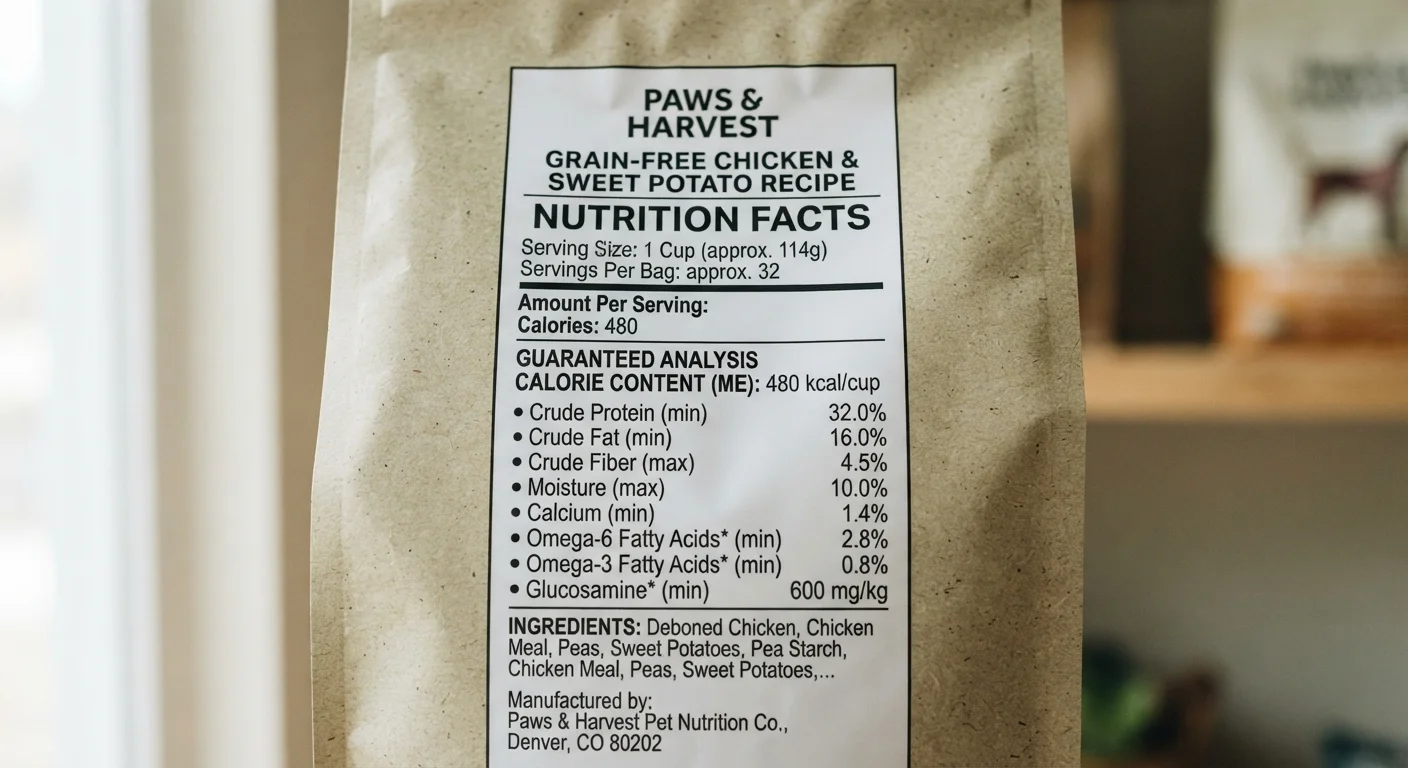
Key Takeaways
- 'Complete and balanced' is a regulated claim governed by AAFCO nutritional standards, not a marketing phrase.
- The claim must specify a life stage — adult maintenance, growth, reproduction, or all life stages.
- Foods can qualify via nutrient analysis or feeding trials; feeding trials offer stronger real-world evidence.
- A food lacking this statement is intended as a supplement or treat, not a sole diet.
- Even 'complete and balanced' foods may not suit every individual animal — consult your veterinarian for personalized guidance.
Complete and Balanced
'Complete and balanced' is a regulated nutritional claim on pet food packaging indicating that the food provides all the nutrients a pet needs — in the right amounts and ratios — to sustain daily health without additional supplementation. The phrase is not marketing language; it is a specific standard defined by the Association of American Feed Control Officials (AAFCO) and enforced at the state level.
A food may meet AAFCO nutrient profiles through laboratory analysis, or through an approved feeding trial protocol — both pathways are valid, but they reflect different levels of real-world validation.
The Regulatory Body Behind the Phrase
When you see 'complete and balanced' on a pet food label, you are reading a claim that carries legal weight in most US states. The Association of American Feed Control Officials (AAFCO) publishes detailed nutrient profiles for dogs and cats, covering minimum — and in some cases maximum — levels for protein, fat, vitamins, and minerals. State feed control regulators use these profiles as the benchmark against which pet food labels are assessed.
The nutritional adequacy statement — the sentence on the label that contains 'complete and balanced' — must also name the life stage the food is formulated for: adult maintenance, growth and reproduction, or all life stages. That detail matters. A food meeting the growth standard has been formulated for puppies and kittens or pregnant and nursing animals, whose nutritional demands are considerably higher than those of an average adult pet.
AAFCO Is Not a Federal Approval Body
AAFCO does not test, inspect, or formally approve individual pet food products before they reach store shelves. It publishes model regulations and nutrient standards that state agencies adopt and enforce. This means compliance is state-by-state, and the level of oversight can vary. When in doubt about a specific product's compliance history, your state's department of agriculture is the relevant authority.
For a deeper dive into how ingredient lists relate to nutritional claims, see our guide on reading a pet food ingredient list.
Two Pathways to the Claim
Manufacturers can substantiate the 'complete and balanced' claim through one of two methods, and the label must tell you which was used.
- Nutrient profile (formulation) method: The manufacturer calculates or laboratory-tests the finished product to confirm it meets AAFCO's published minimums. This is the more common route and is reliable for confirming nutrient presence — but it does not account for whether those nutrients are bioavailable once digested.
- Feeding trial method: The food is fed to a test group of animals under AAFCO's protocol for a set period, with health indicators monitored. This approach provides real-world evidence that animals can absorb and utilize what the label promises. Labels using this method will state something like: 'Animal feeding tests using AAFCO procedures substantiate that provides complete and balanced nutrition.'
40+
Nutrients AAFCO profiles cover for dogs
AAFCO's Dog Food Nutrient Profiles specify minimum levels for more than 40 nutrients, including amino acids, fatty acids, vitamins, and minerals.
26 weeks
Minimum duration of an AAFCO feeding trial
AAFCO's protocol for adult maintenance feeding trials requires animals to be fed the test diet for at least 26 weeks, with health indicators monitored throughout.
Neither method is a guarantee that a particular food will suit every individual animal, which is why observing your pet's body condition, coat quality, and energy levels remains essential regardless of label claims.
What the Claim Does Not Tell You
'Complete and balanced' confirms nutritional adequacy — it says nothing about ingredient quality, sourcing, processing method, or whether a food is appropriate for a pet with a specific health condition. Two foods can both carry the claim while differing substantially in their ingredient composition and digestibility.
The claim also doesn't address portion size or calorie density. A food can be nutritionally complete and still contribute to weight gain if fed in excess. Always follow the feeding guidelines on the packaging as a starting point, and adjust based on your individual pet's body condition score — a metric your veterinarian can walk you through.
If you are weighing grain-inclusive versus grain-free options, the label claim alone won't resolve that question. Our article on grain-free pet diets examines what the current science actually shows. And before making any switch, the practical checklist for evaluating a new pet food is a useful next step.
Check the Life Stage Before You Buy
Always match the life stage on the nutritional adequacy statement to your pet's actual life stage. Feeding a growth-formula food to a healthy adult dog or cat for extended periods can lead to excessive intake of certain nutrients. If you're unsure which life stage category applies to your pet, your veterinarian is the best resource.
When a Food Lacks the Statement
If a product has no nutritional adequacy statement — or carries a phrase such as 'intended for intermittent or supplemental feeding only' — it is not formulated to serve as a complete diet. Treats, meal toppers, broths, and many raw mixers fall into this category. Feeding these as a primary diet risks creating nutritional deficiencies over time.
Homemade and raw diets require particular attention here: unless formulated by a board-certified veterinary nutritionist and regularly reviewed, they rarely meet AAFCO profiles. If you're considering supplementing your pet's diet with additional nutrients, review what the evidence actually supports first — our guide on supplements for pets offers a grounded starting point.
This article provides general pet nutrition information and is not a substitute for advice from a licensed veterinarian. For guidance tailored to your pet's specific health needs, consult a qualified veterinary professional.